



Obróbka cieplna części form: Twardość, Odporność na zużycie, oraz Tool Life
Heat treatment for mold parts improves hardness, Odporność na zużycie, and tool life by changing the steel structure and stabilizing high-friction surfaces. Processes like quenching, tempering, and nitriding help ejector pins, ciosy, Punkty przewodnika, and sleeves resist wear, pękanie, and deformation. The right treatment depends on the mold component, cycle volume, operating stress, and dimensional tolerance requirements.
Mold components fail faster when heat treatment doesn't match the material or production environment. A punch may crack because it's too hard. A guide bushing may lose alignment because it distorted during quenching. Choosing the right process helps reduce maintenance, improve cycle consistency, and extend mold life without increasing unnecessary tooling costs.
What does heat treatment do for mold parts?
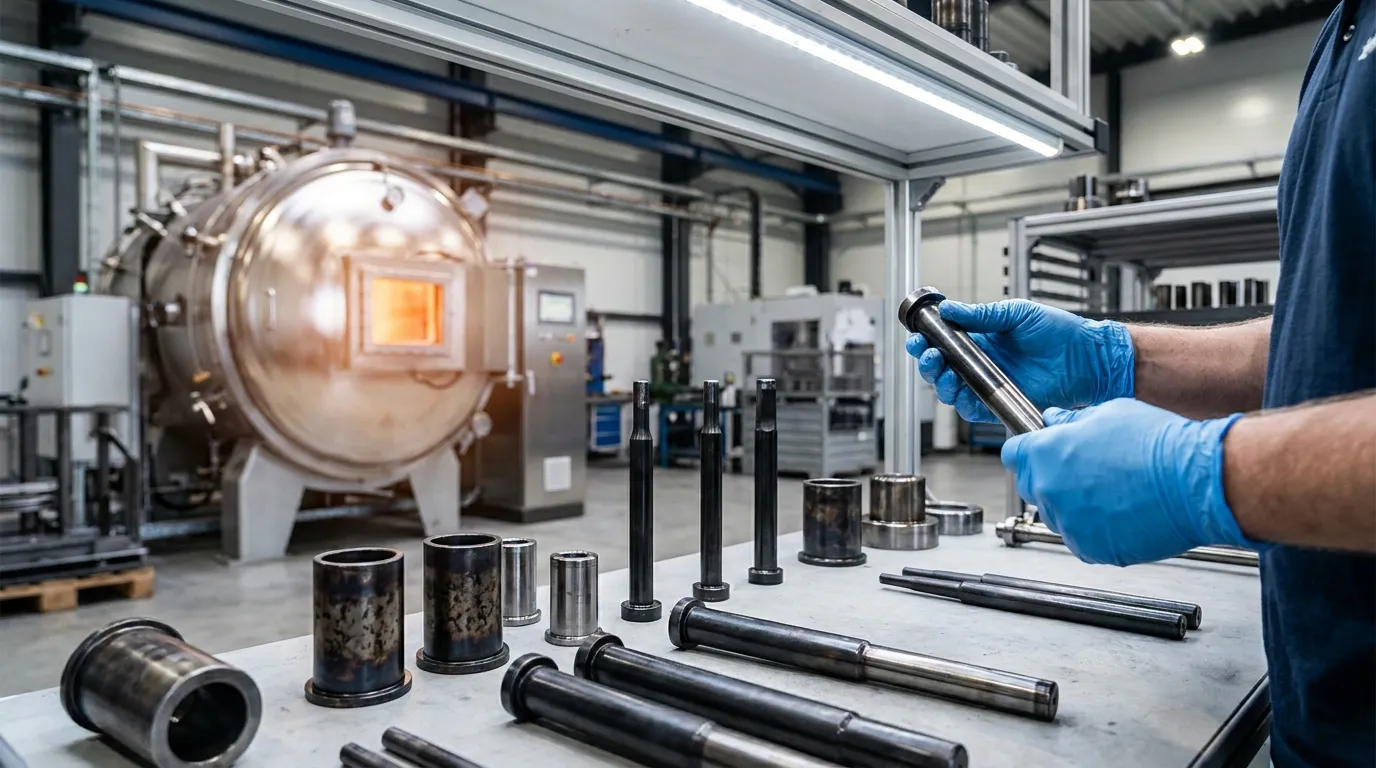
Heat treatment for mold parts improves hardness, Odporność na zużycie, and dimensional stability by changing the steel microstructure. Proper treatment extends mold life and reduces maintenance, but excessive hardness can increase cracking risk.
Heat treatment controls how mold steel responds to stress, tarcie, and repeated production cycles. During processes such as quenching and tempering, the steel is heated and cooled under controlled conditions. This changes the internal grain structure and improves the part's mechanical properties.
In injection molds, high-contact components experience constant pressure and sliding movement. Ejector pins push parts out thousands of times per day. Guide posts absorb alignment stress during every cycle. Without proper heat treatment, these surfaces wear quickly and lose dimensional accuracy.
Według Nawigacja obróbki cieplnej próżniowo, stress relief and controlled heating help reduce internal defects and improve stability. That matters because even small dimensional changes can affect mold alignment and surface quality.
Higher hardness is not always better. Some mold parts fail earlier because they become too brittle after aggressive hardening. In many production environments, balanced toughness and wear resistance perform better than maximum hardness alone.
| Cel obróbki cieplnej | Korzyści produkcyjne |
|---|---|
| Zwiększ twardość | Lepsza odporność na zużycie |
| Poprawa wytrzymałości | Niższe ryzyko pęknięć |
| Zmniejsz stres | Lepsza stabilność wymiarowa |
| Powierzchnie utwardzane | Dłuższa żywotność komponentów |
| Struktura stabilizująca | Spójna dokładność produkcji |
Dla szerszego spojrzenia na kompletność Elementy formy wtryskowej, it's important to understand how each part handles different loads and wear conditions.
Which mold components benefit most from heat treatment?
High-friction mold components such as ejector pins, ciosy, Punkty przewodnika, and sleeves benefit most from heat treatment because they face repeated wear, Ciśnienie, and alignment stress during high-cycle production.
Not every mold part requires the same treatment level. Structural plates may only need moderate hardness, while moving components often need stronger surface protection. The highest wear usually appears where metal-to-metal contact repeats continuously.
A high-cycle automotive mold is a good example. If ejector pins are too soft, the pin heads wear unevenly and start sticking inside the mold. That creates ejection problems, longer cycle times, and more maintenance shutdowns.
| Komponent formy | Główny typ naprężeń | Zalecany fokus |
|---|---|---|
| Sworznie wyrzutowe | Zużycie ślizgowe | Twardość powierzchni |
| Uderzenia | Uderzenie i ciśnienie | Twardość wytrzymałości |
| Tuleje prowadzące | Tarcie wyrównania | Odporność na zużycie |
| Rękawy | Ruch powtarzany | Stabilność powierzchniowa |
| Rdzenie formy | Ciepło i ciśnienie | Stabilność wymiarowa |
Guide parts deserve special attention because alignment problems spread across the entire mold system. A distorted guide bushing can shift cavity positioning and increase flash defects. This is one reason heat treatment is closely tied to the overall Proces produkcji form.
Medical molding applications often use nitrided sleeves because the process creates a hard outer layer without causing large dimensional changes. That helps maintain polished surfaces and consistent cavity performance over long production runs.
What hardness range is best for different mold parts?
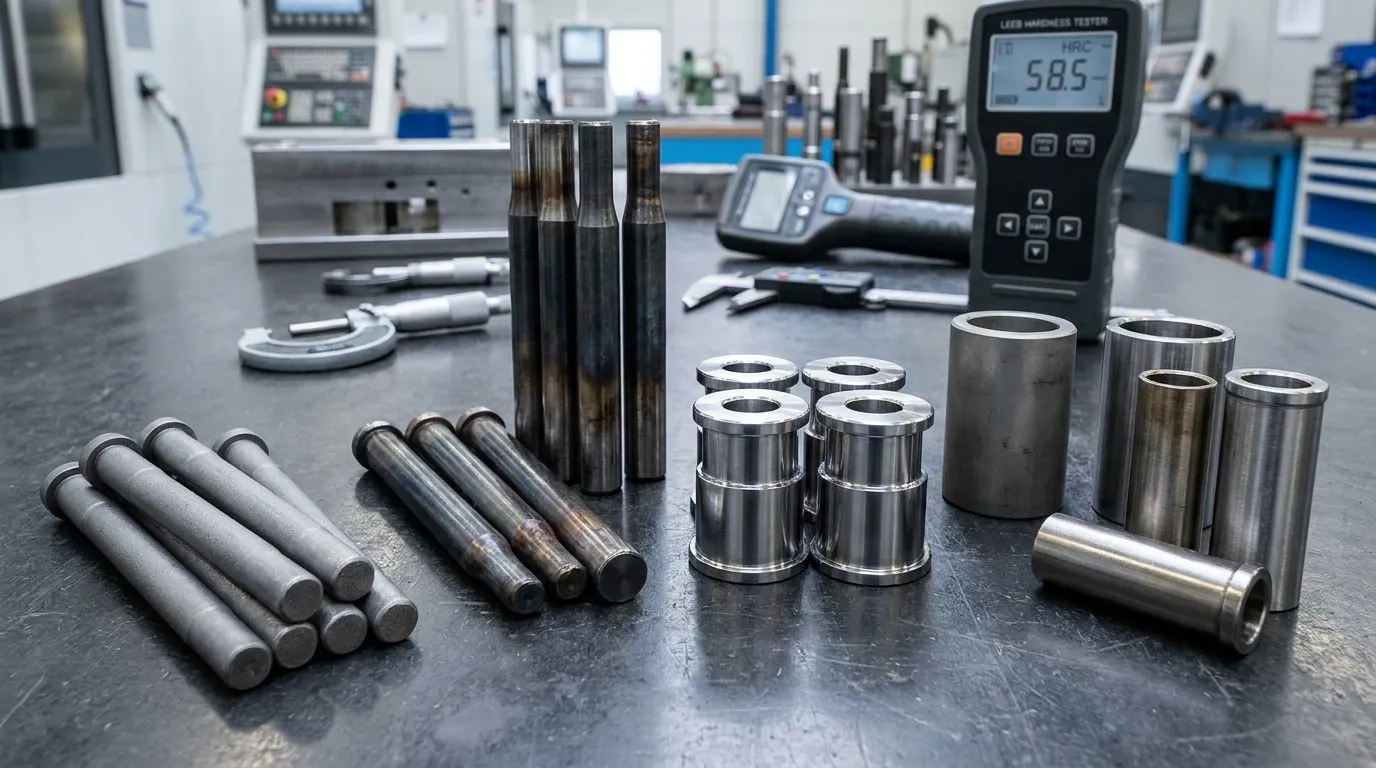
The best hardness level depends on the component function. High-wear parts often require higher hardness, while alignment and structural parts need more toughness to avoid cracking or deformation.
Many buyers assume harder mold parts automatically last longer. That isn't always true. A punch with excessive hardness may crack under repeated impact, especially in fast-cycle production. A slightly lower hardness range can improve toughness and extend usable service life.
The right balance depends on friction, Obciążenie uderzeniowe, thermal stress, and dimensional requirements. High-wear surfaces usually benefit from harder outer layers, while structural parts often need flexibility to absorb stress safely.
Tabela decyzji o podgrzewaniu komponentów formy
| Składnik | Zalecana twardość | Preferowane leczenie | Główne ryzyko awarii | Najlepsza aplikacja |
|---|---|---|---|---|
| Sworzeń wyrzutnika | HRC 58-62 | Nitridowanie | Zużycie powierzchni | Formy o wysokim cyklu |
| Punch | HRC 56-60 | Temper wygaszający | Pękanie | Powtarzający się wpływ |
| Tulejka prowadząca | HRC 50-56 | Poprzez utwardzanie | Zniekształcenia | Systemy wyrównania |
| Rękawa | HRC 58-60 | Nitridowanie | Galling | Formy precyzyjne |
| Rdzeń formy | HRC 48-54 | Obróbka cieplna próżniowa | Zmęczenie termiczne | Złożone ubytki |
Według Wskazówki dotyczące procesu obróbki cieplnej próżni, controlled cooling improves dimensional stability and reduces distortion risk. That's especially important for precision molds with tight tolerances.
A guide bushing that warps during quenching may still appear usable, but slight alignment changes can create uneven wear across the mold. Z czasem, that increases maintenance costs and reduces production consistency.
When should you use nitriding instead of through hardening?
Nitriding is often preferred for mold components that need high surface wear resistance with minimal distortion. Through hardening works better when uniform hardness is needed throughout the part.
The main difference is where the hardness is created. Through hardening affects the full thickness of the steel, while nitriding mainly hardens the outer surface. That makes nitriding useful for precision parts that must keep tight dimensional tolerances.
Nitriding also produces less deformation because it operates at lower temperatures than many quenching processes. In molds with polished sleeves or precision ejector systems, reduced distortion can improve long-term performance.
Korzyści z nitridowania w przypadku pinów wyrzutowych
Ejector pins slide constantly during production. Nitriding creates a hard wear-resistant surface that reduces friction and slows surface damage. This helps prevent sticking and uneven wear patterns in high-cycle molds.
A nitrided sleeve used in medical molding may maintain surface quality much longer than a conventionally hardened sleeve. That matters when cavity finish directly affects cosmetic appearance or sealing performance.
Bezpieczniej jest utwardzać
Through hardening works better when the entire component must resist heavy mechanical load. Large punches and structural mold parts often need consistent hardness across the full section to avoid internal weakness.
Nitriding is not always the best choice. It works well for surface wear, but deeper impact loads may still damage softer internal material. W takich przypadkach, through hardening provides more reliable structural support.
Wybór między tymi metodami powinien być zgodny z warunkami pracy formy i całością Wytyczne dotyczące projektowania form. A process that performs well for guide sleeves may not work for impact-heavy punches.
How does poor heat treatment shorten mold life?
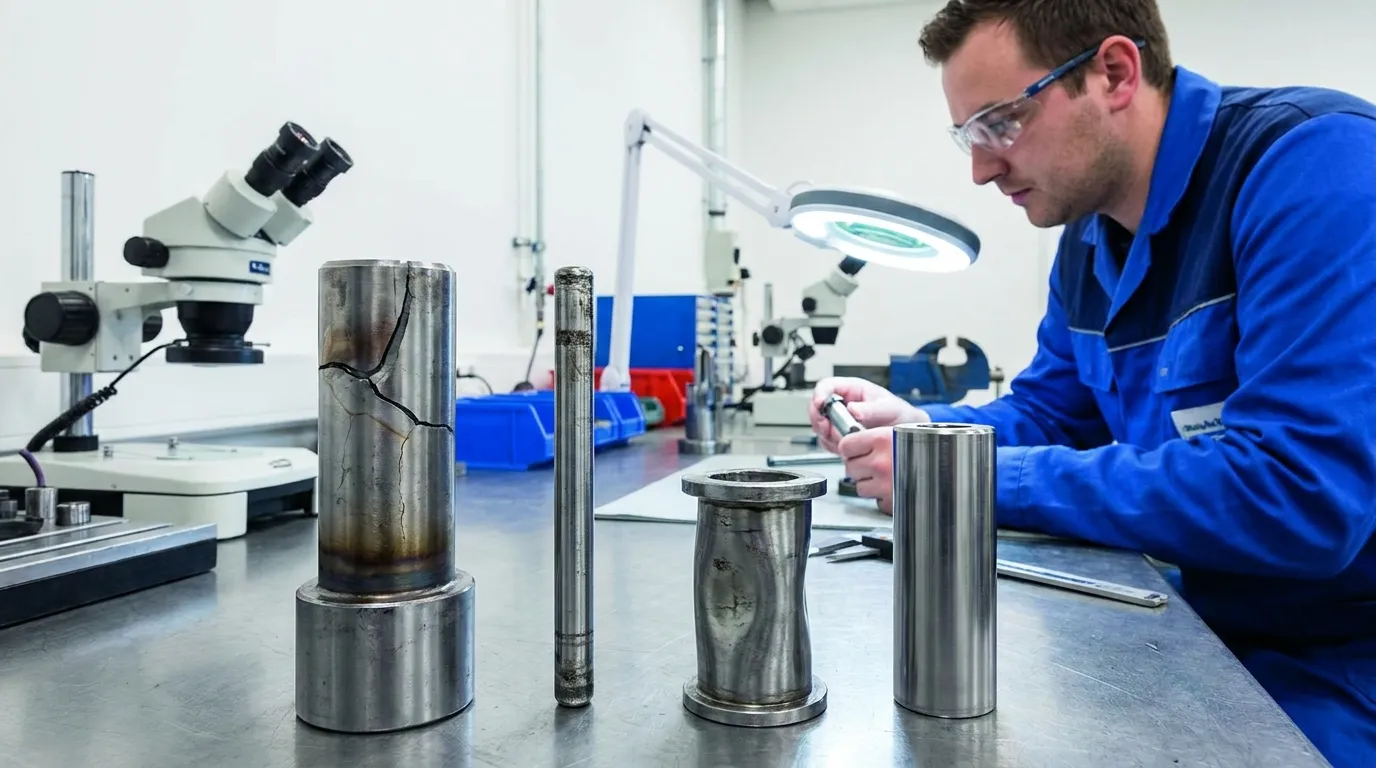
Poor heat treatment can shorten mold life by causing internal stress, pękanie, Zniekształcenie, and unstable hardness. Many failures happen because the treatment process does not match the mold steel or operating conditions.
Heat treatment problems often appear slowly at first. A component may pass inspection but fail early during production because the internal structure isn't stable. Nierównomierne chłodzenie, excessive hardness, or poor stress relief are common causes.
One common failure involves over-hardened punches. In repeated stamping or molding cycles, the punch becomes brittle and develops surface cracks near high-stress corners. Once cracking starts, replacement usually becomes unavoidable.
Typowe objawy awarii obróbki cieplnej
- Pękanie powierzchni wokół krawędzi lub narożników
- Nierówne wzory zużycia na ruchomych częściach
- Zniekształcenia wpływające na ustawienie formy
- Zmniejszona stabilność polerowania
- Przedwczesne zadrażnianie lub przyklejanie się
Według Wskazówki dotyczące procesu obróbki cieplnej, cold treatment and stress reduction can help improve dimensional stability. Preventing distortion is especially important for guide systems and precision cavities.
Many mold failures blamed on poor steel quality are actually caused by incorrect cooling or uncontrolled heat treatment parameters. A guide bushing that loses alignment after quenching can create flash defects across the entire mold system, increasing long-term Koszty wymiany formy.
Lista kontrolna awarii obróbki cieplnej
| Objawy | Prawdopodobna przyczyna | Zalecane rozwiązanie | Wpływ na produkcję |
|---|---|---|---|
| Pękanie powierzchniowe | Nadmierna twardość | Cel o niższej twardości | Nieoczekiwany przestoj |
| Zniekształcenia | Nierównomierne chłodzenie | Hartowanie kontrolowane | Problemy z wyrównaniem |
| Szybkie zużycie | Niska twardość powierzchniowa | Hartowanie powierzchniowe | Częsta konserwacja |
| Galling | Słabe wykończenie powierzchni | Nitridowanie lub polerowanie | Problemy z wyrzutem |
| Miękkie punkty | Nieregularne ogrzewanie | Przegląd kontroli procesu | Skrócona żywotność narzędzia |
How does heat treatment affect surface finish and maintenance?
Heat treatment directly affects friction, polishing stability, and long-term maintenance intervals. Poorly treated surfaces wear unevenly, lose polish quality faster, and create more production interruptions.
Mold surfaces with stable hardness usually maintain finish quality longer during high-cycle production. That becomes important in cosmetic molding applications where surface scratches or wear marks transfer directly onto the plastic part.
A properly nitrided sleeve may require fewer polishing cycles because the hardened surface resists abrasion better. Untreated or unstable surfaces often lose smoothness faster and increase drag during ejection.
Heat treatment also affects maintenance planning. Components with balanced hardness and toughness generally last longer between inspections, especially in molds running abrasive resins or continuous production schedules.
For molds where appearance matters, surface durability should align with the required Jakość powierzchni formy. Heat treatment and polishing performance work together, especially in precision molding environments.
What should buyers ask before ordering heat-treated mold components?
Buyers should verify hardness range, Stalowy gatunek, heat treatment method, and dimensional tolerance before ordering mold components. These details directly affect wear resistance, Częstotliwość konserwacji, oraz stabilność produkcji.
Many sourcing problems start because the treatment process isn't clearly specified. Two components may use the same steel grade but perform very differently depending on how they were hardened and tempered.
Przed zatwierdzeniem produkcji, buyers should confirm:
- Zakres twardości celu
- Metoda obróbki cieplnej stosowana
- Głębokość obróbki powierzchni
- Tolerancja wymiarowa po zabiegu
- Dostępność w zakresie inspekcji twardości lub certyfikacji
A supplier should also explain whether the component uses nitriding, through hardening, vacuum treatment, or another process. That information matters because different methods affect distortion risk and maintenance intervals differently.
Na przykład, a high-cycle ejector system may need nitrided pins with controlled surface hardness, while a large structural punch may require deeper through hardening for impact resistance. Matching the process to the real production load helps prevent early failures and replacement costs.
Poprawne wykonanie kolejnego kroku
Heat treatment for mold parts affects much more than hardness. It influences wear resistance, Stabilność wyrównania, Częstotliwość konserwacji, and long-term production consistency. A component that looks acceptable on paper may still fail early if the treatment process doesn't match the operating conditions.
The safest approach is to evaluate each mold component separately. Sworznie wyrzutowe, Tuleje prowadzące, ciosy, and sleeves all handle stress differently. Choosing the right heat treatment for mold applications helps reduce downtime, extend tool life, and maintain stable molding performance over high production volumes.
Najczęściej zadawane pytania
What is heat treatment in mold manufacturing?
Heat treatment changes the mechanical properties of mold steel through controlled heating and cooling. It improves hardness, Odporność na zużycie, and dimensional stability so mold parts can handle repeated production cycles with less wear.
Does higher hardness always improve mold life?
Higher hardness does not always mean longer mold life. Excessive hardness can make mold components brittle and more likely to crack under impact or thermal stress during production.
What is nitriding in mold manufacturing?
Nitriding creates a hard wear-resistant surface layer by adding nitrogen to the steel surface. It's commonly used when mold parts need better wear resistance with minimal dimensional distortion.
Which mold parts usually require heat treatment?
High-wear mold components usually require heat treatment. Sworznie wyrzutowe, ciosy, Punkty przewodnika, Rękawy, and wear surfaces face repeated friction and pressure during molding cycles.
What causes mold cracking after heat treatment?
Improper heat treatment can create internal stress that leads to cracking. Nadmierna twardość, Nierównomierne chłodzenie, poor material selection, and uncontrolled quenching are common causes.
How does heat treatment affect mold maintenance?
Correct heat treatment reduces maintenance requirements by improving wear resistance and dimensional stability. Mold components stay functional longer and need fewer replacements during high-cycle production.
Udostępnij:



Napisane przez Sunshine
W Sunshine, Jesteśmy profesjonalnym producentem i dostawcą komponentów do precyzyjnych form, oferując szeroką gamę produktów do tłoczenia i formowania wtryskowego. Naszym głównym celem są formy do dziurkania, Sworznie wyrzutowe i tuleje, oraz słupy i tuleje. Dzięki zaawansowanej obróbki CNC, Ścisła kontrola jakości, oraz silne możliwości produkcyjne, Zapewniamy niezawodność, Części o wysokiej precyzji, wraz ze standardowymi komponentami dostępnymi na stanie, zapewniającymi szybkie i efektywne globalne dostawy.
WIADOMOŚCI
UZYSKAJ USŁUGĘ
Z wysokiej jakości częściami dostosowanymi do każdego budżetu oraz przyjaznym personelem przeszkolonym, by Twoja wizyta była poinformowana i bezproblemowa.
