



Injection Molding Mold Parts: Rdzeń, Ubytek, Wyrzucenie, and Guide Parts
Injection molding mold parts include the core, Ubytek, System wyrzutnika, Komponenty przewodnika, Biegacze, bramy, Kanały chłodzące, and venting features. These systems work together to shape plastic parts, maintain alignment, control resin flow, and release finished products safely. High-quality mold components improve dimensional accuracy, Zmniejszaj zużycie, prevent defects like flashing or sticking, and help manufacturers maintain stable production across long production runs.
Injection molds work as complete systems, but every system depends on the quality of its individual parts. A worn guide bushing, poorly positioned ejector pin, or inefficient cooling channel can create defects even when the rest of the mold looks fine. Understanding how these components work together helps engineers, buyers, and production teams make better tooling decisions and avoid expensive downtime later.
What are the main parts of an injection molding mold?
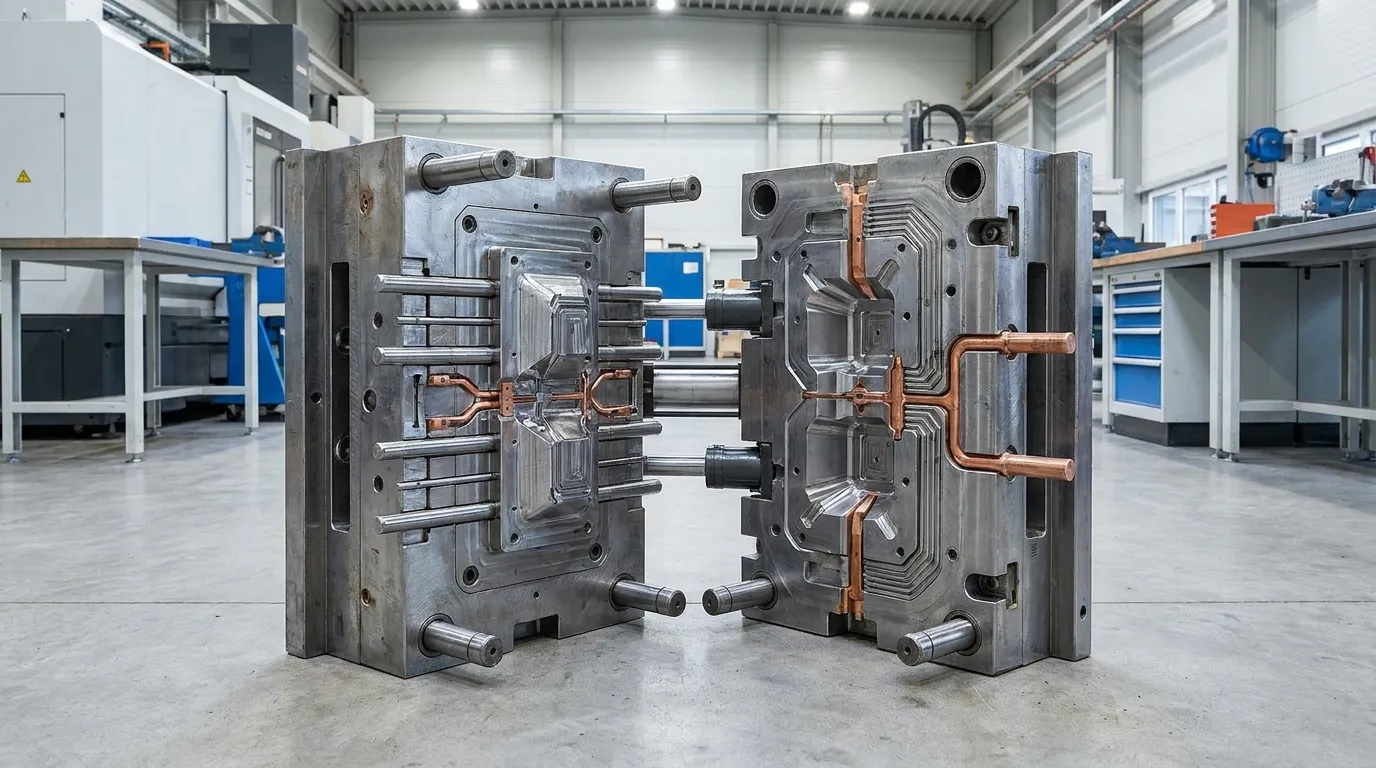
Injection molding mold parts are usually grouped into forming, Przebieg trasy, Wyrzucenie, Chłodzenie, and flow-control systems. Each group affects part quality, mold life, and production consistency in different ways.
Most injection molds contain the same core component groups, even when part designs vary. The core and cavity create the molded shape, alignment parts keep mold halves positioned correctly, and ejection systems remove cooled parts after molding. Kanały chłodzące, Biegacze, and gates manage heat and resin flow throughout the cycle.
If you need a broader breakdown of complete mold architecture, to Przegląd komponentów formy explains how these systems connect inside a full tooling setup.
Według Przegląd formowania wtryskowego na Wikipedii, standard molds also include venting features, Płyty formowe, and clamping systems that support pressure and alignment during production.
Tabela funkcji komponentów formacji wtryskowej
| Component Group | Główna funkcja | Typowe ryzyko awarii | Wpływ na produkcję |
|---|---|---|---|
| Rdzeń i wnęka | Geometria części formowej | Zużycie i niedopasowanie | Błyskanie, dimensional errors |
| System prowadzenia | Utrzymanie wyrównania | Zużycie tulejów | Wady linii rozdzielczej |
| System wyrzutu | Usuń odlewane części | Uszkodzenia kołków | Scratches, Przyklejanie się |
| System kanałów i bram | Bezpośredni przepływ żywicy | Zużycie bramek | Krótkie ujęcia, imbalance |
| System chłodzenia | Kontroluj temperaturę formy | Słaby przepływ chłodzenia | Odkształcenie, long cycle times |
| System wentylacji | Uwalnianie uwięzionego powietrza | Zatkane kanały wentylacyjne | Ślady spaleń, incomplete filling |
Jaka jest różnica między rdzeniem a komorą?
Wnętrze tworzy zewnętrzny kształt plastikowej części, while the core creates internal features and hollow sections. Both must stay precisely aligned to avoid flash, Odkształcenie, or dimensional defects.
The cavity side usually creates the visible outside surface of the molded part. The core side forms internal details such as holes, Żebra, or mounting structures. Podczas wstrzykiwania, molten resin fills the space between these two surfaces to create the finished component.
Szczegółowy opis Podstawy formowania wtryskowego guide can help if you want to understand how the full molding cycle supports these forming surfaces.
| Cechy | Rdzeń | Ubytek |
|---|---|---|
| Główna rola | Tworzy geometrię wewnętrzną | Tworzy kształt zewnętrzny |
| Narażenie | Wysokie ciśnienie i tarcie | Wysokie wymagania dotyczące wykończenia powierzchni |
| Powszechny problem zużycia | Ścieranie i przyklejanie | Zadrapania powierzchniowe |
| Wpływ na jakość | Wymiary wewnętrzne | Wygląd kosmetyczny |
The core often experiences higher mechanical stress because parts shrink around it during cooling. This is why ejector placement matters so much. If the core surface grips the plastic too tightly, the ejection system can damage the finished part during release.
Na przykład, medical device housings often require highly polished cavity surfaces to maintain cosmetic quality. At the same time, the core may need hardened steel inserts to resist wear from repeated production cycles.
Which mold parts control alignment and precision?
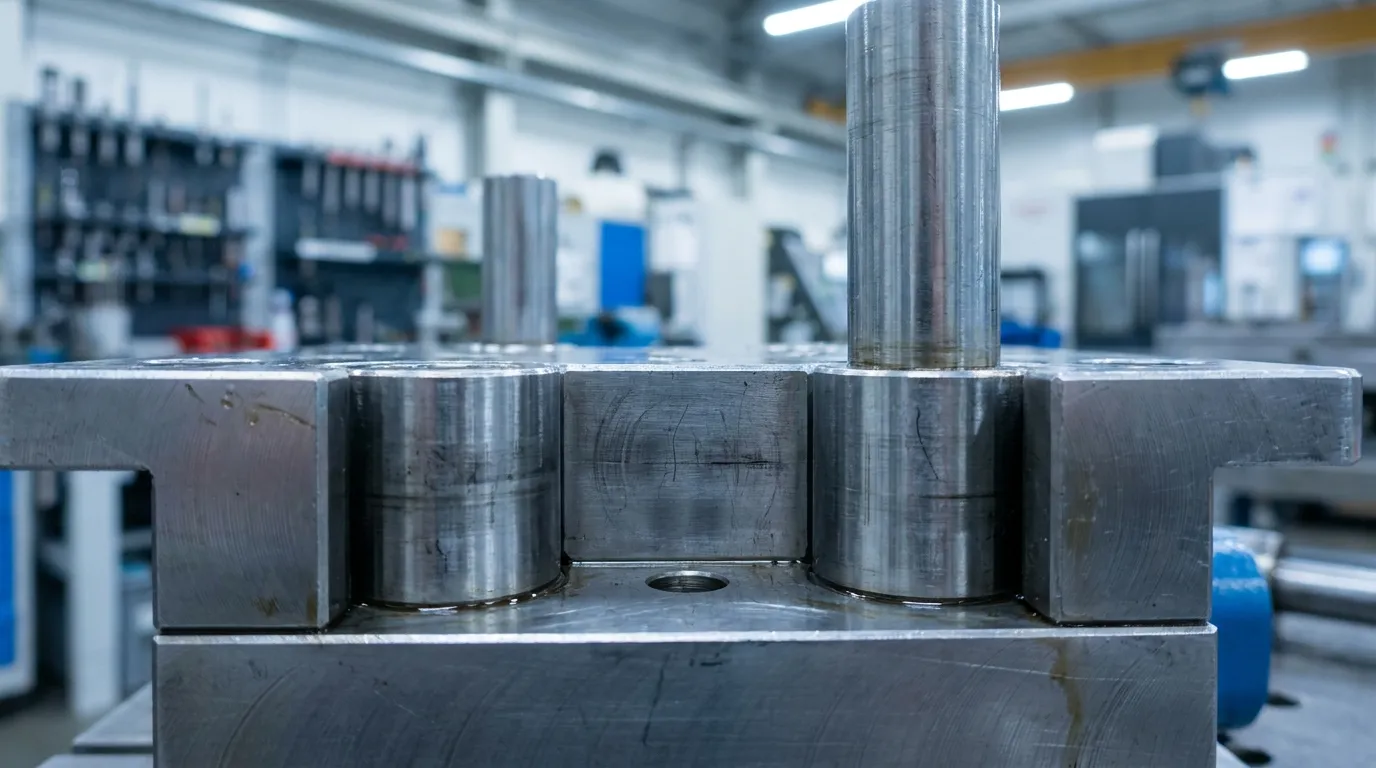
Guide posts and bushings keep mold halves aligned during every cycle. Poor alignment increases wear, flashing, part mismatch, and long-term tooling instability.
Alignment systems control how accurately the mold closes during production. Even slight misalignment can create flashing at the parting line or uneven pressure across the cavity surface. Z czasem, this accelerates mold wear and reduces dimensional consistency.
The Komponenty przewodnika section explains how precision alignment parts support repeatable molding performance.
Według Przewodnik po komponentach form Agilian, guide pins and bushings are among the most important wear surfaces inside production tooling.
Tabela niepowodzenia wyrównania If-Then
| Jeśli tak się stanie | Prawdopodobna przyczyna | Efekt produkcji |
|---|---|---|
| Błyskanie na linii rozdzielczej | Zużyte tuleje prowadzące | Nadmiar wycieku żywicy |
| Nierówne ciśnienie w komorze | Nieułożone połówki formy | Zniekształcenie części |
| Szybkie zużycie krawędzi wnęk | Słaba powtarzalność wyrównania | Skrócona żywotność formy |
| Niedopasowanie powierzchni | Uszkodzone słupy przewodnika | Widoczne wady części |
Lower-cost guide systems are not always the best long-term option. They may work for short production runs, but high-cycle molds usually need hardened alignment components to maintain precision over time.
An automotive interior trim mold is a good example. After extended production cycles, worn guide bushings often create flashing along visible edges. Replacing only the cavity inserts rarely fixes the issue if alignment wear caused the original problem.
How does the ejection system remove molded parts?
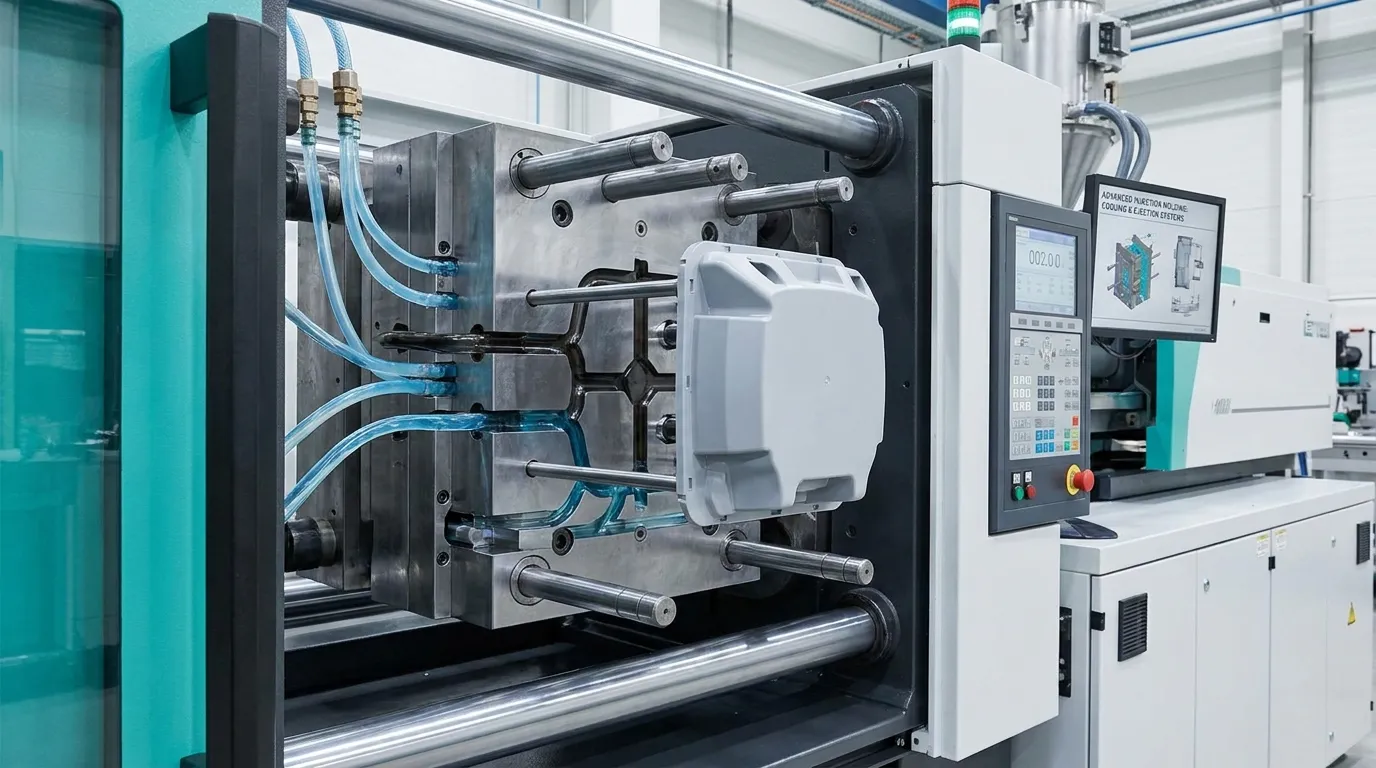
Ejection systems push cooled plastic parts out of the mold after solidification. Incorrect ejector placement can leave marks, crack parts, or create deformation during release.
Po ochłodzeniu, the mold opens and the ejection system pushes the finished part away from the core. Most molds use ejector pins, ejector sleeves, or stripper plates depending on part geometry and surface requirements.
The Części systemu wyrzutnika guide provides additional detail about common ejection hardware used in production molds.
A standard ejection sequence usually follows these steps:
- The mold opens after cooling.
- Ejector plates move forward.
- Ejector pins contact the molded part.
- The part separates from the core.
- The ejector system retracts before the next cycle.
Different parts require different ejection strategies. Thin-wall parts often need carefully distributed ejector pins to avoid deformation. Cosmetic housings may use sleeves or stripper systems to reduce visible marks.
Typowe problemy z wyrzutem
| Problem | Prawdopodobna przyczyna | Result |
|---|---|---|
| Ślady po przypinaniu | Nadciśnienie wyrzutnika | Wady kosmetyczne |
| Przyczepianie części | Słaby kąt zanurzenia | Cykl przerwania |
| Pękanie | Nierównomierna siła wyrzutu | Części złomowe |
| Odkształcenie | Czas wyrzutu na gorąco | Niestabilność wymiarowa |
Replacing worn ejector pins without inspecting alignment components can waste time and money. Ejection problems sometimes start with mold misalignment, not the pins themselves.
A medical electronics housing illustrates this well. Poor ejector placement near cosmetic surfaces can leave visible witness marks, even when molding conditions stay within normal production ranges.
What do runners, bramy, and cooling channels do?
Runners and gates direct molten plastic into the mold cavity, while cooling channels remove heat for stable cycle times. Poor flow or cooling design often causes short shots, Odkształcenie, or sink marks.
The runner system moves molten resin from the injection unit into the cavity. Gates control how resin enters the part itself. Cooling channels then remove heat so the molded component solidifies evenly before ejection.
Według Wpis o formowaniu wtryskowym na Wikipedii, cooling systems strongly influence cycle time and dimensional consistency during production.
| System | Główne zadanie | Wspólny problem |
|---|---|---|
| Runner | Przemieszcza żywicę przez pleśń | Nierównowaga przepływu |
| Brama | Wejście do wnęki sterowniczej | Zamrożenie bram |
| Kanał chłodzący | Usuwa ciepło | Nierównomierne chłodzenie |
| Wiatr | Uwalnia uwięzione powietrze | Ślady spaleń |
Cooling design becomes especially important in high-cavitation molds. A consumer electronics mold producing multiple thin-wall housings may require upgraded cooling channels to maintain stable cycle times across every cavity.
Dlaczego wentylacja ma znaczenie w formach wtryskowych
Vents allow trapped air to escape as molten resin fills the cavity. Without proper venting, compressed air can create burn marks, krótkie ujęcia, or incomplete filling.
The Poradnik po rozwiązywaniu problemów z Elastron notes that poor venting often contributes to filling defects and trapped gas problems during molding cycles.
Complex custom runner systems are not always necessary. Standardized runner layouts often simplify maintenance and reduce downtime for many production programs, especially when part geometry remains relatively simple.
Which injection mold parts wear out the fastest?
Sworznie wyrzutowe, bramy, tulejki, and high-friction inserts usually wear out first because they experience constant movement, Ciśnienie, and heat exposure during molding cycles.
Moving and high-contact components naturally wear faster than static mold plates. Wielkość produkcji, Ścierność żywicy, and maintenance practices all affect how quickly this happens.
The Komponenty zużycia formy section helps production teams identify common replacement areas before failures disrupt production.
Lista kontrolna komponentów form o wysokim zużyciu
| Składnik | Dlaczego się zużywa | Typowy objaw |
|---|---|---|
| Sworznie wyrzutowe | Ciągły ruch ślizgowy | Ślady przyklejenia lub przypięcia |
| Tuleje prowadzące | Powtarzający się kontakt wyrównania | Błyskanie |
| Bramy | Wysoka prędkość żywicy | Niespójność wypełniania |
| Inserty | Tarcie i ciepło | Dryf wymiarowy |
The Najczęściej zadawane pytania o formowaniu wtryskowym ESCATEC explains that mold lifespan depends heavily on steel quality and operating conditions.
A buyer choosing between hardened steel ejector pins and untreated components should consider production volume carefully. Lower-cost untreated pins may work for short runs, but hardened components usually last much longer in continuous manufacturing environments.
Interchangeable inserts also wear differently depending on resin type. Glass-filled materials often accelerate abrasion on cavity inserts compared to standard resins.
What should buyers check before sourcing mold components?
Buyers should verify tolerance capability, Stalowy gatunek, Jakość obróbki cieplnej, Wykończenie powierzchni, and supplier delivery performance before ordering mold components for production tooling.
Mold components directly affect production reliability, so sourcing decisions should focus on consistency instead of price alone. Poorly machined or untreated components can create repeat maintenance issues that cost far more than the original savings.
Producenci poszukujący Standardowe elementy formy should compare material specifications, Precyzja obróbki, and lead-time stability before placing production orders.
Lista kontrolna dla kupujących komponenty do formy
- Potwierdź specyfikacje dotyczące jakości i twardości stali
- Weryfikacja tolerancji dla precyzyjnych części
- Przegląd dokumentacji procesu obróbki cieplnej
- Sprawdź wymagania dotyczące wykończenia powierzchni
- Porównaj czasy realizacji wymiany
- Określ, czy części są standardowe czy niestandardowe
- Oceń spójność dostawców w powtórnych zamówieniach
Custom mold components are not always necessary. Standardized parts often simplify future maintenance because replacements remain easier to source and install.
Na przykład, a consumer electronics supplier using interchangeable cavity inserts can support multiple product versions without building entirely new molds. This lowers tooling costs and shortens revision lead times during product updates.
How do mold component failures affect production quality?
Mold component failures directly affect dimensional consistency, Jakość powierzchni, and production stability. Many common molding defects trace back to worn or poorly maintained tooling parts instead of machine settings alone.
The Części do precyzyjnych form resource explains how tooling accuracy supports repeatable molding performance across long production runs.
Macierz do diagnostyki wad pleśni
| Defekt | Prawdopodobnie uszkodzony komponent | Przyczyna wspólna | Zalecana inspekcja |
|---|---|---|---|
| Błyskanie | Tuleje prowadzące | Nieułożenie formy | Sprawdź zużycie geometrii |
| Krótkie ujęcie | Brama lub wentylacja | Przepływ ograniczony | Sprawdź stan bramki |
| Ślady spaleń | System wentylacji | Uwięziony gaz | Czyste kanały wentylacyjne |
| Przyklejanie się | System wyrzutu | Słaba siła uwalniania | Sprawdź ruch wyrzutnika |
| Odkształcenie | Kanały chłodzące | Nierówna temperatura | Sprawdź przepływ chłodzenia |
Many processors adjust injection pressure first when flashing appears. That approach does not always solve the root issue. If guide systems are worn, the mold may continue leaking resin even with lower processing pressure.
Cooling problems create similar confusion. Uneven cooling channels often cause warping that operators mistakenly blame on material shrinkage or cycle timing. Inspecting the cooling layout usually reveals the real problem faster.
Co robić dalej
Understanding injection molding mold parts helps manufacturers make better tooling decisions before problems appear on the production floor. The core, Ubytek, guide system, Kanały chłodzące, and ejector components all affect mold life and part quality in different ways.
If you're evaluating tooling suppliers or replacing worn mold components, focus on precision, material quality, and long-term repeatability instead of upfront cost alone. Standardized components can simplify maintenance, but high-cycle molds may still require upgraded materials and tighter tolerances for stable production over time.
Najczęściej zadawane pytania
What are the components of an injection mold?
Injection molds contain several functional component groups. These usually include the core, Ubytek, System wyrzutnika, guide pins, tulejki, Biegacze, bramy, Kanały chłodzące, and venting features that support molding, Przebieg trasy, oraz częściowe zwolnienie.
What is the core and cavity in injection molding?
The cavity and core are the primary forming components inside the mold. The cavity creates the outside shape of the part, while the core forms internal geometry and hollow sections during molding.
What do ejector pins do in injection molding?
Ejector pins safely remove molded parts from the cavity after cooling. Proper pin placement helps prevent sticking, pękanie, and visible surface marks during the ejection stage.
Które elementy formy zużywają się najszybciej?
High-friction and moving components usually wear out first. Sworznie wyrzutowe, Tuleje prowadzące, Wkładki, and gates experience repeated heat, Ciśnienie, and motion during production cycles.
What causes flashing in injection molds?
Flashing happens when molten plastic escapes between mold surfaces. Worn alignment components, damaged guide bushings, or poor mold closure often allow resin leakage at the parting line.
How long do injection mold components last?
Mold component lifespan depends on steel quality, Typ żywicy, Praktyki konserwacyjne, oraz wolumen produkcji. Hardened steel components generally last longer in high-cycle manufacturing environments.
Udostępnij:



Napisane przez Sunshine
W Sunshine, Jesteśmy profesjonalnym producentem i dostawcą komponentów do precyzyjnych form, oferując szeroką gamę produktów do tłoczenia i formowania wtryskowego. Naszym głównym celem są formy do dziurkania, Sworznie wyrzutowe i tuleje, oraz słupy i tuleje. Dzięki zaawansowanej obróbki CNC, Ścisła kontrola jakości, oraz silne możliwości produkcyjne, Zapewniamy niezawodność, Części o wysokiej precyzji, wraz ze standardowymi komponentami dostępnymi na stanie, zapewniającymi szybkie i efektywne globalne dostawy.
WIADOMOŚCI
UZYSKAJ USŁUGĘ
Z wysokiej jakości częściami dostosowanymi do każdego budżetu oraz przyjaznym personelem przeszkolonym, by Twoja wizyta była poinformowana i bezproblemowa.
