



Sworznie wyrzutowe formy: Jak wybrać sworznie do płynnego zwalniania części
Mold ejector pins control how molded parts release from the mold after cooling. Choosing the right pin type, Materiał, Rozmiar, and placement helps prevent sticking, pin marks, Odkształcenie, and uneven ejection force. Standardowe sworznie sprawdzają się w wielu formach, but sleeve ejectors, coated pins, and optimized layouts improve release performance in high-volume or complex molding applications.
A poorly designed ejection setup can ruin an otherwise good mold. Parts stick, surfaces show stress marks, and production slows down from bent pins or uneven release force. That’s why mold ejector pin selection matters far beyond basic part removal. The right layout protects part quality, Zmniejsza przestoj, and keeps cycles stable during long production runs.
What do mold ejector pins actually do during part release?
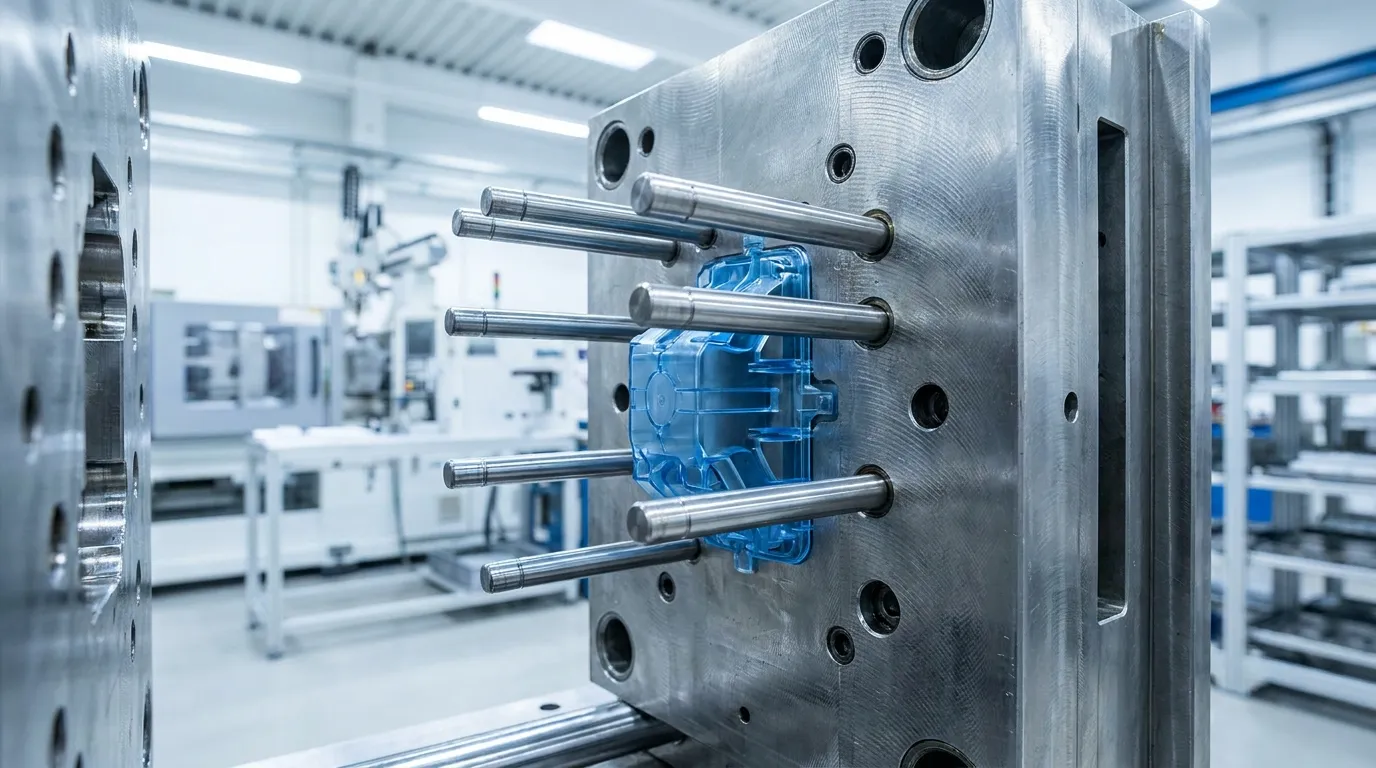
Mold ejector pins push cooled parts off the mold core using controlled force. Correct pin sizing and placement reduce sticking, deformacja, Znaki naprężeń, and uneven release that can damage molded parts or shorten mold life.
Ejector pins are part of the mold’s ejection system. After the plastic cools and the mold opens, the pins push the part away from the core so it can drop safely or move to the next handling step.
The process sounds simple, but release force has to stay balanced. If too much force concentrates in one area, the part can warp or crack. Poor pin placement can also leave visible circles or white stress marks on finished surfaces.
High-cycle molds depend on stable ejection to maintain consistent production. Według Pierwsza forma, ejector systems directly affect release reliability and mold durability during repeated production cycles.
Wielu producentów zaczyna od przeglądu swojej całości Systemy wyrzutów formowania wtryskowego before adjusting pin layouts for specific parts.
Why does ejector pin placement matter so much?
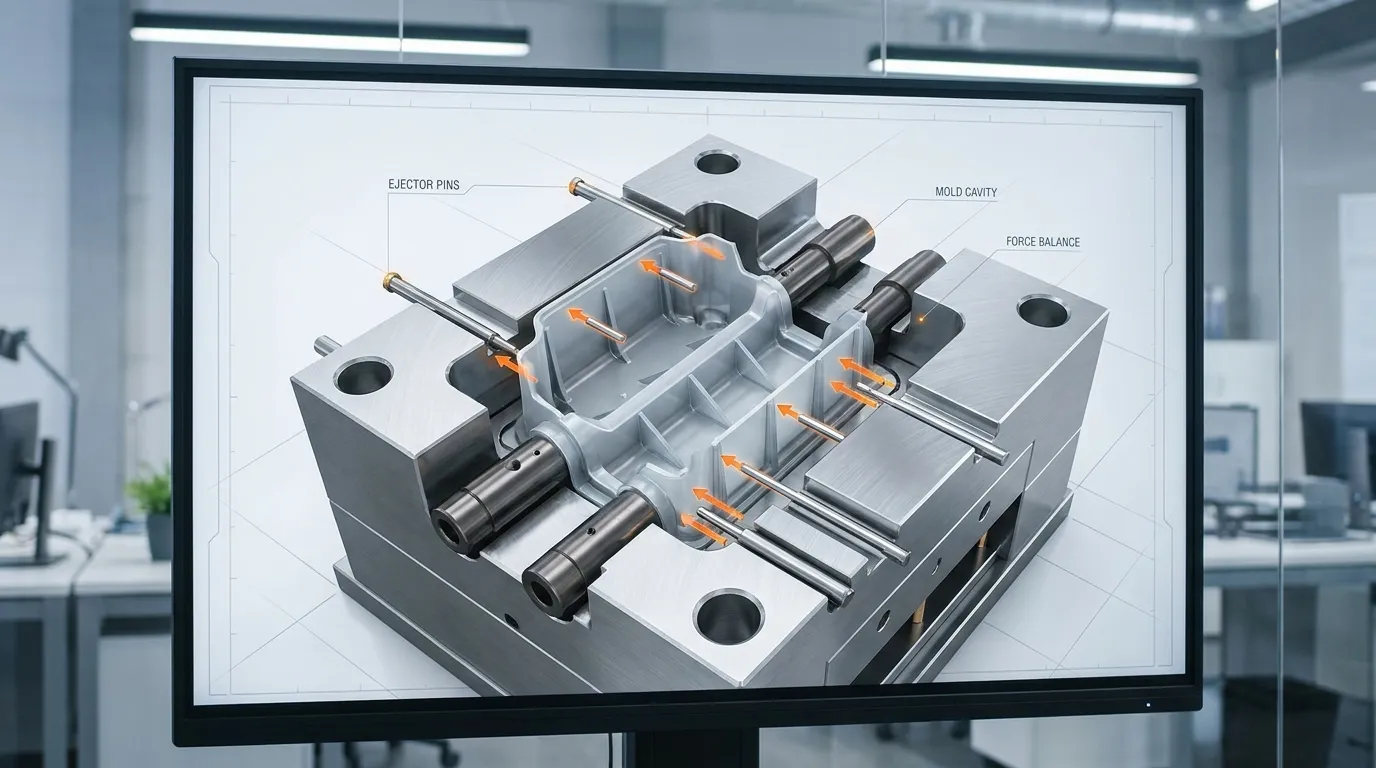
Ejector pin placement matters because uneven release force can warp parts, create white stress marks, or leave visible pin impressions. Pins should support strong structural areas while avoiding cosmetic surfaces and thin unsupported walls.
Placement affects how force travels through the molded part during ejection. Strong ribs, Bossowie, and thicker sections usually handle ejection pressure better than thin cosmetic walls.
Thin-wall products are especially sensitive. A small electronics housing, na przykład, may develop whitening near the ejector area if the pin pushes against unsupported plastic. Even when the mold opens correctly, uneven pressure can distort the part during release.
Wspólne miejsca, gdzie części zaklinają się podczas wyrzucania
Parts often stick around:
- Głębokie żebra
- Rdzenie wysokie
- Powierzchnie teksturowane
- Wąskie kąty zanurzenia
- Cienkie, cylindryczne cechy
These areas create more friction during release. Według Aco Mold, balanced ejection helps reduce release resistance and surface defects.
| Charakterystyka części | Typowe ryzyko | Lepsza strategia przypięcia |
|---|---|---|
| Cienkie ściany | Znaki naprężeń | Dodaj szerszy rozkład siły |
| Głębokie żebra | Przyklejanie się | Umieść szpilki blisko podstaw żeber |
| Powierzchnie kosmetyczne | Widoczne znaki | Przesuwaj piny do ukrytych obszarów |
| Rdzenie wysokie | Nierówne wypuszczanie | Używaj wyrzutników tulejowych |
| Duże płaskie części | Odkształcenie | Równomiernie rozłóż kręgle |
Bardziej szczegółowe tematy architektury formy i rozkładu sił należą do szerszego zakresu Podstawy formowania wtrysków plastiku reference rather than this focused guide.
How do you choose the right mold ejector pin type?
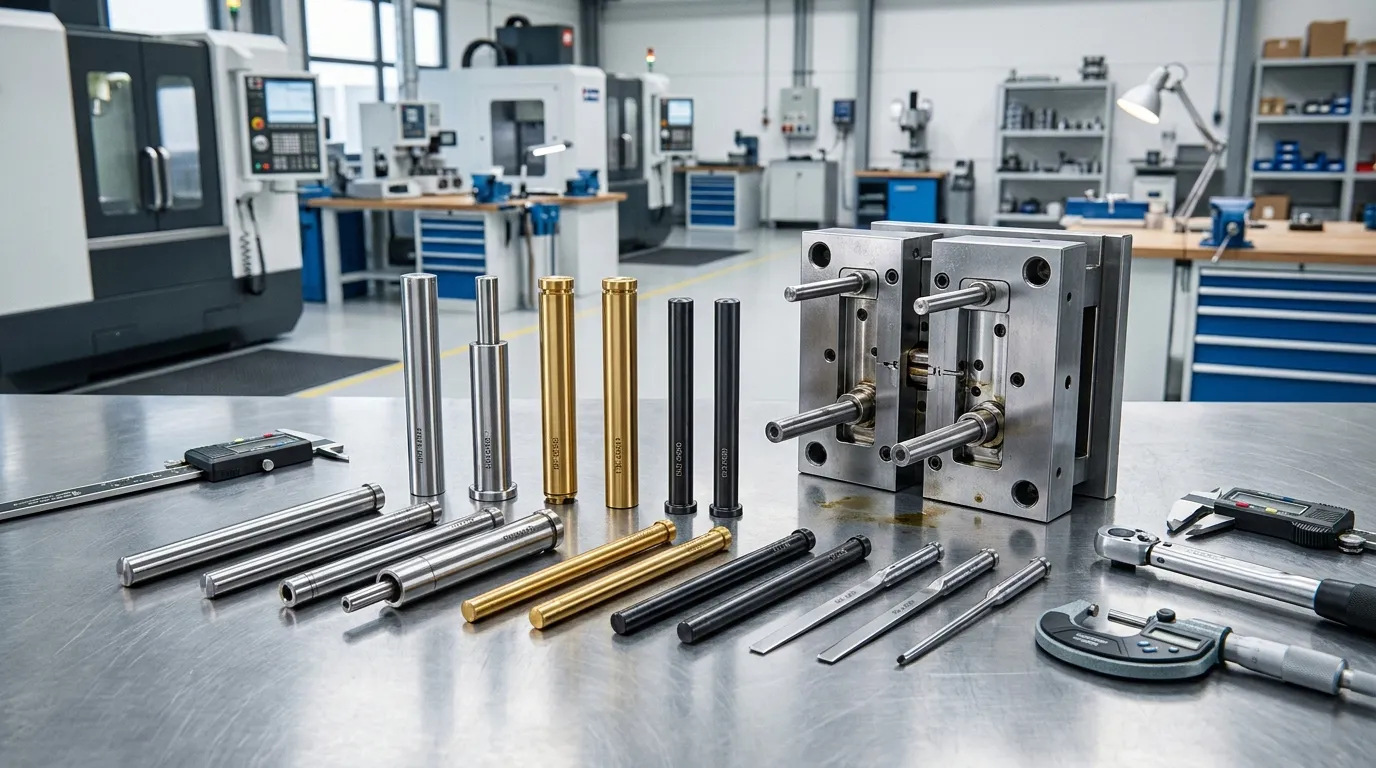
The best mold ejector pin type depends on part geometry, Zachowanie żywicy, Wymagania kosmetyczne, and cycle volume. Standard straight pins handle general molding, while sleeve ejectors, coated pins, and vented designs solve more specialized release problems.
Straight ejector pins work well for many common molds. They’re simple, Opłacalność, and easy to maintain. Mimo to, they are not always the safest choice for difficult geometries.
A deep cylindrical cap mold, na przykład, may deform during release if standard pins apply uneven pressure around the core. W takim przypadku, sleeve ejectors distribute force more evenly and reduce distortion risk.
| Typ wyrzutnika | Najlepsze zastosowanie | Główna zaleta |
|---|---|---|
| Proste kręgle | Formy ogólne | Proste i ekonomiczne |
| Wyrzutniki rękawowe | Rdzenie cylindryczne | Równomierny rozkład siły |
| Wyrzutniki łopat | Cienkie żebra | Lepsze wsparcie w wąskich przestrzeniach |
| Elewatory z wentylacją | Strefy pułapek gazowych | Ulepszone wypuszczanie powietrza |
| Piny powlekane | Żywice ścierne | Niższe zużycie i tarcie |
Według Człowiek zakonnicy, ejector pin standards and hardness levels play a major role in long-term mold reliability.
If you need a broader comparison of styles and configurations, ten przewodnik do Typy sworzni wyrzutników covers additional ejector variations.
Which ejector pin materials and coatings perform best?
Hardened steel ejector pins work for most molds, but DLC or PVD coatings improve wear resistance and reduce friction in high-cycle molds or abrasive resin applications. Material selection should match production volume and resin behavior.
Most standard molds use hardened tool steel ejector pins because they balance strength, Odporność na zużycie, oraz koszt. For low-volume production, that’s often enough.
High-cycle molds using abrasive materials create different conditions. Glass-filled resin, na przykład, increases friction and can wear standard pins faster than many buyers expect. Some mold shops switch to DLC-coated pins to reduce maintenance intervals and extend service life.
Gdy powlekane sworznie wyrzutowe są warte dodatkowych kosztów
- Wolumen produkcji jest wysoki
- Żywica zawiera włókno szklane lub wypełniacze
- Sworznie przesuwają się przez obszary o dużym tarciu
- Odporność na korozję ma znaczenie
- Przestoj w konserwacji jest kosztowny
Według Aco Mold, DLC and PVD coatings can reduce friction and improve wear resistance in demanding molding conditions.
Material selection should also match the broader tooling environment. Many buyers compare ejector materials alongside other Elementy precyzyjnej formy during mold design reviews.
How many ejector pins does a mold need?
Mold ejector pin quantity depends on part size, Grubość ściany, Geometria, and release resistance. The goal is balanced ejection force with minimal cosmetic impact, not simply adding as many pins as possible.
There’s no universal pin count formula. A small packaging cap may need only a few pins, while a large automotive panel may require a carefully distributed layout across multiple support points.
Adding more pins is not always the correct fix for sticking parts. Poor force balance often creates bigger problems than low pin quantity. Extra pins can also leave more visible marks on finished surfaces.
A multi-cavity packaging mold provides a good example. One mold may release center cavities cleanly while outer cavities stick or warp. W wielu przypadkach, the issue comes from uneven force distribution rather than insufficient pin count.
Tabela decyzyjna o umieszczaniu sworzni wyrzutowej
| Stan pleśni | Zalecane podejście | Główne ryzyko, jeśli zostanie zignorowane |
|---|---|---|
| Duża, płaska część | Równomiernie rozłóż kręgle | Odkształcenie |
| Obudowa cienkościenna | Wspieraj słabe sekcje | Wybielanie stresowe |
| Głęboka funkcja rdzenia | Użyj wyrzutnika rękawowego | Zniekształcenia |
| Wysoka kosmetyka | Lokalizacje ukrytych pinów | Widoczne znaki |
| Forma wielokomorowa | Siła w komorze równowagi | Nierówne wypuszczanie |
For a broader overview of mold system planning, many engineers review a complete Wybór komponentów formy resource before finalizing ejector layouts.
What problems happen when ejector pins are selected incorrectly?
Incorrect ejector pin sizing or placement often causes pin marks, Przyklejanie się, bent pins, and uneven release force. Most ejection problems come from poor force distribution rather than defective pins alone.
Poor ejector performance usually appears as a visible molding defect first. The part may show circular impressions, white stress marks, Zniekształcenie, or inconsistent release behavior between cycles.
Long unsupported pins can also bend during production. This often happens when release resistance becomes too high for the selected diameter. Poor alignment or excessive friction increases the problem further.
Dlaczego ślady wyrzutnika pojawiają się na odlewanych częściach
Pin marks happen when pressure concentrates in small areas during release. Powierzchnie kosmetyczne, cienkie ściany, and poor cooling conditions make the marks easier to see.
A thin-wall electronics housing is a common example. If pins push near unsupported cosmetic sections, the plastic can whiten or deform during ejection even when molding temperatures remain correct.
Dlaczego sworznie wyrzutowe wyginają się podczas produkcji
Bent pins usually indicate excessive force or poor support. Long slender pins are more vulnerable because they flex under repeated load.
Według Maszyny Tekwell, incorrect ejector settings and release timing can also contribute to ejection failures during molding operations.
Lista kontrolna problemu awarii wyrzutu
| Problem widoczny | Prawdopodobna przyczyna | Problem związany z PIN-em | Zalecane rozwiązanie |
|---|---|---|---|
| Ślady po przypinaniu | Skoncentrowane siły | Mały obszar styku | Zwiększenie dystrybucji |
| Białe znaki stresu | Cienka, niepodparta ściana | Słabe umiejscowienie | Przesuwaj piny w mocniejszych miejscach |
| Zgięte sworznie | Nadmierny opór | Niewielka średnica | Zwiększ wsparcie pinów |
| Nierówne wypuszczanie | Niezrównoważony układ | Słabe odstępy | Zrównoważ wiele punktów |
| Część przyklejająca się | Wysokie tarcie | Niewłaściwy typ wyrzutnika | Użyj tulejów lub powlekanych szpilek |
Wiele warsztatów pleśniowych szczegółowo rozwiązuje te problemy Rozwiązywanie problemów z wyrzutnikiem reviews before redesigning the entire mold.
When should you use sleeve ejectors or special ejector designs?
Standard straight pins handle many molds well, but specialty ejectors solve problems that simple pins cannot. Rdzenie cylindryczne, narrow ribs, and trapped air zones often need more specialized solutions.
Sleeve ejectors work best around round cores because they apply force evenly around the feature. They reduce distortion on caps, tubes, and deep cylindrical parts. Blade ejectors support narrow ribs and thin sections where standard round pins would leave concentrated stress.
Vented ejectors help release trapped gas during molding. Air-assisted systems may also improve release in difficult geometries with heavy vacuum or friction conditions.
| Specjalna konstrukcja | Najlepsza aplikacja | Główna zaleta |
|---|---|---|
| Wyrzutnik rękawowy | Rdzenie okrągłe | Równomierne ciśnienie uwalniające |
| Wyrzutnik łopaty | Cienkie żebra | Lepsze, wąskie wsparcie |
| Wentylowany wyrzutnik | Pułapki gazowe | Ulepszona wentylacja |
| Wspomaganie powietrzne | Wysokie uwalnianie próżni | Niższe tarcie |
For more advanced configurations, some mold builders compare additional Specjalne rozwiązania wyrzutowe before selecting final tooling components.
What should mold buyers confirm before approving ejector pin layouts?
Before approving mold ejector pin layouts, buyers should verify force balance, cosmetic surface protection, maintenance accessibility, and resin compatibility. Early review prevents expensive mold modifications after steel cutting or production startup.
Pin layouts should be reviewed before machining begins. Changes after steel cutting can increase lead times, Koszt narzędzi, oraz opóźnienia produkcyjne.
Według Aprios, mold complexity directly affects production timelines. Catching ejection issues early helps avoid redesign work later.
Lista kontrolna zatwierdzeń kupujących
- Potwierdzaj, że piny unikają powierzchni kosmetycznych
- Sprawdź podpory wokół cienkich ścianek
- Zweryfikowanie zrównoważonego rozkładu sił
- Przegląd dostępności utrzymania
- Dopasuj materiał szpilki do typu żywicy
- Potwierdź wsparcie dla głębokich rdzeni
- Sprawdź ryzyko zużycia w zastosowaniach ściernych
Wielu kupujących ocenia też szersze opinie Planowanie formowania wtryskowego requirements before approving final tooling layouts.
Poprawne wykonanie kolejnego kroku
Good ejection design protects more than part release. It affects cosmetic quality, Życie pleśni, maintenance cost, and cycle consistency across the entire production run. Small pin placement mistakes can create expensive problems once production starts.
The best mold ejector pins setup depends on part geometry, Zachowanie żywicy, oraz wolumen produkcji. Standard pins work well in many molds, but specialty ejectors, better force distribution, and upgraded coatings often improve long-term reliability. Przed zatwierdzeniem formy, review the ejection layout carefully and confirm the system fits the actual molding conditions instead of relying on default pin placement.
Najczęściej zadawane pytania
What is an ejector pin in injection molding?
An ejector pin is a hardened metal component that pushes a molded part out of the mold after cooling. It applies controlled force to release the part without damaging the mold or the finished surface.
What causes ejector pin marks on plastic parts?
Ejector pin marks usually appear when force concentrates in small areas or pins are placed on cosmetic surfaces. Poor cooling, insufficient draft angle, or uneven release force can make the marks more visible.
How many ejector pins should a mold have?
The correct number depends on part size, Grubość ściany, Geometria, and release resistance. The goal is balanced force distribution without adding unnecessary visible pin locations.
Which ejector pin material lasts longest?
Hardened tool steel ejector pins usually provide the best durability for high-cycle molding. DLC or PVD coatings can extend service life further in abrasive resin or high-friction applications.
When should sleeve ejectors be used?
Sleeve ejectors work best around cylindrical cores or round features where standard pins cannot distribute force evenly. They reduce distortion risk on tubular and deep-core molded parts.
Why do ejector pins bend during production?
Ejector pins usually bend because of uneven release force, Słabe ustawienie, excessive resistance, or unsupported pin length. Incorrect pin diameter selection can also increase bending risk.
Udostępnij:



Napisane przez Sunshine
W Sunshine, Jesteśmy profesjonalnym producentem i dostawcą komponentów do precyzyjnych form, oferując szeroką gamę produktów do tłoczenia i formowania wtryskowego. Naszym głównym celem są formy do dziurkania, Sworznie wyrzutowe i tuleje, oraz słupy i tuleje. Dzięki zaawansowanej obróbki CNC, Ścisła kontrola jakości, oraz silne możliwości produkcyjne, Zapewniamy niezawodność, Części o wysokiej precyzji, wraz ze standardowymi komponentami dostępnymi na stanie, zapewniającymi szybkie i efektywne globalne dostawy.
WIADOMOŚCI
UZYSKAJ USŁUGĘ
Z wysokiej jakości częściami dostosowanymi do każdego budżetu oraz przyjaznym personelem przeszkolonym, by Twoja wizyta była poinformowana i bezproblemowa.
