



Precyzyjne komponenty do form: Gdy liczy się dokładność i odporność na zużycie
Precision components for molds are high-tolerance parts that improve alignment, repeatability, and wear resistance in injection mold systems. Components such as guide posts, Sworznie wyrzutowe, and bushings need tight dimensional control to reduce flash, nierówne zużycie, and part variation. The right material, Powłoka, and inspection process can extend mold life and maintain stable production quality across long manufacturing runs.
A mold can look well-built on paper and still fail in production because of small component inaccuracies. Niedopasowanie, Zużycie powierzchni, and tolerance drift often start with the parts that guide, Pozycja, and eject material inside the mold. For manufacturers running high-volume production, precision components are not just about tighter machining. They affect maintenance costs, scrap rates, and long-term mold stability.
What are precision components in mold manufacturing?
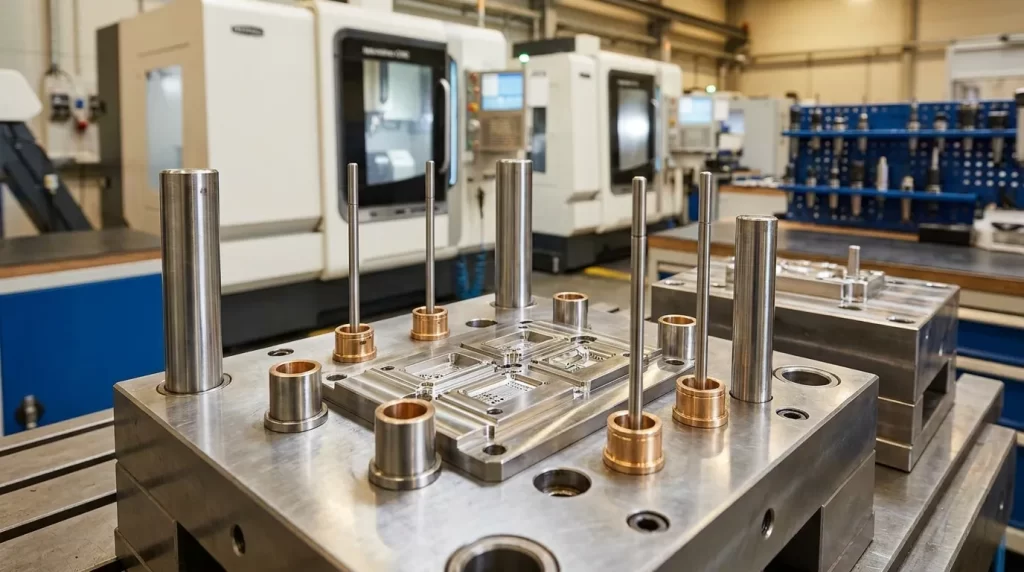
Precision components in molds are high-tolerance parts designed to maintain alignment, repeatability, and dimensional accuracy during repeated production cycles. They reduce variation, minimize wear-related defects, and improve mold lifespan.
W produkcji form, precision components refer to parts that must maintain exact positioning under repeated mechanical stress. These components include guide posts, tulejki, Sworznie wyrzutowe, Rękawy, and cavity inserts. Even a small dimensional shift can create flash, Przyklejanie się, or inconsistent plastic parts.
The need for precision becomes more obvious in high-cycle molds. A mold producing thousands of parts each day cannot rely on loose-fitting components. Wear increases quickly when alignment drifts, especially in molds processing abrasive resins or thin-wall parts.
Manufacturers often use hardened tool steels, precyzyjne szlifowanie, Obróbka EDM, and advanced inspection systems to maintain dimensional consistency. A broader overview of mold systems and component categories is available in this Kompletny przewodnik po komponentach formy.
For buyers comparing suppliers, the key issue is not just machining capability. It is whether the supplier can maintain repeatability over long production runs using properly engineered Elementy precyzyjnej formy.
Which mold components require the highest precision?
Systemy prowadzenia, ejector components, and cavity alignment parts usually require the highest precision because even small dimensional variation can create flash, mismatch, Przedwczesne zużycie, or unstable part quality.
Not every mold component needs micron-level tolerances. Some areas are far more sensitive to dimensional variation than others. Guide systems and moving parts usually experience the highest stress and alignment pressure during production.
Systemy prowadzenia
Guide posts and bushings control mold alignment during opening and closing. If these parts wear unevenly, cavity surfaces may no longer match correctly. That often causes flash on finished parts or visible mismatch lines.
Automotive trim molds are a common example. A guide-post tolerance difference as small as ±0.01 mm can affect visible surface quality on exterior plastic parts.
Systemy wyrzutowe
Ejector pins and sleeves require smooth movement and consistent positioning. Excess friction or slight misalignment increases wear and can damage molded parts during ejection.
In high-volume electronics production, ejector pins often fail early because of short cycle times and repeated friction contact. Poor alignment accelerates galling and surface scoring.
| Komponent formy | Dlaczego precyzja ma znaczenie | Typowe ryzyko awarii |
|---|---|---|
| Punkty przewodnika | Utrzymuje wyrównanie formy | Błysk i niedopasowanie |
| Tuleje | Steruje stabilnością ruchu | Nierówne zużycie |
| Sworznie wyrzutowe | Wspiera czyste zwalnianie części | Wbijanie się w szpilkę |
| Wkładki rdzeniowe | Utrzymuje dokładność wymiarową | Niespójność części |
| Rękawy | Zmniejsza ruch tarcia | Punktacja nawierzchni |
Pozyskiwanie producentów Części do wyrównania formy should focus on repeatability and wear performance instead of chasing the tightest possible tolerance everywhere.
What tolerance range is considered high precision for mold components?
High-precision mold components commonly operate within ±0.01 mm tolerance or tighter depending on mold complexity, Typ żywicy, and production volume requirements.
Tolerance requirements depend on the mold application. Thin-wall packaging molds and medical molds usually require tighter dimensional control than general consumer products. Według Attur International, precision machining applications often operate within ±0.01 mm tolerance ranges.
That does not mean every component should be machined to the tightest possible limit. Ultra-tight tolerances are not automatically better. If the mold application does not require them, they can increase cost without improving production stability.
| Typ zastosowania | Typowy wymóg tolerancji |
|---|---|
| Ogólne elementy formy | ±0.02 mm |
| Części precyzyjnego wyrównania | ±0.01 mm |
| Listwy cienkościenne | ±0.005 mm |
| Medyczna lub mikroformowanie | Below ±0.005 mm |
Tolerance planning should match actual production conditions. High-volume molds processing abrasive materials usually benefit more from stable wear resistance than from unnecessary ultra-fine tolerances.
Why does wear resistance matter in injection molds?
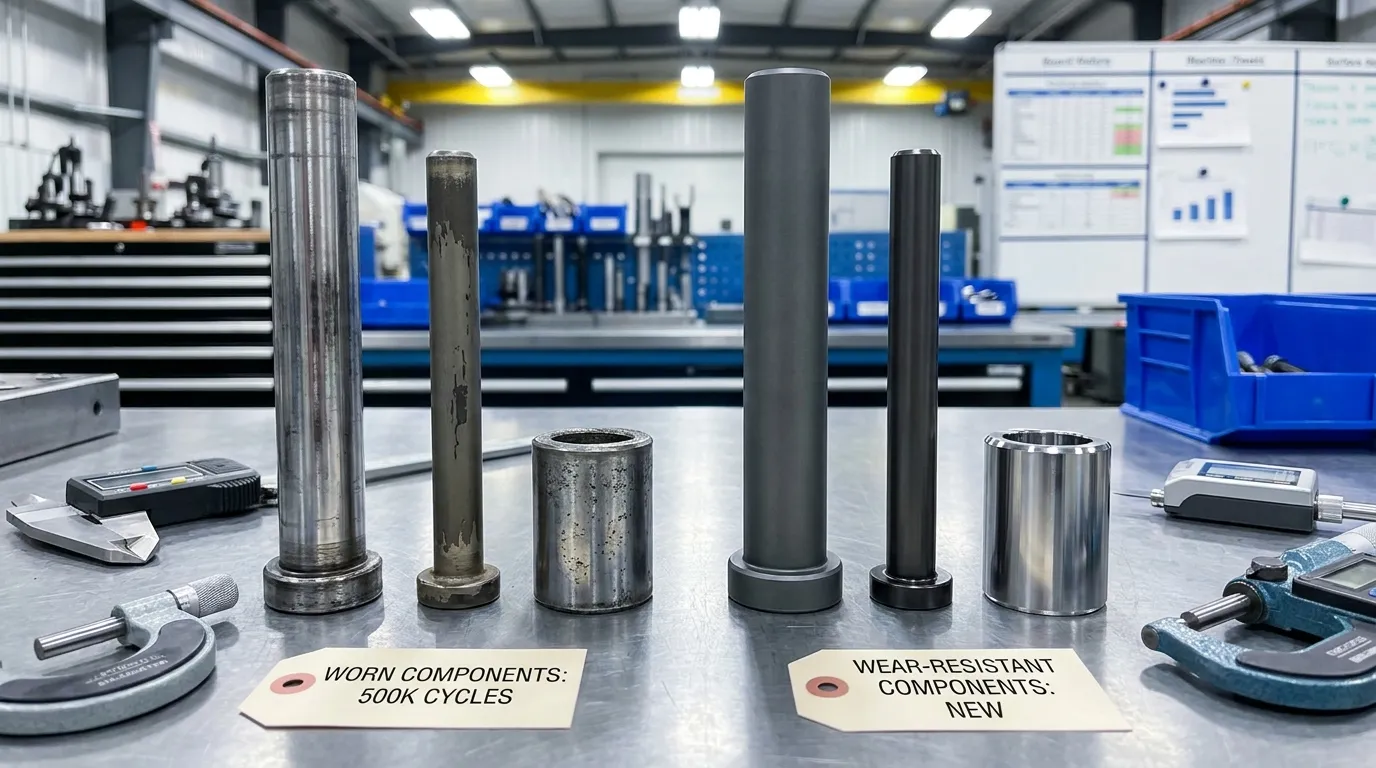
Wear resistance directly affects mold lifespan, cycle stability, and part consistency. Poor wear performance increases maintenance frequency, dryf wymiarowy, and the risk of flash or sticking during production.
Mold components experience repeated friction, Ciśnienie, and heat during production. Z czasem, these forces remove material from contact surfaces and reduce alignment accuracy. Once wear begins, dimensional variation spreads quickly through the entire mold system.
Abrasive plastics make the problem worse. Glass-filled resins and engineering plastics create higher friction loads that accelerate surface damage. Components that start with weak hardness or poor surface treatment often fail much earlier than expected.
Typowe punkty zużycia
The most common wear locations include:
- Słupki drogowe i tuleje
- Sworznie wyrzutowe
- Rdzenie przesuwające się
- Powierzchnie odcinające
- Tuleje i ruchome wkładki
Coatings help, but they cannot compensate for poor alignment or weak base material selection. A nitrided surface on a poorly fitted guide system will still wear unevenly under repeated load.
Lista kontrolna dotycząca uszkodzenia przez zużywanie przez pleśń
| Znak ostrzegawczy | Prawdopodobna przyczyna | Zalecane działanie |
|---|---|---|
| Błysk na formowanych częściach | Zużycie wyrównania | System inspekcji przewodników |
| Wbijanie się w szpilkę | Powierzchniowe galeszenie | Wymień lub pokryj sworznie wyrzucające |
| Nierówne zużycie jamy | Niska twardość | Ulepsz klasę materiałową |
| Punktacja nawierzchni | Uszkodzenia spowodowane tarciem | Poprawa smarowania |
| Częsta konserwacja | Słaba odporność na zużycie | Przegląd strategii powłoki |
Dla producentów porównujących Części formy odporne na zużycie, the better long-term choice is often the component that reduces downtime rather than the one with the lowest purchase price.
Which materials and coatings improve mold component lifespan?
High-grade tool steels combined with surface treatments like nitriding or PVD coatings improve hardness, Zmniejszaj tarcie, and extend the operating life of precision mold components under repeated production stress.
Material selection affects both wear resistance and dimensional stability. Hardened tool steels are common because they maintain strength under repeated mechanical load. Surface treatments improve resistance to friction and abrasion without changing the entire component structure.
Nitriding is widely used because it hardens the outer surface while maintaining core toughness. PVD coatings reduce friction and improve release performance on moving parts.
| Materiał lub powłoka | Główna zaleta | Typowe zastosowanie |
|---|---|---|
| Stal narzędziowa | Wysoka twardość | Podstawowe komponenty |
| Nitridowanie | Odporność na zużycie powierzchni | Systemy prowadzenia |
| Powłoka PVD | Niższe tarcie | Sworznie wyrzutowe |
| Obróbka cieplna | Stabilność wymiarowa | Elementy konstrukcyjne |
A supplier comparison often shows the real value of coatings. One production facility using coated bushings reduced maintenance intervals compared with untreated steel bushings operating under the same cycle conditions.
Custom precision components are valuable for high-cycle or complex molds, but standard parts are often the smarter choice for easier maintenance and replacement. Buyers evaluating Trwałe elementy formy should balance lifespan, Prędkość zastępcza, and total operating cost.
How are precision mold components inspected and verified?
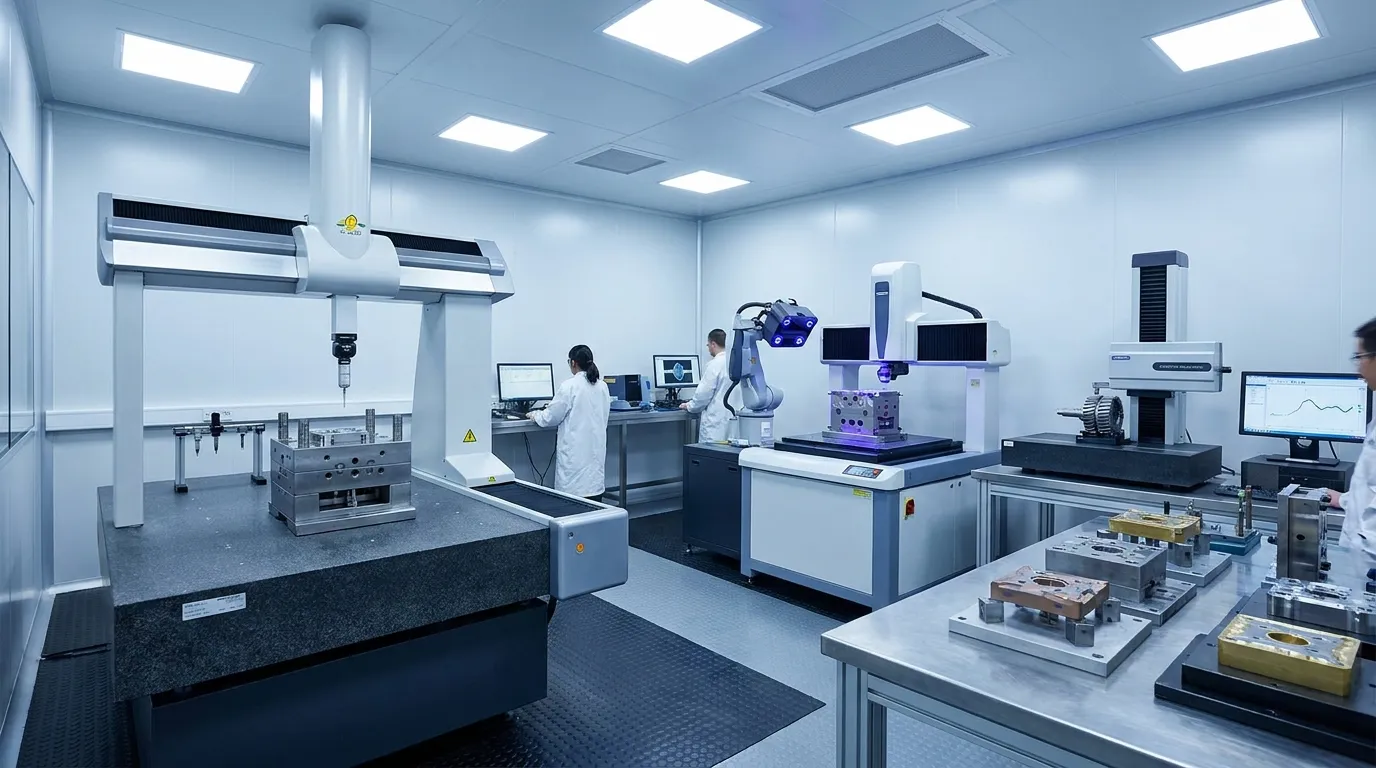
Manufacturers verify precision mold components using contour measurement systems, optical inspection, and dimensional metrology tools to confirm tolerance accuracy and surface conformity before production use.
Inspection matters because even small dimensional variation can affect mold performance. Most suppliers use multiple verification methods depending on component complexity and tolerance requirements.
Według MinebeaMitsumi, precision manufacturing depends heavily on dimensional consistency and stable machining accuracy.
Typowy proces inspekcji
- Początkowe pomiary wymiarowe za pomocą zacisków lub mikrometrów
- Weryfikacja precyzji za pomocą CMM lub systemów pomiaru konturowego
- Inspekcja powierzchni pod kątem śladów zużycia lub wad wykończeniowych
- Ostateczna weryfikacja powtarzalności przed wysyłką
Optical inspection systems are common for smaller components with complex geometry. Contour measuring equipment helps verify profiles and edge accuracy on inserts and precision-fit parts.
Inspection also helps identify process drift before it becomes a production issue. In thin-wall molding, a ±0.01 mm alignment variation can create inconsistent cavity fill and visible defects across thousands of parts.
Are custom precision components always better than standard parts?
Custom precision components are not always the best choice. They work well for demanding molds with tight tolerances or unusual geometry, but standard components are often easier to replace and maintain during regular production.
The decision depends on production volume, Złożoność, oraz strategię utrzymania. A custom component may improve cycle stability in a high-volume automotive mold, but it can also increase lead time and replacement cost.
Tabela decyzyjna o precyzji vs Standardowych Komponentach
| Sytuacja | Lepszy wybór | Dlaczego |
|---|---|---|
| Produkcja wielkomasowa | Niestandardowe części precyzyjne | Lepsza długoterminowa stabilność |
| Proste produkty konsumenckie | Części standardowe | Szybsza wymiana |
| Formowanie z ciasnymi tolerancjami | Części niestandardowe | Ulepszone przebieganie |
| Środowiska częstej konserwacji | Części standardowe | Łatwiejsze pozyskiwanie |
| Złożona geometria formy | Części niestandardowe | Lepsze dopasowanie i osiągi |
A buyer producing low-volume consumer products may gain little value from expensive custom alignment systems. Z drugiej strony, medical or electronics molds often justify higher precision because downtime and defect rates carry much higher production costs.
The smarter approach is matching component strategy to production conditions instead of assuming tighter tolerance always improves results.
How do sourcing and customs delays affect precision component supply?
Precision mold components often have longer sourcing timelines because they require specialized machining, inspekcja, and export documentation. Customs delays can add another layer of risk when replacement parts are needed quickly.
Shipment documentation matters more in 2026 because import systems are stricter in several regions. The EU’s Import Control System 2 (ICS2) requires more detailed shipment information for imported goods.
A common problem is vague shipment labeling. One supplier described mold components simply as “machine parts,” which delayed customs clearance because the classification lacked enough detail.
Lista kontrolna wysyłki komponentów precyzyjnych
- Potwierdź dokładność kodu HS przed wysyłką
- Używaj szczegółowych opisów części
- Weryfikacja dokumentacji materiałowej
- Uwzględnij specyfikacje wymiarowe, gdy jest to wymagane
- Potwierdź wymagania dotyczące zgodności w destynacji
- Przegląd dokumentację importową przed wysyłką
Według Wytyczne DHL dotyczące opóźnień w odprawie celnej oraz współczesne Biuletyny handlowe CBP, incomplete documentation remains a major cause of shipping disruption.
Co robić dalej
Choosing the right precision components comes down to production stability, Odporność na zużycie, and realistic tolerance requirements. The best option is not always the tightest or most expensive part. It is the component that maintains accuracy over time without creating unnecessary maintenance cost or sourcing delays.
If you are reviewing mold performance problems, start with alignment systems, ejector components, and wear surfaces first. Those areas usually reveal the earliest signs of dimensional drift. For a broader understanding of mold systems and applications, to Przewodnik po formowaniu wtryskowym tworzyw sztucznych provides additional context on how molds are designed and used across production environments.
Najczęściej zadawane pytania
What are precision components used for in molds?
Precision components maintain alignment, Dokładność wymiarowa, and repeatability inside mold systems. They help reduce defects, improve consistency, and extend mold lifespan during repeated production cycles.
What tolerance is considered high precision in mold manufacturing?
High precision in mold manufacturing commonly means tolerances around ±0.01 mm or tighter depending on the application. Critical mold areas may require even smaller variation for stable production.
Które elementy formy zużywają się najszybciej?
Sworznie wyrzutowe, guide systems, and high-friction contact surfaces usually experience the fastest wear. Słabe smarowanie, Niedopasowanie, and abrasive materials accelerate failure.
Are coated mold components worth the cost?
Coated components often last longer and reduce friction in high-cycle production environments. The added cost is usually justified when downtime or replacement frequency becomes expensive.
How are precision mold parts inspected?
Manufacturers use contour measuring systems, optical inspection equipment, and dimensional metrology tools to verify tolerances and surface quality. Inspection confirms repeatability before production use.
Can standard mold components replace custom precision parts?
Standard components work well for many general applications, but custom parts are often necessary for tight tolerances, unusual geometries, or high-volume production stability.
Udostępnij:



Napisane przez Sunshine
W Sunshine, Jesteśmy profesjonalnym producentem i dostawcą komponentów do precyzyjnych form, oferując szeroką gamę produktów do tłoczenia i formowania wtryskowego. Naszym głównym celem są formy do dziurkania, Sworznie wyrzutowe i tuleje, oraz słupy i tuleje. Dzięki zaawansowanej obróbki CNC, Ścisła kontrola jakości, oraz silne możliwości produkcyjne, Zapewniamy niezawodność, Części o wysokiej precyzji, wraz ze standardowymi komponentami dostępnymi na stanie, zapewniającymi szybkie i efektywne globalne dostawy.
WIADOMOŚCI
UZYSKAJ USŁUGĘ
Z wysokiej jakości częściami dostosowanymi do każdego budżetu oraz przyjaznym personelem przeszkolonym, by Twoja wizyta była poinformowana i bezproblemowa.
