



Precyzyjne komponenty form: Przewodnik po wysokoprecyzyjnych zespołach form
Precision mold components improve mold alignment, Powtarzalność, and long-term production stability by maintaining tight tolerances across repeated manufacturing cycles. Komponenty takie jak słupki przewodnie, tulejki, Sworznie wyrzutowe, and inserts directly affect flash control, dimensional consistency, Odporność na zużycie, oraz życie pleśni. Wybór odpowiednich materiałów, poziomy twardości, and fit tolerances helps reduce downtime, minimize repairs, and maintain reliable high-volume production.
High-accuracy molds depend on more than cavity design alone. The quality and fit of each internal component determine how consistently the mold performs after thousands or even millions of cycles. Słabe ustawienie, nierówne zużycie, and loose tolerances often start with small component failures that grow into expensive production issues. Understanding which precision parts matter most helps buyers and engineers build more stable mold assemblies from the start.
What are precision mold components?
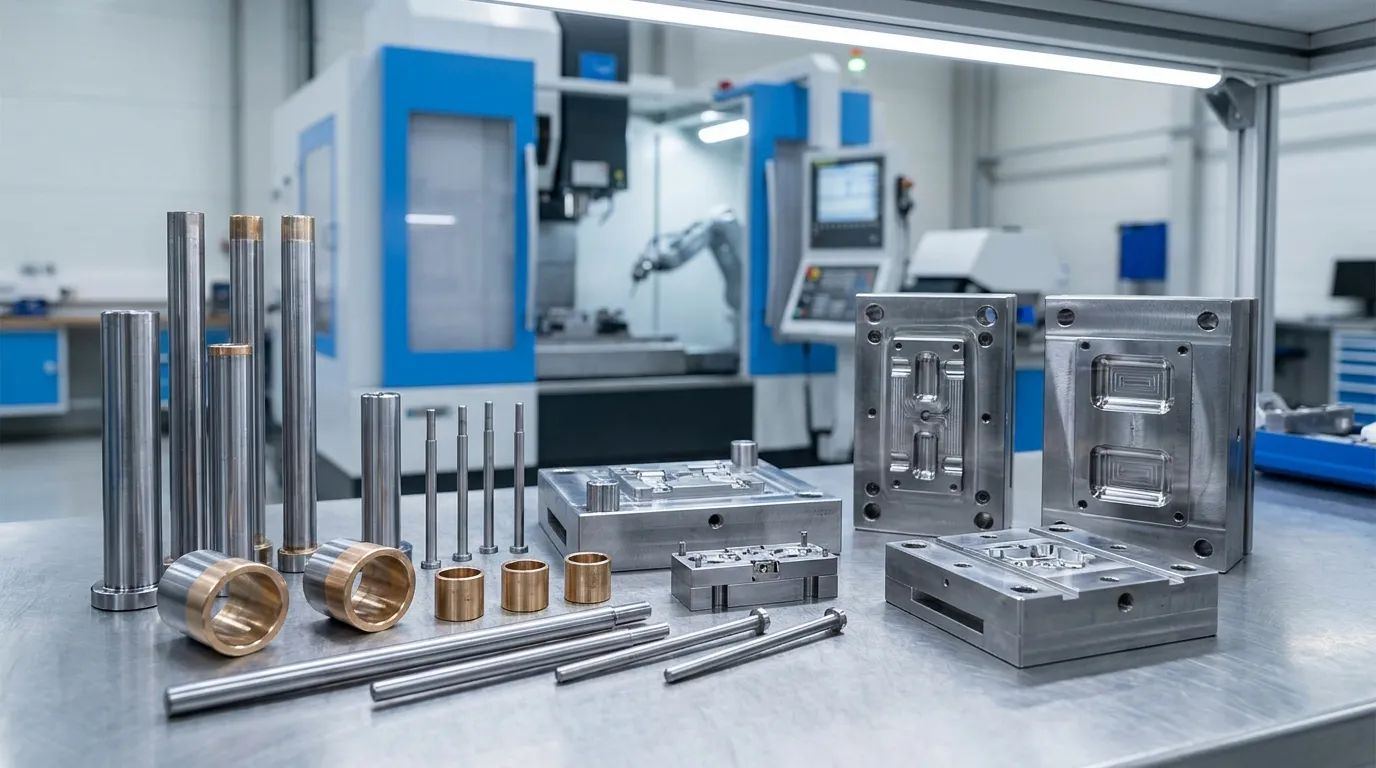
Precision mold components are high-tolerance parts used to maintain alignment, Powtarzalność, and dimensional stability inside mold assemblies. Components like guide posts, tulejki, Sworznie wyrzutowe, and inserts directly affect mold accuracy, Odporność na zużycie, and production consistency over long manufacturing cycles.
These components are machined and ground to tight tolerances so mold halves close accurately during every production cycle. Even small alignment errors can create flash, nierówne zużycie, or dimensional variation in molded parts. That is why high-cycle molds rely heavily on precision-fit internal systems.
| Składnik | Główna funkcja |
|---|---|
| Punkty przewodnika | Wyrównaj połówki formy |
| Tuleje | Zmniejsz zużycie podczas ruchu |
| Sworznie wyrzutowe | Uwalnianie form części |
| Inserty | Cechy kluczowych części form |
| Rękawy | Ruch wyrzutnika wspomagającego |
| Jamy i rdzenie | Kształtuj produkt końcowy |
Manufacturers often combine hardened tool steels and carbide materials to improve wear resistance in these areas. Według Przegląd komponentów do precyzyjnego formowania Nidec, precision-fit mold elements are widely used in applications requiring stable dimensional control and repeatable production accuracy.
For a broader overview of mold system architecture, the Kompletny przewodnik po komponentach formy explains how these assemblies fit into the larger injection molding process.
Możesz też zbadać powiązane tematy Systemy komponentów formowych used in different tooling configurations.
Which precision mold components affect alignment the most?
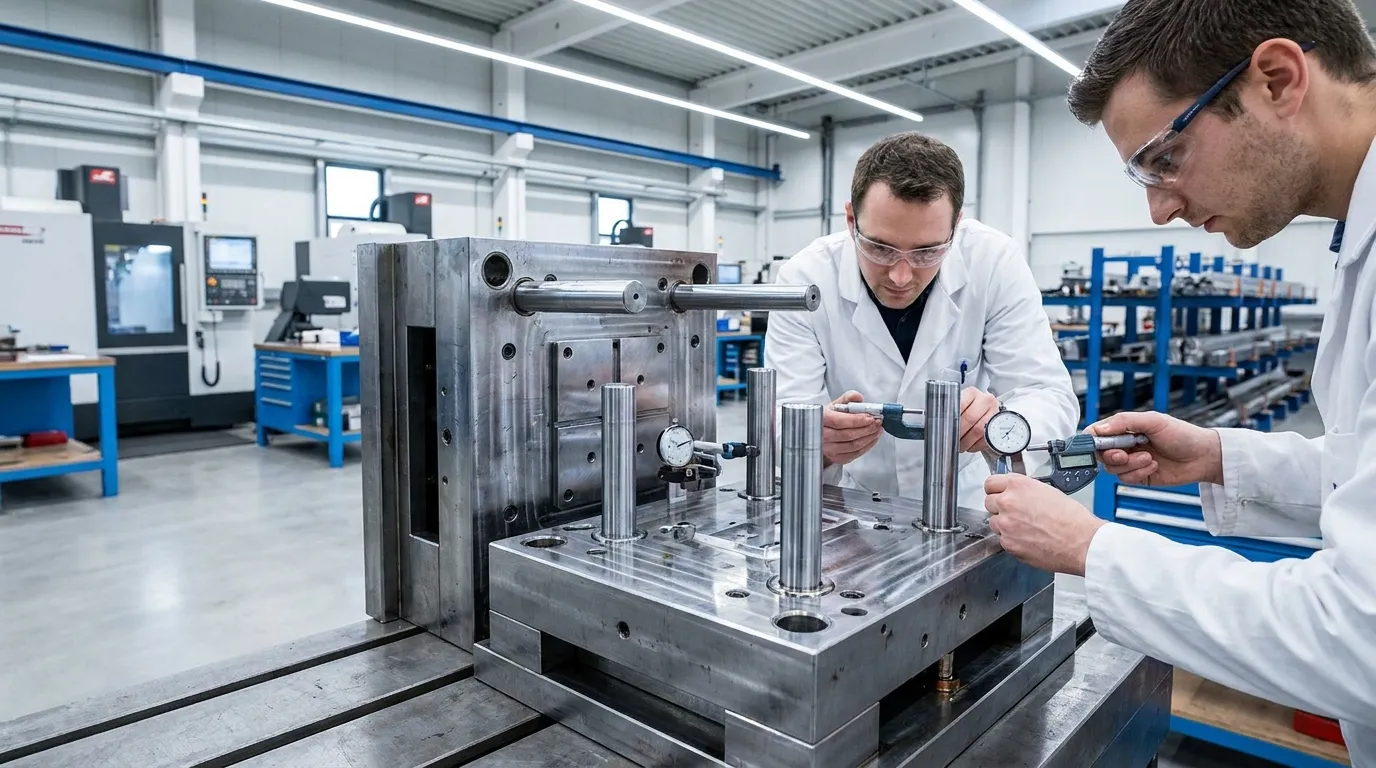
Punkty przewodnika, tulejki, and precision inserts have the biggest impact on mold alignment because they control cavity positioning during repeated production cycles. Poor fit or premature wear in these components increases flash risk, Wariacja wymiarowa, and mold instability.
Alignment problems rarely begin with major mold damage. In most cases, wear starts gradually inside guide systems or mating surfaces. Once movement develops between mold halves, the cavity no longer closes consistently, and defects become harder to control.
Słupki drogowe i tuleje
Guide posts and bushings absorb repeated opening and closing movement during every molding cycle. Jeśli te części zużywają się nierównomiernie, the mold halves can shift slightly during closure. That small shift may create flash, burrs, or part mismatch over time.
A high-cycle automotive grille mold is a common example. After extended production, worn bushings can create enough play to cause visible flashing along long cosmetic edges. Replacing only the worn guide system often restores part quality without rebuilding the full mold.
Wkładki i ubytki
Precision inserts also affect alignment because they maintain cavity positioning in critical areas. Loose insert fit can create variation in wall thickness or gate geometry, especially in medical or electronics molds.
Low-cost insert systems are not always the best choice. They may reduce initial tooling cost, but frequent replacement and production instability often erase those savings during long production runs.
Tabela ryzyka awarii komponentów precyzyjnych
| Składnik | Powszechny problem zużycia | Objawy produkcyjne | Zalecana aktualizacja |
|---|---|---|---|
| Punkt przewodnikowy | Zużycie powierzchni | Błyskanie na linii rozdzielczej | Utwardzony system prowadnic |
| Tuleja | Wzrost przesunu | Niedopasowanie formy | Tulejka precyzyjnie szlifowana |
| Wkład | Zużycie krawędzi | Wariacja wymiarowa | Wkład węglikowy |
| Sworzeń wyrzutnika | Galling | Przyczepianie części | Wypolerowany, utwardzony sworzeń |
Producenci pracujący z narzędziami o ścisłych tolerancjach często przechodzą na Systemy precyzyjnego prowadzenia to reduce long-term alignment drift.
How do tight tolerances improve repeatability in mold assemblies?
Tight component tolerances reduce movement between mating mold parts during repeated cycles. Better fit improves cavity alignment, stabilizes ejection, reduces flashing, and helps maintain consistent part dimensions during long production runs.
Repeatability matters most in high-volume production. A mold that performs well for 5,000 cycles may still fail in long-term production if clearances grow too quickly. Precision-ground components slow that wear progression by minimizing friction and movement between mating surfaces.
Tolerance control becomes especially important in molds with thin walls or cosmetic surfaces. Even minor cavity shift can affect appearance, Dopasowanie, or sealing performance. Medical device molds often use tighter ejector pin tolerances to avoid surface marks during part release.
- Bardziej stabilne wyrównanie wnęk
- Zmniejszone powstawanie błysków i zadziorów
- Lepsza spójność wymiarowa
- Łagodniejsze cykle wyrzutu
- Niższa częstotliwość konserwacji
Over-specifying one component rarely fixes the entire system. Tight tolerances only help when the full mold assembly can maintain alignment consistently. A precision insert paired with a worn guide system still creates instability during production.
Wielu dostawców narzędzi oferuje Części formy o ścisłej tolerancji specifically designed for long-cycle production environments.
What materials and hardness levels work best for precision mold parts?
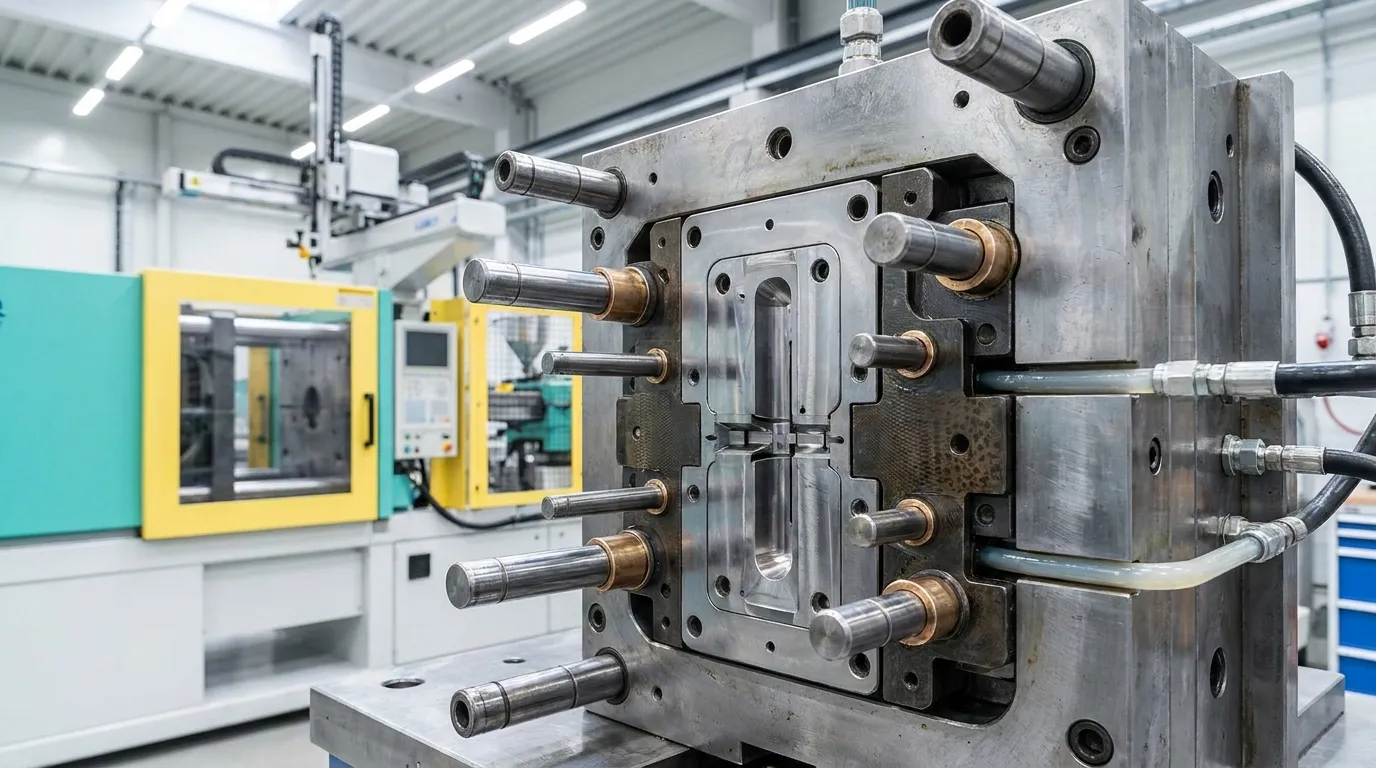
Material selection affects wear resistance, thermal stability, and service life in precision mold assemblies. Carbide components offer superior wear resistance, while hardened tool steels balance toughness, Obróbka, and long-cycle durability.
Material choice depends on cycle volume, molding conditions, oraz wymagane tolerancje. High-speed production creates friction and heat that quickly damage softer components. Harder materials hold dimensional accuracy longer under those conditions.
| Materiał | Typowa przewaga | Powszechne użycie |
|---|---|---|
| SKD11 | Odporność na zużycie | Wkładki i dziurki |
| SKH51 | Odporność na ciepło | Narzędzia o wysokiej prędkości |
| Węglik | Ekstremalna twardość | Precyzyjne wkładki |
| Stal narzędziowa | Zrównoważona wytrzymałość | Ogólne systemy formy |
Według Referencje do precyzyjnych komponentów iPROS, carbide and hardened tool steels are commonly selected for applications requiring long wear life and dimensional stability.
Heat treatment quality matters just as much as raw material selection. Poorly controlled hardening can create distortion or cracking, especially in precision-ground components. Buyers should ask suppliers about hardness range, Metody inspekcji, and traceability before approving production.
Consumer electronics molds often highlight this issue clearly. One housing mold using upgraded carbide inserts reduced replacement frequency significantly because the insert edges resisted wear during continuous production.
If material durability is a priority, te Materiały precyzyjne do narzędzi are commonly used in high-accuracy assemblies.
When do standard mold components stop being reliable?
Standard mold components often become unreliable in high-cycle, tight-tolerance, or medical-grade applications where wear accumulates quickly. Precision-ground or custom-fit components improve alignment stability and reduce downtime in these demanding environments.
Standard catalog components work well in many general-purpose molds. They are cost-effective and easy to replace. Problems usually appear when production cycles increase, tolerances tighten, or molded parts require strict cosmetic consistency.
Medical molding is one example where standard systems often struggle. Według Wytyczne dotyczące wymagań dotyczących formowania wtryskowego medycznego, repeatable dimensional control and traceability are critical in regulated production environments.
Standardowa vs Tabela Decyzyjna o Precyzyjnych Komponentach
| Warunki produkcji | Komponenty standardowe | Komponenty precyzyjne |
|---|---|---|
| Narzędzia o niskiej wydajności | Zazwyczaj akceptowalne | Opcjonalne |
| Powierzchnie kosmetyczne | Umiarkowane ryzyko | Polecam |
| Części medyczne | Często niewystarczające | Preferowane |
| Formy o wysokim cyklu | Szybsze zużycie | Lepsza długoterminowa stabilność |
| Ścisłe tolerancje | Możliwe problemy z przepustami | Lepsza powtarzalność |
A common mistake is delaying component upgrades until visible defects appear. By that stage, wear may already affect cavities, Wkładki, lub powierzchnie odcinające. Replacing guide systems earlier often costs far less than repairing damaged mold sections later.
How do precision components extend mold life?
Precision components extend mold life by reducing friction, Niedopasowanie, and uneven wear during repeated production cycles. Better fit between moving parts helps the mold maintain stable operation longer without frequent adjustments or repairs.
Long-cycle molds place constant stress on guide systems, ejector assemblies, and mating surfaces. Once clearances begin increasing, wear spreads quickly across neighboring components. That chain reaction shortens overall tooling life.
A production mold running one million cycles illustrates this clearly. In one automotive application, worn guide bushings caused cavity mismatch and flashing along cosmetic surfaces. Replacing the guide system restored alignment and delayed a far more expensive cavity rebuild.
Lista kontrolna poprawy życia pleśni
- Stosuj utwardzone systemy prowadnic do form o wysokim cyklu
- Dopasuj materiał wkładu do produkcji
- Regularnie kontroluj zużycie sworzni wyrzutnika
- Wymień zużyte tuleje zanim pojawią się uszkodzenia wnęki
- Utrzymuj regularne harmonogramy smarowania
- Monitorowanie wyrównania podczas konserwacji zapobiegawczej
Low-cost ejector systems often become the first major wear point in fast-cycle production. That is especially true in molds using aggressive ejection timing or thin-wall parts. Upgrading those systems early usually improves production stability and reduces downtime.
Możesz przeczytać więcej Odporne na zużycie elementy formy commonly used to improve tooling durability.
What should buyers evaluate before sourcing precision mold components?
Buyers should evaluate tolerance capability, Jakość obróbki cieplnej, Śledzenie materiału, Metody inspekcji, and delivery consistency before selecting a precision mold component supplier. These factors affect both mold stability and long-term production reliability.
A supplier's machining accuracy matters, but inspection capability matters just as much. Precision components should include documented dimensional checks, Weryfikacja twardości, and repeatable manufacturing controls.
- Zdolność tolerancji
- Dokładność szlifowania
- Spójność obróbki cieplnej
- Certyfikacja materiałów
- Jakość wykończenia powierzchni
- Niezawodność dostarczania
- Czasy realizacji wymiany
Production scheduling also affects sourcing decisions. Delayed component delivery can hold up mold trials, validation runs, or customer approvals. Some manufacturers now build extra inspection and logistics planning into production schedules to reduce tooling delays, as discussed in Analiza najnowszego planowania produkcji form.
Import timing may also affect tooling schedules in some regions. Buyers handling overseas shipments should review applicable customs and trade documentation requirements before finalizing delivery timelines. The Wytyczne Bangladeszu Celne is one example of how import procedures can influence manufacturing lead times.
Before selecting a supplier, it also helps to compare available Dostawca komponentów do form na zamówienie capabilities against actual production requirements instead of choosing based on price alone.
Poprawne wykonanie kolejnego kroku
Precision mold components directly affect alignment stability, dimensional consistency, oraz życie pleśni. Small differences in fit, Twardość, or wear resistance often become major production issues after extended cycles. That is why component selection should match the actual operating conditions of the mold, not just the initial tooling budget.
If your application involves tight tolerances, Powierzchnie kosmetyczne, medical parts, or high-cycle production, it is worth reviewing the full guide system, ejector assembly, and insert strategy before launch. Choosing the right precision mold components early usually reduces downtime, lowers maintenance costs, and keeps production more stable over time.
Najczęściej zadawane pytania
What are precision mold components?
Precision mold components are high-tolerance parts used to maintain alignment, stability, and dimensional accuracy inside mold assemblies. Common examples include guide posts, tulejki, Sworznie wyrzutowe, Wkładki, oraz ubytki.
Why are guide posts and bushings important?
Guide posts and bushings keep mold halves aligned during repeated opening and closing cycles. Poor alignment increases wear, flash defects, and dimensional inconsistency during production.
What materials are commonly used for precision mold parts?
Carbide and hardened tool steels like SKD11 and SKH51 are commonly used because they provide strong wear resistance and dimensional stability. Material choice depends on cycle volume, Wymagania tolerancyjne, oraz warunki eksploatacji.
How do ejector pins affect molding quality?
Ejector pins affect part release consistency and surface quality during mold opening. Poorly fitted or worn ejector pins can create marks, sticking problems, or uneven ejection force.
When should custom mold components be used?
Custom mold components are usually necessary when standard catalog parts cannot maintain required tolerances, fit conditions, or production durability. They are common in medical, Motoryzacja, and high-cycle tooling applications.
How do precision components improve mold life?
Precision components reduce friction, Niedopasowanie, and uneven wear during repeated cycles. Better fit and surface finish help molds maintain stable operation for longer production runs.
Udostępnij:



Napisane przez Sunshine
W Sunshine, Jesteśmy profesjonalnym producentem i dostawcą komponentów do precyzyjnych form, oferując szeroką gamę produktów do tłoczenia i formowania wtryskowego. Naszym głównym celem są formy do dziurkania, Sworznie wyrzutowe i tuleje, oraz słupy i tuleje. Dzięki zaawansowanej obróbki CNC, Ścisła kontrola jakości, oraz silne możliwości produkcyjne, Zapewniamy niezawodność, Części o wysokiej precyzji, wraz ze standardowymi komponentami dostępnymi na stanie, zapewniającymi szybkie i efektywne globalne dostawy.
WIADOMOŚCI
UZYSKAJ USŁUGĘ
Z wysokiej jakości częściami dostosowanymi do każdego budżetu oraz przyjaznym personelem przeszkolonym, by Twoja wizyta była poinformowana i bezproblemowa.
