



Ejector Pins in Injection Molding: Funkcja, Rodzaje, and Failure Causes
Ejector pins injection molding systems use hardened steel pins to push cooled plastic parts out of a mold cavity after each cycle. Correct pin type, placement, and material selection help prevent ejector marks, Przyklejanie się, pin bending, and uneven ejection force. Most failures come from poor alignment, excessive force, Materiały ścierne, or weak maintenance practices.
A mold can produce accurate parts for years, then suddenly start leaving marks, Elementy przyklejające się, or bending pins. W wielu przypadkach, the ejector system is the problem. Ejector pins seem simple, but their size, placement, and surface condition affect cycle stability, cosmetic quality, oraz życie pleśni. Understanding how they work helps manufacturers reduce scrap, Czas wolny, and expensive tooling repairs.
What are ejector pins in injection molding?
Ejector pins in injection molding are hardened steel pins that push cooled plastic parts out of the mold cavity after molding. Their placement, Rozmiar, and material directly affect part quality, Stabilność cyklu, oraz żywotności pleśni.
Ejector pins are part of the mold ejection system. After the plastic cools and the mold opens, the pins move forward and push the molded part away from the core side of the mold. Bez nich, many parts would stick inside the cavity and stop production.
Most ejector pins are round hardened steel rods. They sit inside precisely machined holes and connect to an ejector plate behind the mold. When the machine activates the ejector system, the plate moves forward and drives the pins against the molded part.
The pin layout matters as much as the pins themselves. Poor placement can create visible marks, uneven force, or warped parts. Many manufacturers review the full Kompletny przewodnik po komponentach formy before finalizing ejection layouts because ejector design affects several connected mold systems.
How does the ejector pin system work during the molding cycle?
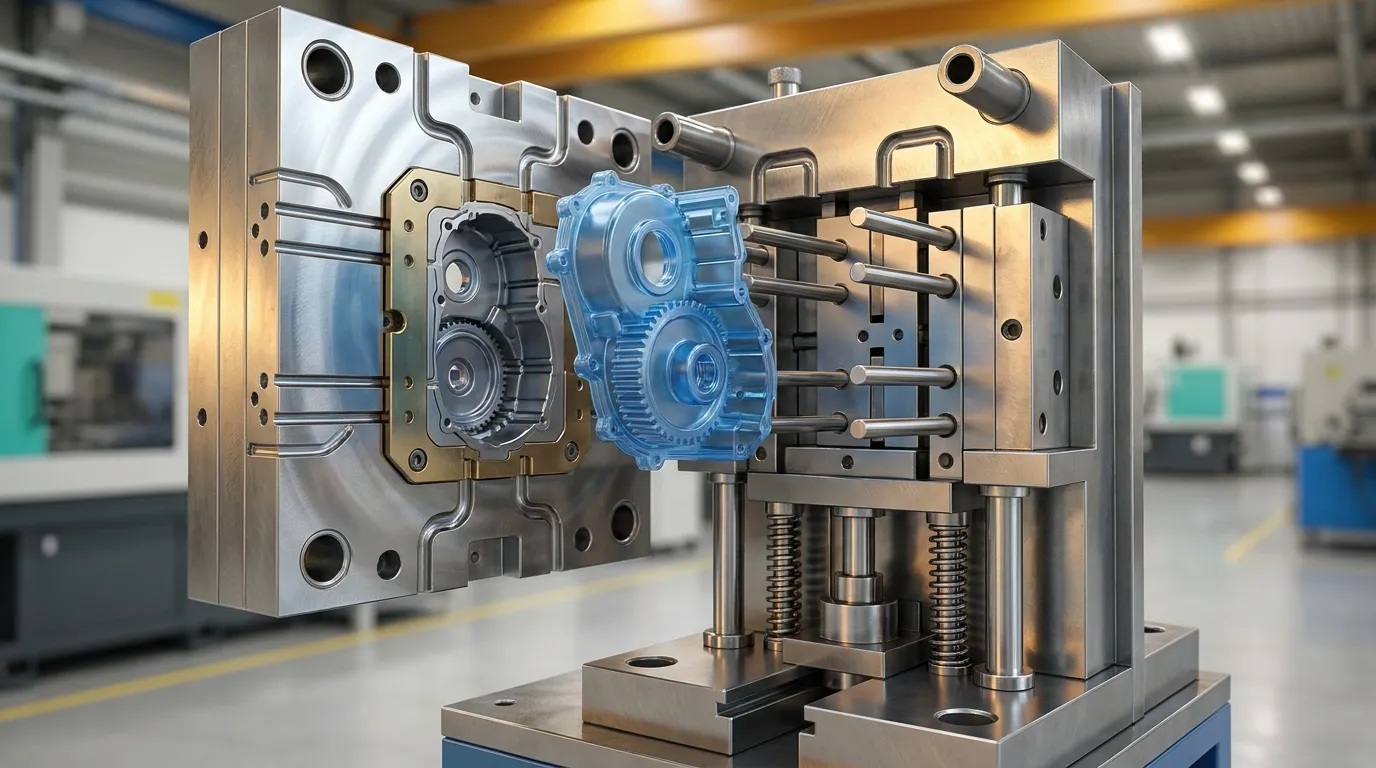
Po otwarciu formy, the ejector plate pushes ejector pins forward to release the cooled part from the cavity. The pins retract before the next cycle begins, making correct timing essential for smooth production.
The ejection sequence starts after cooling is complete. Once the mold halves separate, the molded part usually remains attached to the core side because of shrinkage and surface friction. The ejector system then activates and pushes the part free.
- Plastik stygnie wewnątrz komory
- Pleśń się otwiera
- Płyta wyrzutowa przesuwa się do przodu
- Sworznie stykają się z częścią
- Części wypuszczone z rdzenia
- Kołki się chowały
- Pleśń zamyka się na kolejny cykl
Według Prowadnica sworzni wyrzutnika WayKen, balanced ejection force is important for stable molding cycles. Uneven pressure can twist thin-wall parts or create visible stress marks.
Large molded parts often need multiple pins working together. A thin electronics housing, na przykład, may use several small pins placed near ribs and support walls to spread force evenly. Large flat panels may also use ejector sleeves or stripper systems to reduce warping.
What types of ejector pins are used in injection molds?
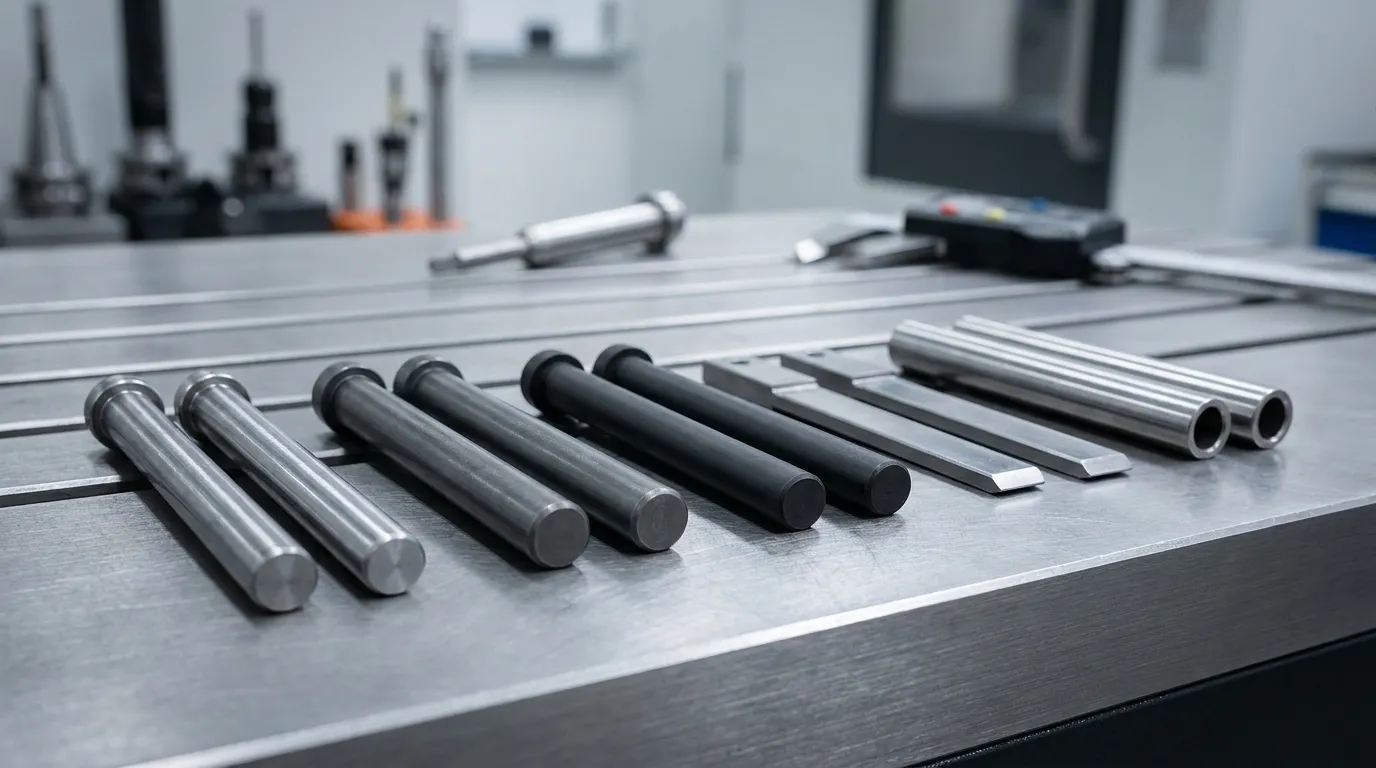
Different ejector pin types solve different molding problems. Through-hardened pins handle general applications, nitrided pins improve wear resistance, and coated pins reduce friction in demanding or abrasive molding conditions.
Manufacturers choose ejector pin types based on resin type, cycle count, Wymagania kosmetyczne, and mold geometry. Standard pins work well for many molds, but high-volume production usually needs upgraded materials or coatings.
| Typ sworzni | Najlepsze zastosowanie | Główna zaleta | Główne ograniczenie |
|---|---|---|---|
| Sworznie hartowane przez przez-zewnątrz | Ogólne formowanie | Niski koszt | Szybsze zużycie |
| Nitrydne piny H13 | Formy o wysokim cyklu | Lepsza odporność na zużycie | Wyższa cena |
| Czarne szpilki | Żywice ścierne | Zmniejszone tarcie | Koszt powłoki |
| Wyrzutniki łopat | Cienkie żebra | Lepsze wsparcie | Skomplikowane obróbki |
| Tuleje wyrzutowe | Bossowie rundy | Równe ciśnienie | Większy zasięg |
Standard hardened pins are not always the best option. Abrasive resins and high-cycle molds usually justify nitrided or coated pins despite the higher upfront cost. Replacing worn pins repeatedly often costs more than upgrading materials early.
Manufacturers working with textured consumer products also use coated pins to reduce visible drag marks. Some molds for medical housings use low-friction coatings because smooth release is more important than initial tooling cost.
Gdy tuleje wyrzutowe działają lepiej niż sworznie
Ejector sleeves work better when the molded feature is round and hollow, such as screw bosses or cylindrical supports. A sleeve spreads force around the feature instead of concentrating pressure in one small area.
For molds with many precision moving parts, manufacturers often review compatible Części zamienne do formy before selecting ejector systems.
What materials and coatings are best for ejector pins?
H13 steel and hardened tool steels are commonly used for ejector pins because they resist heat, zużycie, and deformation. Specialized coatings like DLC or nitriding reduce friction and extend service life in high-cycle molds.
Ejector pins operate under repeated pressure and heat. Soft materials wear quickly, especially in molds running glass-filled or abrasive resins. H13 tool steel is widely used because it balances toughness, Twardość, and thermal stability.
Heat treatment improves durability by increasing surface hardness. Nitriding adds another protective layer that helps reduce galling and surface wear. Według Prowadnica sworzni wyrzutnika Aco Mold, coated pins can also reduce friction in demanding molding conditions.
| Materiał lub powłoka | Główna zaleta | Najlepsza aplikacja |
|---|---|---|
| Stal H13 | Odporność na ciepło | Formy o wysokim cyklu |
| Hartowana stal narzędziowa | Ogólna trwałość | Produkcja standardowa |
| Powierzchnia nitridowana | Redukcja zużycia | Materiały ścierne |
| Powłoka DLC | Niższe tarcie | Elementy kosmetyczne |
| Powłoka PVD | Ochrona powierzchni | Długie serie produkcji |
Surface finish also affects performance. Rough pins create drag and increase sticking risk. Smooth polished surfaces usually improve release consistency and reduce cosmetic damage on visible products.
Producenci porównujący materiały narzędziowe często oceniają szerszą ocenę Elementy precyzyjnej formy at the same time because ejector durability affects overall mold maintenance schedules.
Why do ejector pins leave marks on molded parts?
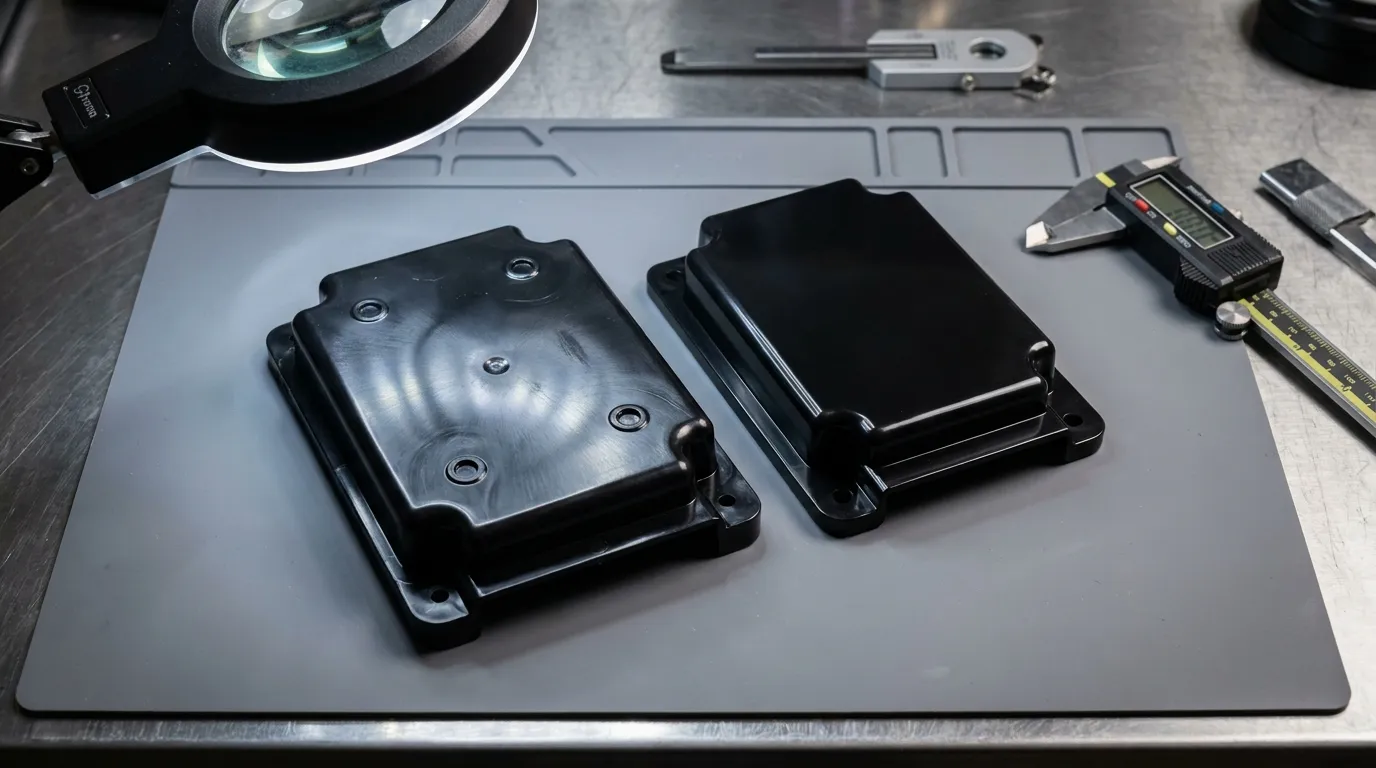
Ejector pin marks happen when concentrated ejection force pushes against soft or unsupported plastic surfaces. Złe umiejscowienie bolców, excessive force, or mismatched textured surfaces can make the marks more visible.
Ejector marks are one of the most common cosmetic issues in injection molding. They usually appear as small circular marks, glossy spots, or raised rings on the finished part surface. W wielu przypadkach, the marks are harmless. On cosmetic products, they can become a quality problem.
Według Wytyczne Protolabs dotyczące umieszczania sworzni wyrzutnika, unsupported surfaces and high force concentration increase the visibility of marks. Thin walls and glossy finishes are especially sensitive.
| Objawy | Prawdopodobna przyczyna | Zalecane rozwiązanie |
|---|---|---|
| Głębokie okrągłe znaki | Nadmierna siła wyrzutowa | Dodaj punkty wsparcia |
| Błyszczące plamki po szpilkach | Niedopasowanie powierzchni | Kołki dopasowania tekstur |
| Wypaczony panel | Nierówna siła | Układ pinów rebalansujących |
| Dramy dragowe | Słabe wypuszczenie | Poprawa polerowania/powłoki |
Adding more ejector pins does not automatically improve ejection. Poorly balanced layouts can actually increase cosmetic defects and pin wear. The goal is balanced force, not maximum pin count.
Dopuszczalne a nieakceptowalne znaki wyrzutnika
Small witness marks are normal in many industrial parts. Internal housings and hidden components often allow light pin marks without affecting function.
Visible consumer products are different. A textured electronics cover or automotive trim panel may reject even minor cosmetic defects. Some manufacturers texture the pin face to match surrounding mold surfaces and reduce visible contrast.
For broader mold design basics, readers can review Podstawy formowania wtrysków plastiku alongside ejector system planning.
How are ejector pins positioned correctly?
Correct ejector pin placement spreads force evenly across the molded part. Poor positioning creates stress concentration, bending, Odkształcenie, or visible defects, especially in thin-wall parts.
Pins are usually placed near strong structural features such as ribs, Bossowie, and thicker wall sections. These areas can absorb ejection force without deforming. Thin unsupported surfaces should avoid direct pin contact whenever possible.
Large flat parts need careful force balancing. A wide plastic panel with only a few central pins may flex during ejection and create sink marks or distortion. Adding support points near the perimeter often improves stability.
How many ejector pins are needed?
The number depends on part geometry, resin shrinkage, Grubość ściany, and surface finish requirements. Według Przegląd sworzni wyrzutnika FirstMold, larger parts usually need more balanced support points to prevent localized stress.
A simple consumer electronics housing may use six to ten pins. A large automotive panel can require dozens of carefully positioned ejectors working together.
Lista kontrolna umieszczania sworzni wyrzutnika
- Umieść sworznie w pobliżu żeber i podpór konstrukcyjnych
- Unikaj bardzo widocznych powierzchni kosmetycznych
- Równomiernie rozłóż siłę na część
- Ostrożnie podtrzymuj sekcje cienkościenne
- Utrzymuj średnice bolców na tyle duże, by nie były zginane
- Dopasowuj powierzchnie o teksturze tam, gdzie wygląd ma znaczenie
- Sprawdź cofnięcie sworzni przed zamknięciem formy
Cosmetic surfaces should not rely on aggressive ejection force. Redesigning support geometry is often safer than simply increasing pin pressure.
What causes ejector pins to fail?
Ejector pins usually fail because of poor alignment, excessive ejection force, inadequate lubrication, Materiały ścierne, or uneven load distribution. Early symptoms include sticking, wear marks, bending, and unstable ejection cycles.
Pin failures rarely happen without warning. Most molds show early signs such as drag marks, inconsistent release, or visible wear long before a pin breaks completely. Catching those signs early helps avoid downtime and cavity damage.
Thin pins in deep cavities are especially vulnerable. A long unsupported pin can flex during ejection and gradually bend over repeated cycles. Abrasive resins also accelerate wear and increase friction.
Tabela diagnostyki awarii sworzni wyrzutnika
| Objawy | Prawdopodobna przyczyna | Wpływ na produkcję | Zalecane rozwiązanie |
|---|---|---|---|
| Zgięte sworznie | Nierówna siła lub niewielki sworzeń | Zniekształcenie części | Zwiększ podparcie lub średnicę |
| Szpilki do nakłucia | Słabe smarowanie | Cykl przerwania | Poprawa czyszczenia i smarowania |
| Galling | Tarcie między sworzniem a otworem | Punktacja nawierzchni | Używaj powłok lub polerowania |
| Złamane kręgle | Nadmierne ciśnienie | Uszkodzenia spowodowane pleśnią | Siła wyrzutu wyrównującego |
| Ślady zużycia | Żywica ścierna | Wady kosmetyczne | Materiał do ulepszania pinów |
Wygięte sworznie wyrzutowe
Automotive interior molds commonly experience pin bending around deep ribs and narrow support features. If the pin diameter is too small, repeated force cycles eventually create deflection.
Increasing the number of support points often works better than simply using more force. Balanced layouts reduce stress on individual pins and improve long-term mold stability.
Sworznie wyrzutowe z przyklejaniem
Pins stick when friction increases inside the ejector bore. Dirt, resin buildup, weak lubrication, or surface damage can all contribute to sticking problems.
Molds running high-cycle production schedules usually need regular inspection intervals. Many manufacturers combine ejector maintenance with broader Systemy komponentów układu inspections to reduce unexpected downtime.
How can manufacturers reduce ejector pin problems?
Most ejector pin failures can be reduced through correct pin sizing, balanced placement, Regularna inspekcja, lubrication control, and proper surface finishing. Preventive maintenance is usually cheaper than mold downtime and scrap losses.
The best prevention strategy starts during mold design. Proper pin diameter, placement, and support reduce stress before production even begins. Maintenance then keeps the system stable over long production runs.
High-volume molds benefit from scheduled cleaning and inspection cycles. Waiting for visible failure usually leads to more expensive repairs and production delays.
Lista kontrolna zapobiegania wyrzutowi
- Regularnie sprawdzaj sworznie pod kątem zużycia lub wygięć
- Polerowanie uszkodzonych powierzchni zanim rozprzestrzeni się gnieźd
- Wymiana słabych harmonogramów smarowania
- Do żywic ściernych używaj powlekanych sworzni
- Unikaj nadmiernego ciśnienia wyrzutowego
- Dopasuj teksturę szpilki na powierzchniach kosmetycznych
- Weryfikacja ustawienia płyty wyrzutowej podczas konserwacji
- Wymień zużyte tuleje, zanim ruch sworzni stanie się niestabilny
A medical mold producing smooth cosmetic housings, na przykład, may justify DLC-coated pins because reduced friction improves release consistency. A low-volume industrial housing may not need that extra cost.
Producenci zajmujący się długotrwałym zużyciem narzędzi czasem porównują trwałość wyrzutników z szerszymi uwagami Kontrola zużycia narzędzi strategies across different production systems.
Poprawne wykonanie kolejnego kroku
Ejector pins injection molding systems affect more than part removal. They influence cosmetic quality, Stabilność cyklu, maintenance costs, oraz żywotności pleśni. Small design decisions, such as pin placement or coating selection, can prevent major production problems later.
If a mold already shows sticking, witness marks, or bent pins, start by reviewing force distribution and support geometry before increasing ejection pressure. Many issues come from imbalance rather than insufficient force.
For new molds, focus on balanced layouts, durable materials, and realistic maintenance planning. Those choices usually cost less than repeated downtime and tooling repairs.
Najczęściej zadawane pytania
What are ejector pins used for in injection molding?
Ejector pins push cooled plastic parts out of the mold cavity after molding. They help automate part removal and keep production cycles consistent while reducing manual handling.
Why do ejector pins leave circular marks?
Ejector pin marks appear when force concentrates on small contact areas during part ejection. Słabe umiejscowienie, excessive pressure, or soft plastic surfaces can make the marks more visible.
What material is best for ejector pins?
Hardened tool steel and H13 steel are common choices because they resist heat, zużycie, and deformation. Coatings such as nitriding or DLC improve lifespan in abrasive molding environments.
How many ejector pins should a mold have?
The number of ejector pins depends on part size, Grubość ściany, Geometria, and ejection force requirements. Larger or more flexible parts usually need additional support points for balanced release.
What causes ejector pins to bend?
Ejector pins bend when they experience uneven force, Słabe ustawienie, excessive pressure, or weak support. Thin pins inside deep cavities are especially vulnerable to deflection over repeated cycles.
Can ejector pins be used on textured surfaces?
Tak, but the pin surface often needs matching texture treatment to avoid visible glossy circles. Proper finishing helps the ejector area blend with the surrounding molded surface.
Udostępnij:



Napisane przez Sunshine
W Sunshine, Jesteśmy profesjonalnym producentem i dostawcą komponentów do precyzyjnych form, oferując szeroką gamę produktów do tłoczenia i formowania wtryskowego. Naszym głównym celem są formy do dziurkania, Sworznie wyrzutowe i tuleje, oraz słupy i tuleje. Dzięki zaawansowanej obróbki CNC, Ścisła kontrola jakości, oraz silne możliwości produkcyjne, Zapewniamy niezawodność, Części o wysokiej precyzji, wraz ze standardowymi komponentami dostępnymi na stanie, zapewniającymi szybkie i efektywne globalne dostawy.
WIADOMOŚCI
UZYSKAJ USŁUGĘ
Z wysokiej jakości częściami dostosowanymi do każdego budżetu oraz przyjaznym personelem przeszkolonym, by Twoja wizyta była poinformowana i bezproblemowa.
