



Proces formowania wtryskowego: Przewodnik krok po kroku od projektowania do produkcji
Injection mold process describes the complete workflow used to design, manufacture, test, and mass-produce plastic parts using injection molding tools. The process includes DFM review, Projektowanie formy, Obróbka, Próby formowania, Próbkowanie, quality validation, and production ramp-up. Stable production depends on accurate tooling, controlled process parameters, and early defect prevention before full manufacturing begins.
Injection molding projects rarely fail because of one major issue. Most problems start with small design mistakes, rushed tooling decisions, or unstable sampling results. Understanding the full process helps buyers avoid delays, reduce tooling revisions, and improve production consistency. This guide explains each stage clearly, from early DFM review to final production approval.
What Is the Injection Mold Process?
Injection mold process refers to the complete workflow of designing, building, Testowanie, and using a mold to mass-produce plastic parts. The process includes DFM review, mold manufacturing, Próbkowanie, quality approval, and stable production ramp-up.
The process starts long before molten plastic enters a mold cavity. Manufacturers first review the product design, evaluate moldability, and identify production risks. This early planning stage has a major effect on tooling quality, Stabilność cyklu, oraz długoterminowe koszty produkcji.
Once the design is approved, the mold moves through machining, fitting, Polerowanie, and assembly. After tooling is complete, manufacturers perform mold trials and sample inspections before releasing the tool for production. Według Przegląd formowania wtryskowego w katalogu IQS, injection molding remains one of the most common manufacturing methods for high-volume plastic parts.
If you're new to tooling fundamentals, to Przewodnik po formowaniu wtryskowym tworzyw sztucznych gives broader background on mold structures and manufacturing systems. Możesz też recenzować Podstawy projektowania form plastikowych to understand how product geometry affects tooling decisions.
How Does the Injection Mold Process Work Step by Step?
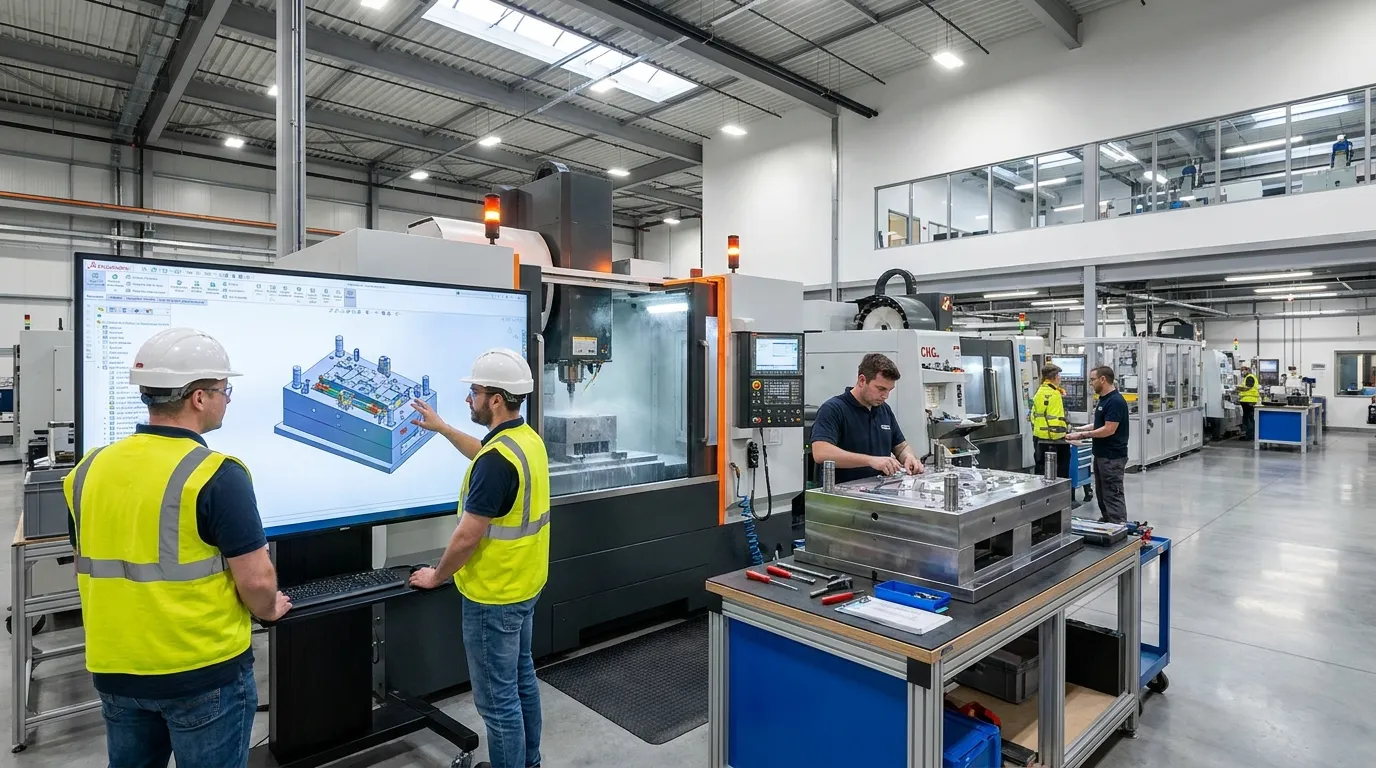
The injection mold process starts with design review and DFM analysis, followed by mold design, Obróbka, Zgromadzenie, Próbkowanie, Testowanie, and final production approval. Stable mass production begins only after part quality and cycle consistency are confirmed.
Most injection molding projects follow the same core sequence. The exact timeline changes based on complexity, tooling size, and production requirements, but the overall workflow stays similar across industries.
| Scena | Główny cel | Wspólne wyjście |
|---|---|---|
| Recenzja DFM | Zidentyfikuj ryzyko formowania | Zalecenia konstrukcyjne |
| Mold design | Stwórz układ narzędzi | Pliki form 3D |
| Produkcja narzędzi | Zbuduj formę | Komponenty formy obrabiane |
| Próba z formą | Testowa wydajność formy | Części próbki T1 |
| Walidacja | Potwierdź spójność jakości | Zatwierdzone próbki |
| Production ramp | Produkcja stabilizująca | Pełna produkcja |
Przegląd projektu i DFM
The first stage focuses on manufacturability. DFM, or Design for Manufacturing, checks whether the part can be molded consistently without excessive defects or tooling risk. Engineers review wall thickness, Kąty draftu, podcina, gate locations, and material flow before steel cutting begins.
Obudowa elektroniki użytkowej jest częstym przykładem. If the housing wall thickness changes late in the project, the mold may require additional machining after sampling. That adds cost and delays production approval. Early DFM prevents many of these problems before tooling starts.
For a deeper breakdown of design optimization, review this guide on Proces formowania wtryskowego DFM.
Produkcja form
After DFM approval, mold manufacturing begins. Toolmakers machine steel blocks using CNC equipment and EDM processes to create cavities, Kolory, and detailed part geometry. Kanały chłodzące, Systemy wyrzutowe, and alignment features are added during this stage.
Fast tooling is not always the best option. Rushed DFM review often creates larger delays later when mold corrections become necessary. A slightly longer design review usually saves time during sampling and production.
Pobieranie próbek i zatwierdzenie produkcji
Once tooling is assembled, manufacturers perform mold trials to evaluate part quality and machine stability. The first sample run is often called T1 sampling. Engineers inspect dimensions, cosmetic quality, kurczenie się, and molding consistency.
Mass production does not start immediately after T1 approval. Most projects require process adjustments and repeat testing before production becomes stable. This stage determines whether the mold can reliably support long-term manufacturing.
Why Is DFM Review Important Before Mold Manufacturing?
DFM review helps manufacturers identify molding risks before tooling begins. Early analysis reduces defects, prevents expensive steel modifications, and improves production consistency after sampling starts.
DFM review is one of the most important stages in the injection molding workflow. Once steel cutting starts, design changes become expensive and time-consuming. A simple geometry issue can require additional machining, insert replacement, or another round of mold trials.
Według Przewodnik po formowalności Protolabs, wall thickness consistency, draft angle design, and material flow all affect molding success. These factors also influence cooling time, part warpage, and cycle stability.
- Ostre narożniki tworzące punkty naprężeń
- Niewystarczające kąty zaciągu do wyrzucania części
- Nierówna grubość ścianek powoduje ślady po zlewaniu
- Złe umiejscowienie bramy wpływające na przepływ materiałów
- Ścisłe tolerancje zwiększające złożoność narzędzi
A draft-angle correction is a good real-world example. A part may look acceptable in CAD, but without proper draft, the component sticks during ejection. Fixing that problem before machining prevents costly steel modifications later.
Low mold pricing can look attractive initially, but poor sampling stability usually increases long-term production cost and quality risk. Experienced suppliers spend more time reviewing manufacturability because stable production matters more than fast quoting.
Możesz dowiedzieć się więcej o optymalizacji projektowania oraz Wymagania dotyczące projektowania formy before tooling approval.
What Happens During Injection Mold Manufacturing?
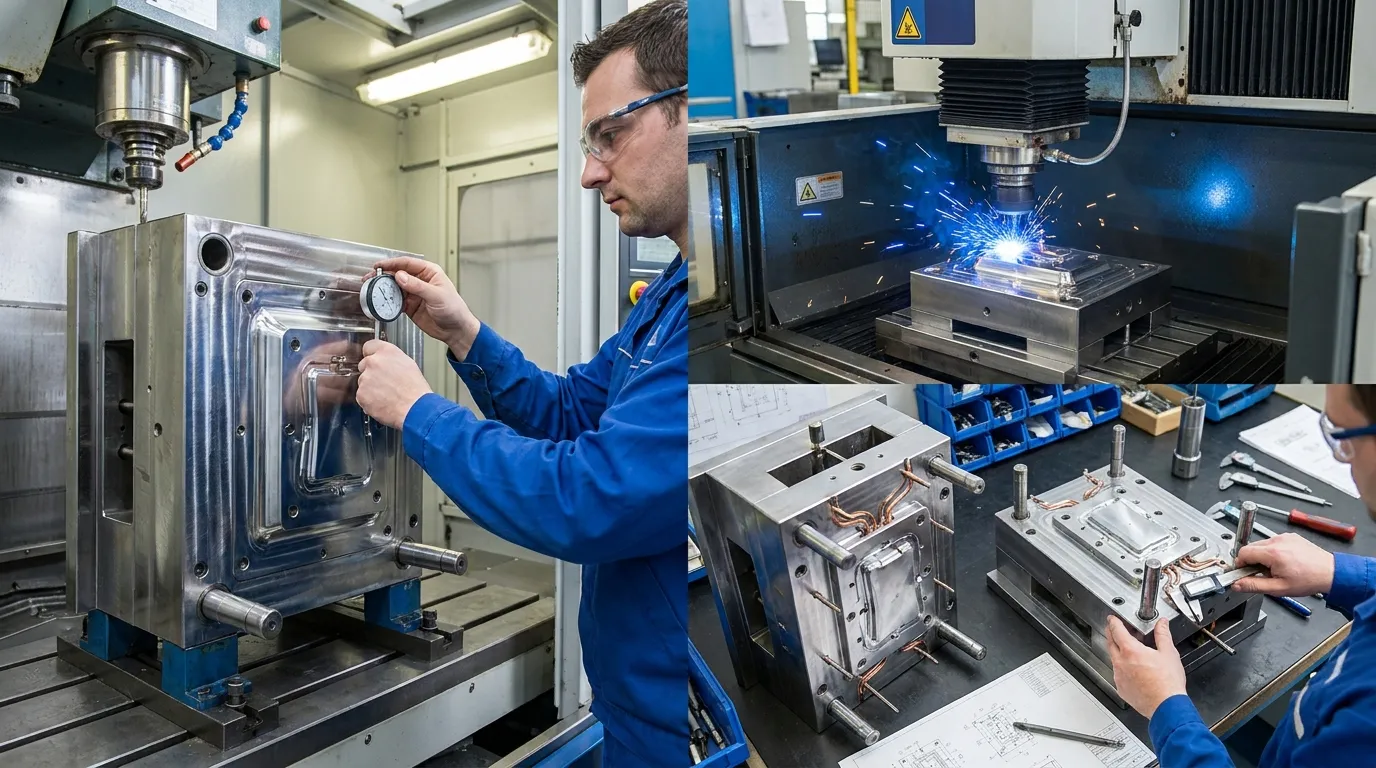
Injection mold manufacturing combines CNC machining, Przetwarzanie EDM, Polerowanie, fitting, and assembly to produce a mold capable of repeatable production. Accuracy during this stage directly affects part quality, Czas cyklu, oraz żywotności pleśni.
Tool manufacturing transforms engineering files into a functional production mold. Most molds are built from hardened steel or aluminum, depending on expected production volume and part complexity.
Obróbka i EDM
CNC machining removes large sections of steel and creates the primary mold structure. EDM, or Electrical Discharge Machining, handles finer details and sharp internal features that traditional machining cannot easily produce.
Complex automotive trim components often require both machining methods. Tight cosmetic surfaces, snap-fit details, and textured areas usually need additional EDM processing before polishing begins.
| Etap produkcji | Cel |
|---|---|
| Obróbka CNC | Stwórz strukturę formy |
| Przetwarzanie EDM | Tworzenie szczegółowej geometrii |
| Szlifowanie | Poprawa precyzyjnych powierzchni |
| Polerowanie | Poprawa wykończenia powierzchni |
| Dopasowanie | Wyrównanie elementów formy |
| Zgromadzenie | Zbudowa systemu formowania końcowego |
Dopasowanie formy i polerowanie
After machining, technicians fit all mold components together and check alignment accuracy. Cooling systems, Sworznie wyrzutowe, Suwaki, and guide components are installed during assembly. Surface polishing then improves cosmetic appearance and material flow.
A medical device enclosure is a good example. During sampling, cosmetic defects may appear near visible surfaces. Additional polishing is often required before final approval. Według Badania nad procesami polerowania form, surface finishing has a direct impact on molded part quality.
Manufacturers also verify mold movement and sealing during this stage. Poor alignment can cause flash defects, Wariacja wymiarowa, or premature tool wear during production.
For additional tooling details, to Przewodnik po narzędziach do formowania wtrysków explains how mold systems are structured.
What Happens During Mold Trial and Sampling?
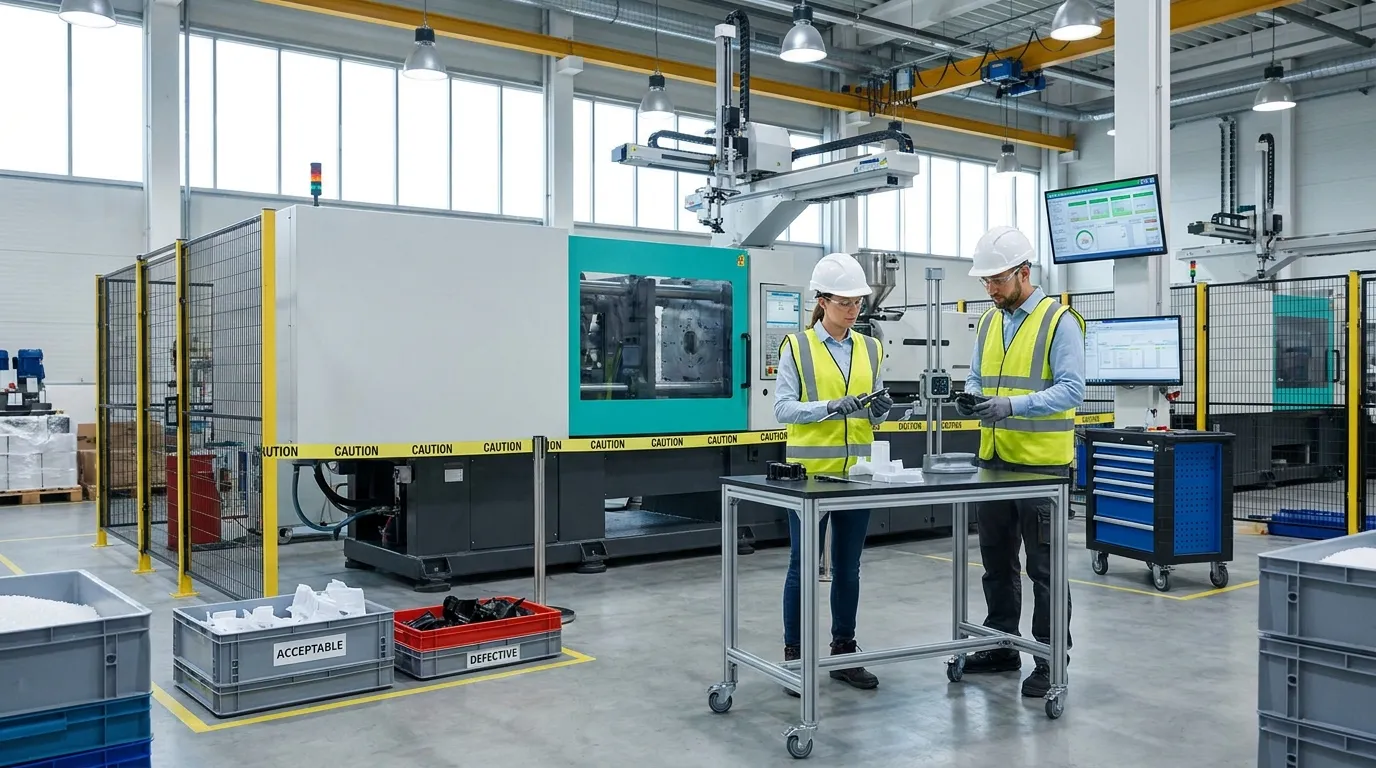
Mold trial and sampling verify whether the tool can consistently produce acceptable parts. Manufacturers evaluate dimensions, Wady, kurczenie się, and cycle stability before approving the mold for production.
Sampling is the point where theoretical design becomes real production output. The first mold trial checks whether the mold performs correctly under production conditions. Engineers monitor filling balance, cooling behavior, Dokładność wymiarowa, and cosmetic quality.
T1 samples often reveal issues that were not visible during design review. Common problems include warpage, ślady zapadnięcia, krótkie ujęcia, Błysk, or uneven shrinkage. Manufacturers then adjust process settings or modify tooling before running another trial.
Typowe wady wykrywane podczas pobierania próbek
| Defekt | Typical Cause | Powszechna poprawka |
|---|---|---|
| Ślady po zapadnięciu | Grube sekcje ścian | Dostosuj projekt ścian |
| Flash | Słabe uszczelnienie formy | Popraw dopasowanie |
| Warpage | Nierównomierne chłodzenie | Modyfikacja układu chłodzenia |
| Krótkie ujęcie | Słaby przepływ materiałów | Dostosuj lokalizację bramek |
| Ślady spaleń | Uwięzione powietrze | Poprawa odpowietrzania |
A production ramp-up scenario shows why this stage matters. One manufacturer completed tooling on schedule, but unstable cycle times caused inconsistent dimensions during sampling. The project needed additional process tuning before production approval could move forward.
Many buyers focus too heavily on mold completion dates, but production stability after sampling is what actually determines project success. A mold that ships quickly but fails during validation usually creates larger delays later.
Manufacturers also use this stage to verify customer specifications and inspection requirements. To Walidacja formowania wtryskowego resource explains how design decisions influence final part quality.
How Does Mass Production Start After Sampling?
Mass production starts after sampling results are approved and process parameters become stable. Manufacturers monitor cycle time, Wskaźniki defektów, and dimensional consistency before scaling to full production volume.
Production ramp-up focuses on consistency. Engineers lock machine parameters, validate repeatability, and monitor output quality before increasing manufacturing volume. This stage confirms that the process works reliably outside controlled trial conditions.
Według Przewodnik po rozwoju procesów Kaysun, stable processing conditions help reduce variability and improve long-term manufacturing performance. Small changes in temperature, Ciśnienie, or cooling time can significantly affect part quality.
- Czas cyklu stabilnego
- Wymiary spójne
- Kontrolowane wskaźniki defektów
- Weryfikacja wydajności materiałów
- Powtarzalne ustawienia maszyny
An unstable process can delay mass production even when tooling is technically complete. One automotive project passed dimensional inspection during T1 trials, but cycle instability created inconsistent shrinkage during extended production runs. Additional process tuning delayed launch approval.
To jest miejsce Projektowanie formy gotowej do produkcji becomes important. Strong DFM planning makes production stabilization much easier after sampling.
What Delays Commonly Affect Injection Mold Projects?
Injection mold projects are commonly delayed by design revisions, Poprawki narzędzi, Braki materiałów, and international shipping issues. Delays often happen after steel cutting because modifications require additional machining and validation.
Most mold projects do not fail because of one major event. Delays usually build from multiple smaller issues across design, Narzędzia, Próbkowanie, and logistics.
| Przyczyna opóźnienia | Kiedy to się dzieje | Wpływ | Metoda zapobiegania |
|---|---|---|---|
| Późne zmiany w projekcie | Przed lub po narzędziach | Dodatkowe obróbki | Zakończ przegląd DFM na wczesnym etapie |
| Defekty próbkowania | Podczas prób T1 | Powtarzanie testów | Dokładnie zweryfikowaj narzędzia |
| Niedobory materiałów | Przygotowanie do produkcji | Opóźnione planowanie | Potwierdź łańcuch dostaw wcześnie |
| Opóźnienia w odprawie celnej | Żegluga międzynarodowa | Opóźniona dostawa | Przygotuj dokumentację wcześnie |
| Niestabilność cyklu | Production ramp | Opóźniona akceptacja | Optymalizacja ustawień procesów |
International logistics can also affect mold timelines. An automotive trim component shipped overseas may face inspection delays if customs documentation is incomplete. Information from CBP oraz Trade.gov shows that import processing and trade documentation can influence shipment timing.
Buyers should also understand that mold modifications after steel cutting are rarely quick fixes. Even small changes can require additional machining, Polerowanie, fitting, and repeat sampling before approval.
How Can Buyers Reduce Risk Before Starting an Injection Mold Project?
Reducing injection molding risk starts with preparation. Buyers who clarify specifications early usually avoid expensive tooling changes later. Good communication during DFM and sampling stages also improves project stability.
A strong supplier should explain process risks clearly before production starts. If the supplier avoids discussing DFM limitations, tolerance concerns, or sampling expectations, that is usually a warning sign.
- Potwierdź przegląd DFM przed cięciem stali
- Przegląd grubość ścian i kąty zaciągania
- Określ wymagania dotyczące jakości kosmetyków wcześnie
- Wyjaśnij oczekiwania dotyczące zatwierdzeń próbek
- Zaplanuj realistyczne czasy realizacji poprawek
- Sprawdź dostępność materiałów przed wyprodukowaniem
- Potwierdzaj standardy inspekcji i walidacji
A practical example is a consumer electronics enclosure with cosmetic surface requirements. If the customer approves tooling before discussing polishing standards, additional rework may appear during T1 sampling. That creates extra delays and additional cost.
To Lista kontrolna planowania formowania wtryskowego can help buyers organize design and production expectations before tooling approval.
Co robić dalej
The injection mold process works best when design review, Narzędzia, Próbkowanie, and production planning are treated as one connected workflow. Problems caught early are usually manageable. Problems discovered after tooling or during unstable production often become expensive and time-consuming.
Before starting a new project, review manufacturability carefully and confirm how your supplier handles DFM, Próby formowania, and production validation. Stable production matters more than fast tooling completion. A supplier with strong process control can reduce defects, improve delivery consistency, and help avoid unnecessary mold revisions later in the project lifecycle.
Najczęściej zadawane pytania
What is the injection mold process?
The injection mold process is the workflow used to design, manufacture, test, and use molds for producing plastic parts. It includes DFM review, Narzędzia, Próby formowania, quality validation, and mass production preparation.
How long does injection mold manufacturing take?
Injection mold manufacturing timelines vary based on complexity, Poprawki, and sampling requirements. Tooling and production ramp-up can extend project timelines across several weeks or months depending on mold size and validation needs.
Why is DFM important in injection molding?
DFM helps identify production risks before tooling starts. Early review reduces defects, minimizes costly tool modifications, and improves long-term production stability after sampling begins.
What happens during mold sampling?
Mold sampling checks whether the mold can consistently produce acceptable parts. Manufacturers inspect dimensions, Wady, kurczenie się, and cycle stability before approving the tool for production.
What causes injection molding delays?
Injection molding delays often come from design revisions, Poprawki narzędzi, logistics issues, or material shortages. Changes after steel cutting usually increase lead times because additional machining and validation are required.
How do manufacturers reduce molding defects?
Manufacturers reduce molding defects through DFM review, controlled process settings, sampling adjustments, and consistent quality monitoring. Stable machine parameters are important before scaling to full production volume.
Udostępnij:



Napisane przez Sunshine
W Sunshine, Jesteśmy profesjonalnym producentem i dostawcą komponentów do precyzyjnych form, oferując szeroką gamę produktów do tłoczenia i formowania wtryskowego. Naszym głównym celem są formy do dziurkania, Sworznie wyrzutowe i tuleje, oraz słupy i tuleje. Dzięki zaawansowanej obróbki CNC, Ścisła kontrola jakości, oraz silne możliwości produkcyjne, Zapewniamy niezawodność, Części o wysokiej precyzji, wraz ze standardowymi komponentami dostępnymi na stanie, zapewniającymi szybkie i efektywne globalne dostawy.
WIADOMOŚCI
UZYSKAJ USŁUGĘ
Z wysokiej jakości częściami dostosowanymi do każdego budżetu oraz przyjaznym personelem przeszkolonym, by Twoja wizyta była poinformowana i bezproblemowa.
