



Injection Mold Surface Finish: Standards, Options, and Cost Impact
Injection mold surface finish controls the texture, gloss, and roughness transferred to plastic parts during molding. SPI finishes are commonly used for polished cosmetic surfaces, while VDI finishes work well for matte and textured parts. The right finish affects appearance, Wyrzucenie, scratch visibility, Zużycie przez formę, oraz koszt narzędzi, so finish selection should balance cosmetic goals with manufacturability and production efficiency.
A mold surface finish does more than change how a part looks. It can affect release force, scratch resistance, polishing time, and even how long the mold lasts in production. Choosing the wrong finish often leads to higher tooling cost or avoidable cosmetic problems. This guide explains how SPI and VDI finishes work, when to use them, and how to match the finish to your product and production goals.
What is an injection mold surface finish?
Injection mold surface finish defines the texture and roughness transferred from the mold cavity to the plastic part. The selected finish affects product appearance, scratch visibility, ejection performance, Zużycie przez formę, oraz koszt narzędzi.
Every molded plastic part copies the condition of the mold cavity surface. A highly polished cavity creates a glossy appearance, while a textured cavity creates a matte or patterned finish. Surface finish also changes how the part interacts with the mold during ejection.
Smooth finishes often look premium, especially for consumer products. They also make scratches and fingerprints easier to see. Textured finishes usually hide wear better and improve grip, which is why they are common in automotive interiors and industrial housings.
Finish selection also affects manufacturing time. Mirror-polished surfaces require more machining, Polerowanie, oraz prace inspekcyjne. That increases tooling cost and maintenance requirements over the mold's lifecycle.
If you want a broader overview of mold construction and tooling systems, SunshinePro's Kompletny przewodnik po formowaniu wtrysków tworzyw sztucznych explains the larger mold engineering process in more detail.
Możesz także przejrzeć Etapy produkcji formy that influence final surface quality.
What do SPI and VDI surface finish standards mean?
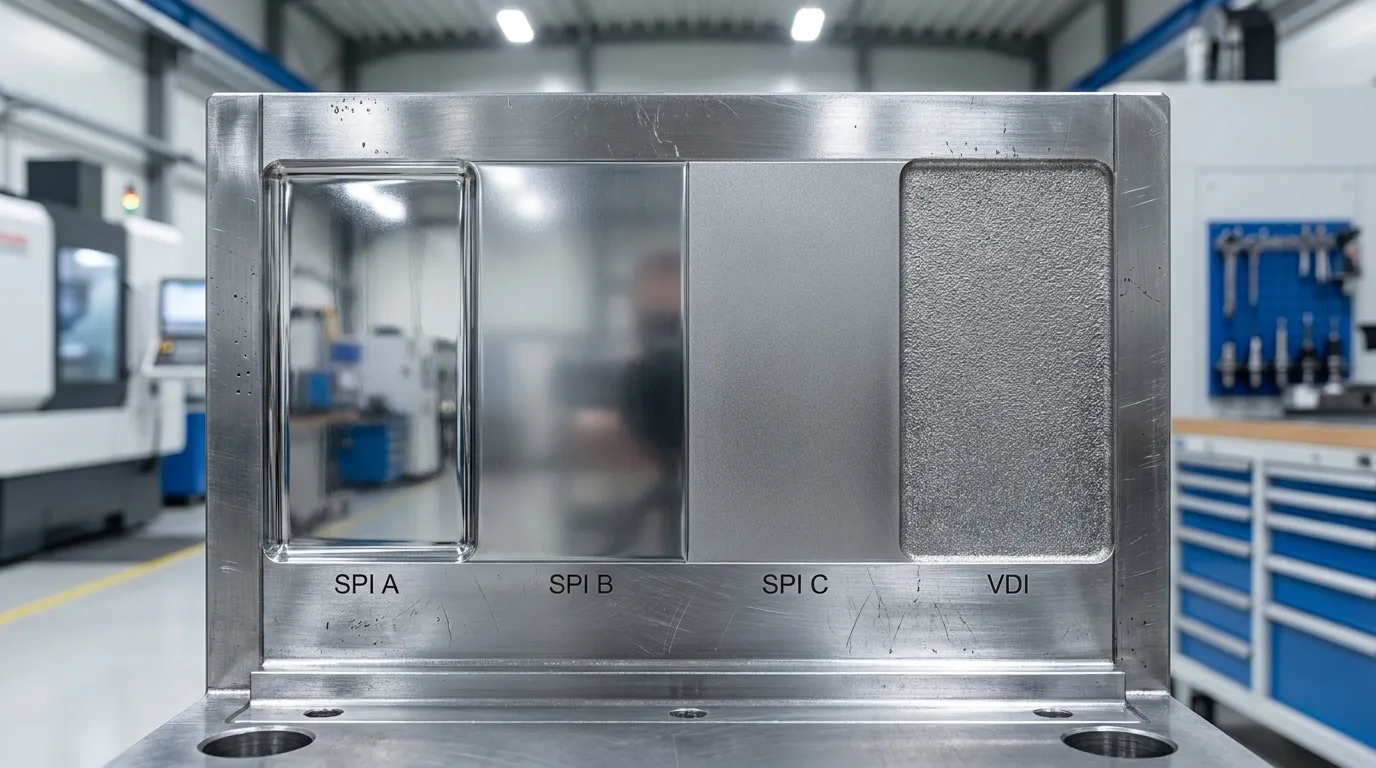
SPI standards classify polished mold finishes from high-gloss A grades to textured D grades, while VDI 3400 uses EDM texture scales for matte and textured surfaces. SPI is commonly used for polished cosmetic parts, while VDI is preferred for textured industrial finishes.
Most injection mold surface finish specifications use either SPI or VDI standards. SPI stands for Society of the Plastics Industry and focuses on polished finishes. VDI 3400 is commonly used for textured EDM surfaces.
Według Przewodnik po wykończeniu SPI od Fictiv oraz Odniesienie wykończenia powierzchni Engineering Product Design, SPI grades range from highly polished mirror finishes to rough textured surfaces.
Wyjaśnienie ukończenia ocen SPI
| Stopień SPI | Wygląd | Typowe zastosowanie | Koszt względny |
|---|---|---|---|
| SPI A1-A3 | Błyszczące lustro | Optical parts, premium cosmetics | Najwyższe |
| SPI B1-B3 | Półpołysk | Domy konsumenckie | Średnio-wysokie |
| SPI C1-C3 | Matowy | Komponenty użytkowe | Medium |
| SPI D1-D3 | Teksturowane | Części przemysłowe | Dolne |
Mirror-polished SPI A finishes are not automatically the best option. They work well for optical clarity and premium cosmetics, but they also reveal fingerprints, Zadrapania, and molding defects more easily.
Wyjaśnienie jakości tekstur VDI
| Zakres VDI | Poziom tekstur | Typowe zastosowanie |
|---|---|---|
| VDI 12-18 | Delikatny mat | Produkty konsumenckie |
| VDI 21-27 | Średnia tekstura | Wersja samochodowa |
| VDI 30-45 | Gruba faktura | Domy przemysłowe |
VDI textures are often created through EDM, or electrical discharge machining. These finishes work well when products need grip, reduced glare, or better scratch masking.
How does surface finish affect appearance, tarcie, oraz wyrzucenie?
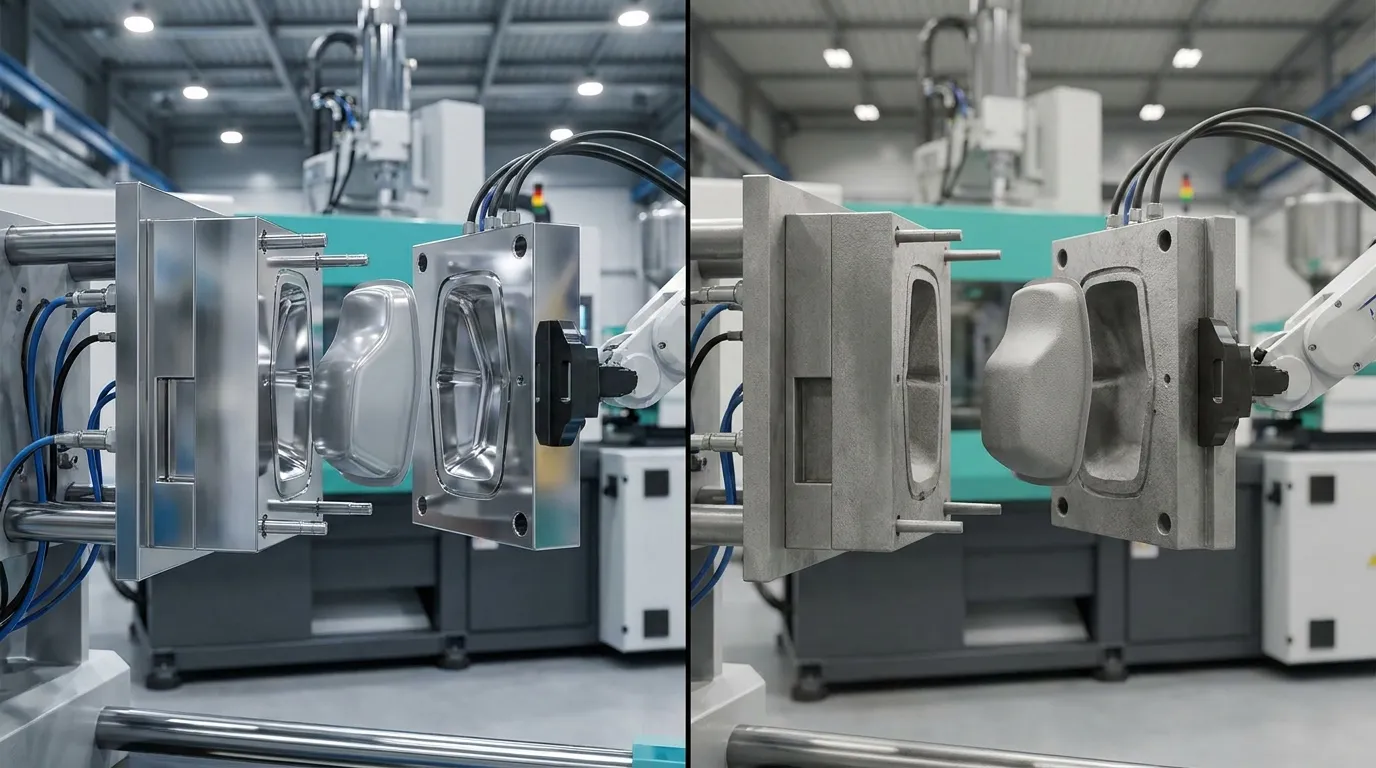
Surface finish affects more than appearance. High-gloss finishes can increase sticking and reveal scratches, while textured finishes may improve grip and hide defects but often require larger draft angles for smooth ejection.
Surface finish changes how the molded part behaves inside the cavity. Smooth polished surfaces create more contact area between the plastic and steel. In some materials, that increases friction during ejection.
Textured surfaces break up contact points and can help reduce visible drag marks. They also hide sink marks, fingerprints, and minor cosmetic defects better than polished surfaces. This is one reason automotive interiors often use textured finishes instead of mirror gloss.
Według Przegląd wykończenia powierzchni Nicolet Plastics, finish selection should match both appearance goals and molding performance requirements.
Dlaczego powierzchnie teksturowane potrzebują większego kąta zaciągu
Textured molds usually require more draft because the plastic grips the cavity surface more aggressively during ejection. Deeper textures create more mechanical resistance, especially with softer materials.
| Typ wykończenia | Typowa potrzeba poboru | Ryzyko wyrzucenia |
|---|---|---|
| Wysoka jakość | Możliwy niższy zanurzenie | Ryzyko wklejenia |
| Lekka faktura | Umiarkowany draft | Zrównoważony |
| Głęboka faktura | Wymagany wyższy draft | Możliwe ślady przeciągania |
A nylon-filled industrial housing is a good example. One manufacturer selected an aggressive texture to improve grip, but the original draft angle was too low. Parts started sticking during ejection, which caused visible drag marks and slower cycle times. Increasing the draft solved the issue without changing the resin.
If you're evaluating textured finishes, SunshinePro's Wytyczne dotyczące draftu kątów can help you avoid release problems early in the design stage.
Which finish should you choose for different product types?
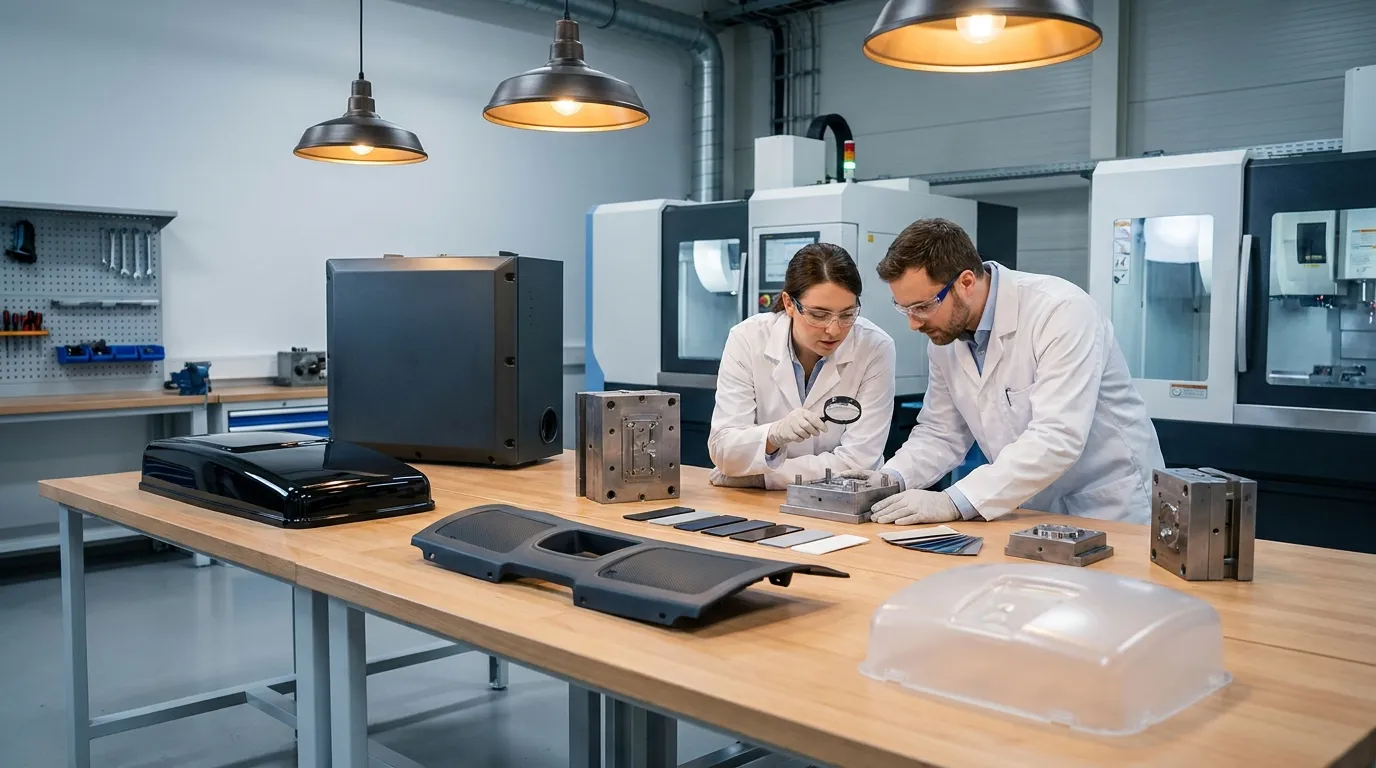
The best injection mold surface finish depends on the product’s appearance requirements, handling conditions, and production goals. High-gloss SPI A finishes suit cosmetic consumer products, while textured VDI finishes often work better for grip, scratch resistance, and industrial durability.
The right finish depends on how the product is used after molding. A cosmetic electronics housing needs different surface behavior than an industrial bracket or medical enclosure.
Textured finishes are often the safer choice for frequently handled products because they hide cosmetic wear better and reduce visible handling marks over time.
Dobór wykończenia według typu produktu
| Typ produktu | Zalecane wykończenie | Główny powód |
|---|---|---|
| Elektronika użytkowa | SPI A2 lub B1 | Wygląd premium |
| Wyposażenie wnętrza samochodów | VDI 24-30 | Zmniejszone odblaski i ukrywanie zadrapań |
| Medyczna hala | SPI B zakończenie | Łatwiejsze czyszczenie przy umiarkowanym połysku |
| Osiedla przemysłowe | Tekstura VDI | Trwałość i przyczepność |
| Wewnętrzne części konstrukcyjne | Wykończenie SPI C | Niższy koszt narzędzi |
A consumer electronics company provides a common example. Their first housing design used a mirror-polished SPI A finish because the product needed a premium look. After production launch, fingerprint complaints increased. The manufacturer switched to a fine VDI texture that reduced visible smudges without changing the mold geometry.
For broader manufacturability planning, SunshinePro's Decyzje DFM guide explains how cosmetic choices affect tooling and production efficiency.
How much does surface finish increase mold cost?
Surface finish can significantly change mold cost because high-polish cavities require additional machining, hand polishing, inspekcja, oraz konserwację. Mirror finishes usually increase tooling time and should only be specified when appearance or optical clarity truly requires it.
High-gloss polishing adds labor at several stages of mold production. Toolmakers often need multiple polishing passes, finer abrasives, and extra inspection work to remove small surface defects.
Według Przewodnik po wykończeniu powierzchni formowania wtryskowego BEC Group, finish-related manufacturability decisions can strongly affect tooling cost and lead time.
Dlaczego polerowanie luster wydłuża czas pracy przy narzędziach
Mirror polishing is slow because every small machining mark must be removed manually. Highly polished cavities also require careful maintenance to preserve surface quality during long production runs.
| Typ wykończenia | Względny czas pracy z narzędziami | Zapotrzebowanie na konserwację |
|---|---|---|
| SPI A luster do lustrzanego polerowania | Najwyższe | Wysoko |
| SPI B półpołysk | Umiarkowany | Medium |
| SPI C matte | Dolne | Dolne |
| Tekstura VDI | Umiarkowany | Medium |
Many manufacturers over-specify high-gloss finishes even when the part is rarely visible. W takich przypadkach, a lower-cost matte finish often improves manufacturability without affecting product value.
An industrial bracket project shows this clearly. The original design specified a polished finish for hidden internal components. Po przeglądzie, the tooling team switched to a matte SPI C finish. That reduced polishing labor and shortened mold delivery time without changing part performance.
If you are comparing tooling budgets, SunshinePro's Współczynniki kosztów narzędzi article explains how mold complexity, finish level, and cavity design influence pricing.
Which finishes work best with different plastic materials?
Different plastics respond differently to polished and textured surfaces. Resin behavior affects gloss consistency, scratch visibility, and release performance.
| Materiał | Najlepsze typy wykończenia | Powszechna obawa |
|---|---|---|
| ABS | SPI A lub B | Odciski palców na powierzchniach błyszczących |
| Poliwęglan (PC) | SPI A | Wymagania dotyczące przejrzystości optycznej |
| Polipropylen (PP) | SPI B lub VDI | Niższa ostrość powierzchni detali |
| Nylon | SPI C lub tekstura | Opór wyrzutowy |
| Żywice wypełnione szkłem | Mat lub faktura | Zużycie przez pleśń spowodowane ściernymi wypełniaczami |
Filled materials deserve extra attention. Glass-filled plastics can wear polished cavities faster because the reinforcement fibers are abrasive. In many industrial applications, matte or textured finishes hold up better over long production runs.
Medical equipment housings often use semi-gloss finishes instead of mirror polish. The moderate gloss level keeps surfaces easier to clean without adding unnecessary polishing cost.
Typowe błędy w wykończeniu powierzchni, które zwiększają liczbę wad i koszty
Many mold finish problems start with over-specification. Choosing a high-gloss finish without considering resin behavior, draft angle, or production wear can increase tooling cost while creating avoidable cosmetic and ejection issues.
The most common mistake is selecting a finish based only on appearance. Cosmetic goals matter, but finish selection also affects mold release, Konserwacja, oraz stabilność produkcji.
Another frequent problem is choosing texture too late in the design process. Adding texture after draft angles are finalized can create sticking issues or visible drag marks during ejection.
Lista kontrolna wykończenia powierzchni
- Dopasuj poziom wykończenia do rzeczywistej widoczności produktu
- Zwiększenie kąta wyciągu dla powierzchni teksturowanych
- Sprawdź kompatybilność z żywicą przed zatwierdzeniem poziomu polerowania
- Unikaj polerowania luster, chyba że wygląd tego wymaga
- Rozważ długoterminową konserwację i zużycie
- Potwierdź strefy priorytetowe kosmetyczne na rysunkach
A textured automotive trim panel is a practical example. The original design used a polished finish that reflected sunlight strongly inside the vehicle cabin. Switching to a medium VDI texture reduced glare and hid scratches from daily use.
Możesz recenzować SunshinePro Proces przeglądu narzędzi to understand how finish decisions should be evaluated before tooling approval.
How should you specify mold surface finish on engineering drawings?
Clear finish specifications reduce supplier confusion and help maintain cosmetic consistency across production runs. The drawing should identify both the finish standard and the exact surface areas where the finish applies.
Most manufacturers use SPI or VDI callouts directly on the engineering drawing. Cosmetic priority zones should also be labeled clearly so the mold maker knows where appearance matters most.
Lista kontrolna specyfikacji wykończenia powierzchni
- Określ na rysunku wykończenie SPI lub VDI
- Wyraźnie oznacz powierzchnie kosmetyczne
- Zidentyfikuj strefy teksturowane i wypolerowane osobno
- Potwierdź wymagania dotyczące szkicowania powierzchni teksturowanych
- Przegląd zgodności z żywicą przed ostateczną akceptacją
- Dostosuj oczekiwania dotyczące wykończenia z budżetem na narzędzia
A good specification process prevents expensive revisions later. Small changes in texture depth or gloss level can affect polishing time, Prace konserwacyjne, oraz spójność produkcji.
For broader mold planning guidance, SunshinePro's Przegląd specyfikacji formy resource explains how design decisions affect tooling performance and manufacturability.
Poprawne wykonanie kolejnego kroku
The best injection mold surface finish balances appearance, production efficiency, oraz długoterminową trwałość. A polished surface may improve cosmetic appeal, but it can also increase tooling cost and reveal scratches more easily. Textured finishes often perform better in high-contact applications where grip and wear resistance matter more than gloss.
Before approving a finish, review the resin type, product visibility, draft angle, and tooling budget together. A practical finish decision early in the design stage usually prevents expensive mold revisions and production problems later.
Najczęściej zadawane pytania
What is SPI finish in injection molding?
SPI finish is a standardized mold surface classification system used for injection molded parts. The grades range from high-gloss polished finishes to textured matte finishes, helping manufacturers define cosmetic and functional surface requirements clearly.
What is the difference between SPI and VDI finishes?
SPI finishes mainly describe polished surface quality, while VDI finishes are commonly used for textured EDM surfaces. SPI is often selected for cosmetic gloss, while VDI works better for matte textures and industrial products.
Does textured finish require more draft angle?
Tak, textured finishes usually require larger draft angles to help parts release cleanly from the mold. Deeper textures create more surface resistance, which increases the risk of drag marks during ejection.
Which injection molding finish hides scratches best?
Matte and textured finishes generally hide scratches, fingerprints, and small cosmetic defects better than mirror-polished surfaces. Highly polished parts tend to show handling wear more easily during daily use.
Do polished molds cost more?
Tak, polished molds usually cost more because they require additional machining, hand polishing, inspekcja, and maintenance work. Mirror-polished cavities can also increase tooling lead time and long-term maintenance effort.
What finish is best for consumer electronics?
Consumer electronics often use SPI A or SPI B finishes when a premium cosmetic appearance matters most. Fine VDI textures may work better when fingerprint resistance and grip are higher priorities than high gloss.
Udostępnij:



Napisane przez Sunshine
W Sunshine, Jesteśmy profesjonalnym producentem i dostawcą komponentów do precyzyjnych form, oferując szeroką gamę produktów do tłoczenia i formowania wtryskowego. Naszym głównym celem są formy do dziurkania, Sworznie wyrzutowe i tuleje, oraz słupy i tuleje. Dzięki zaawansowanej obróbki CNC, Ścisła kontrola jakości, oraz silne możliwości produkcyjne, Zapewniamy niezawodność, Części o wysokiej precyzji, wraz ze standardowymi komponentami dostępnymi na stanie, zapewniającymi szybkie i efektywne globalne dostawy.
WIADOMOŚCI
UZYSKAJ USŁUGĘ
Z wysokiej jakości częściami dostosowanymi do każdego budżetu oraz przyjaznym personelem przeszkolonym, by Twoja wizyta była poinformowana i bezproblemowa.
