



Przewodnik po komponentach form: Rodzaje, Funkcje, oraz lista kontrolna zakupu
Komponenty formy to precyzyjne elementy kontrolujące ustawienie, Chłodzenie, Karmienie, and ejection inside an injection mold. Buyers should compare component types, Klasy materiałów, Tolerancje, Twardość, and lead times before sending an RFQ. Standard parts reduce replacement costs and delivery risk, while custom components work better for specialized molds with tighter performance requirements.
A mold may look simple from the outside, but component quality decides how well it performs on the production floor. Poor ejector pins, weak guide bushings, or incorrect tolerances can lead to flash, Przyklejanie się, Czas wolny, and expensive repairs. This guide explains the main mold component types, Co robi każdy z nich, and what buyers should check before choosing a supplier or requesting a quote.
Czym są komponenty formy i dlaczego mają znaczenie?
Mold components are the individual functional parts inside an injection mold, w tym sworznie wyrzutowe, Tuleje prowadzące, Systemy chłodzenia, and mold bases. Their precision affects cycle time, Jakość części, Dokładność wyrównania, oraz żywotności pleśni.
Every injection mold uses multiple parts that work together during molding. These components guide mold movement, cool molten plastic, Wyrzucanie gotowych części, and keep alignment stable during repeated production cycles. If one critical part wears out early, the entire mold can lose accuracy.
Standardized components also make maintenance easier. Factories can replace worn pins, tulejki, or springs without redesigning the entire tool. That matters for high-volume production lines where every hour of downtime affects output and delivery schedules.
Buyers comparing suppliers should focus on more than machining price. Jakość materiałowa, hardness treatment, and dimensional consistency often determine whether a mold performs well after 100,000 cycles or after 1 million cycles.
For a broader overview of mold construction and tooling workflow, Zobacz te Podstawy formowania wtrysków plastiku.
Jakie są główne rodzaje elementów formy?
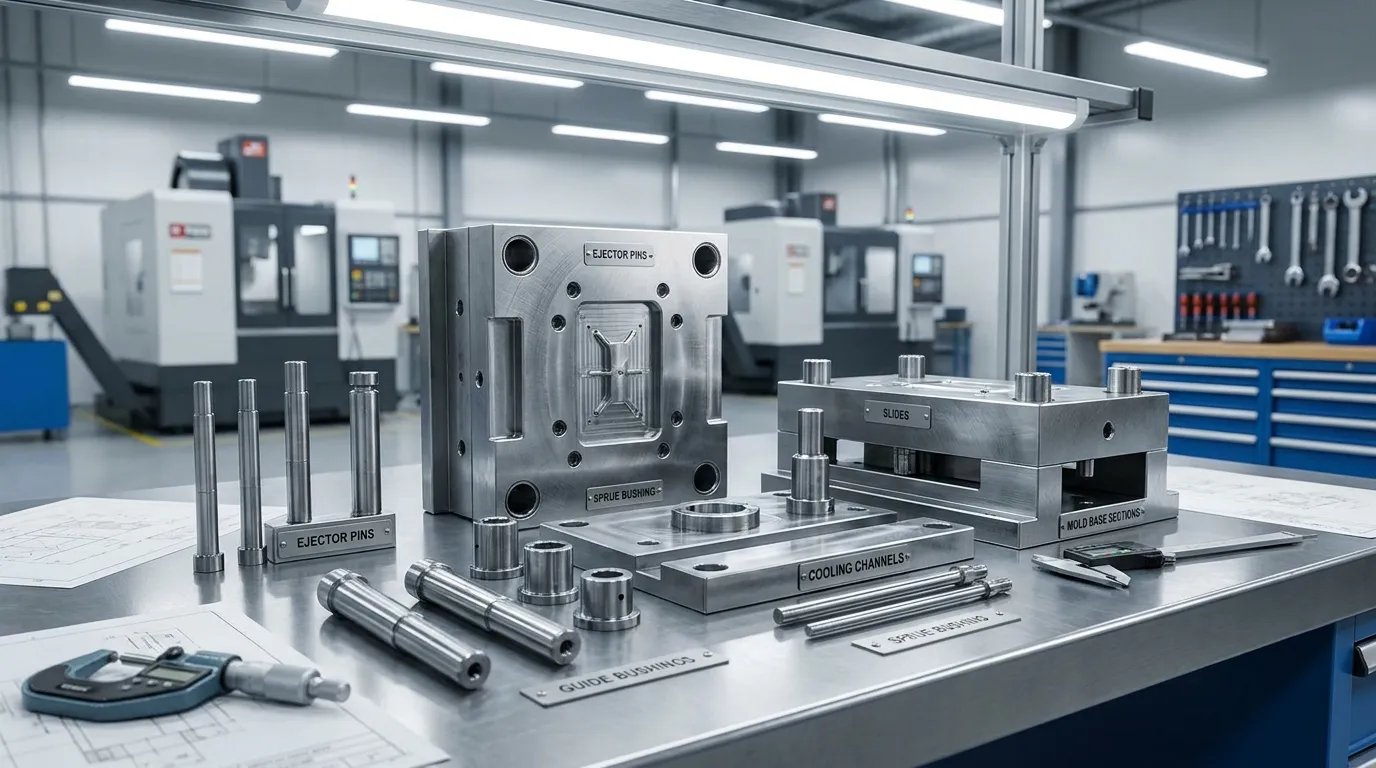
The main mold components include the mold base, guiding system, Kanały chłodzące, System zasilający, and ejection system. Each section controls a different part of molding performance, from alignment and resin flow to cooling efficiency and part release.
Most injection molds follow a similar structure, even when part geometry changes. Understanding these systems helps buyers compare molds and evaluate supplier capabilities more accurately.
| Component Group | Główna funkcja | Wspólne części |
|---|---|---|
| Podstawa formy | Podtrzymuje całą strukturę formy | Plates, clamps, filary nośne |
| System nawigacyjny | Utrzymuje wyrównanie podczas otwierania i zamykania | Sworznie prowadzące, Tuleje prowadzące |
| System zasilający | Kieruje stopioną żywicę do jamy | Tuleje sprue, Biegacze, bramy |
| System chłodzenia | Kontroluje temperaturę formy | Kanały chłodzące, fittings |
| System wyrzutu | Bezpiecznie usuwa odlewane części | Sworznie wyrzutowe, Rękawy, Płyty stripperowe |
According to industry references from FirstMold, cooling and ejection systems directly affect cycle consistency and molded part quality. Poor cooling design can increase warpage, while weak ejection systems may scratch finished surfaces.
Komponenty wyrzutu
Ejector pins are among the most heavily used mold parts. They push finished plastic parts out of the cavity after cooling. Sleeve ejectors and stripper plates are also common in molds with deep or complex geometry.
An automotive supplier producing high-volume trim parts may replace ejector pins every 500,000 cycles. Upgrading to hardened coated pins often reduces replacement frequency and lowers maintenance downtime.
Elementy prowadzące
Guide pins and guide bushings keep both mold halves aligned during operation. Misalignment can damage cavities, create flash, or increase wear on moving sections.
Standard guide systems are usually the safer choice for maintenance-heavy factories because replacement parts are easier to source quickly. Custom guide systems work best only when a mold requires specialized movement or tight space constraints.
For more detail on component categories and tooling systems, visit Systemy komponentów formowych.
Które elementy formy zużywają się najszybciej?
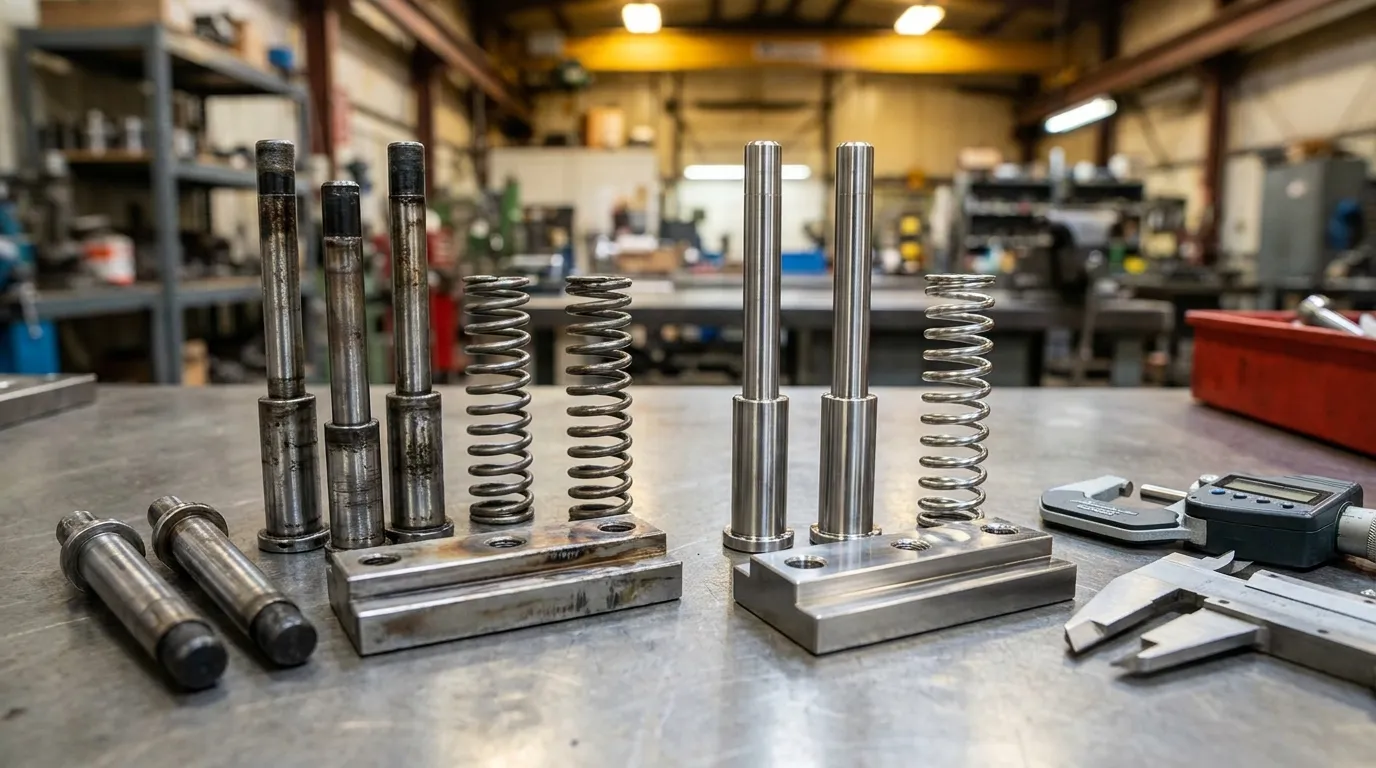
Sworznie wyrzutowe, Tuleje prowadzące, Slajdy, and springs usually wear out faster because they face repeated friction, Ciepło, and movement. Buyers should check hardness, Powłoka, Jakość materiałowa, and replacement availability before ordering.
High-wear parts operate under constant pressure and repeated movement. Friction between sliding components slowly removes material, especially in molds running abrasive resins or high production volumes. Weak coatings or low-grade steel can accelerate wear even faster.
The most common wear-prone components include:
- Sworznie wyrzutowe
- Tuleje prowadzące
- Sprężyny zwrotne
- Zjeżdżalnie i podnośniki
- Rdzenie sworznione wystawione na działanie materiałów ściernych
A medical mold buyer working in a humid cleanroom environment may choose stainless steel components to reduce corrosion risk. Standard carbon steel parts often degrade faster when moisture exposure is constant.
Extremely tight tolerances are not always beneficial. Over-specifying tolerances can increase machining cost and lead time without improving molded part quality. Buyers should match tolerance requirements to the actual application instead of requesting the highest precision by default.
Preventive maintenance also matters. Replacing inexpensive wear components early usually costs far less than repairing damaged cavities or mold bases later.
Standardowe a niestandardowe komponenty formy: which is better?
Standard mold components are faster and cheaper to replace, while custom components work better for specialized geometry or high-performance molds. Właściwy wybór zależy od wielkości produkcji, Tolerancje, oraz priorytety utrzymania.
Many buyers assume custom components always improve mold performance. To nie zawsze jest prawdą. Standard components reduce sourcing complexity, Uproszczenie konserwacji, and lower emergency replacement costs for most production environments.
Custom components become useful when a mold requires unusual geometry, limited installation space, or advanced movement systems. Medycyna, Lotnictwo, and multi-cavity tooling often require more customization than general consumer product molds.
Standardowa vs niestandardowa tabela decyzyjna
| Czynnik | Komponenty standardowe | Komponenty niestandardowe |
|---|---|---|
| Koszty | Dolne | Wyżej |
| Czas realizacji | Szybciej | Wolniej |
| Dostępność zastępcza | Łatwo | Limitowane |
| Konserwacja | Prostsze | Bardziej wyspecjalizowany |
| Elastyczność precyzyjna | Umiarkowany | Wyżej |
| Najlepszy przypadek użycia | Formy produkcji ogólnej | Specjalistyczne narzędzia |
The cheapest mold components often create the highest long-term production cost. Częste wymiany, Problemy z wyrównaniem, and downtime can easily exceed the savings from a lower initial purchase price.
A factory producing packaging parts around the clock may prefer standardized guide bushings because emergency replacements are easier to source locally. A specialized medical mold may justify custom components because dimensional stability is more critical than replacement convenience.
Jakie materiały są najczęściej stosowane do produkcji komponentów form?
Tool steel is the most common material for mold components because it handles pressure, Ciepło, and repeated movement well. Stainless steel and coated alloys are also used when corrosion resistance or wear protection is important.
Wybór materiałów zależy od ilości produkcji, Typ żywicy, oraz warunki eksploatacji. Components exposed to abrasive glass-filled plastics usually require harder steel grades than molds running softer resins.
| Materiał | Powszechne użycie | Główna zaleta |
|---|---|---|
| Hartowana stal narzędziowa | Sworznie wyrzutowe, Kolory | Wysoka odporność na zużycie |
| Stal nierdzewna | Środowiska medyczne i wilgotne | Odporność na korozję |
| Stal stopowa | Zamki i systemy ruchome | Wytrzymałość |
| Stal nitridowana | Komponenty o wysokim tarciu | Twardość powierzchni |
Heat treatment matters as much as the steel itself. Improper hardening can lead to cracking, deformacja, or uneven wear during production cycles. Buyers should confirm hardness specifications in the RFQ instead of assuming all suppliers use the same standards.
A supplier quoting low-cost components without hardness certification may create future maintenance problems. That risk increases in high-volume automotive or electronics production where molds cycle continuously for long periods.
Co powinni sprawdzić kupujący przed wysłaniem RFQ?
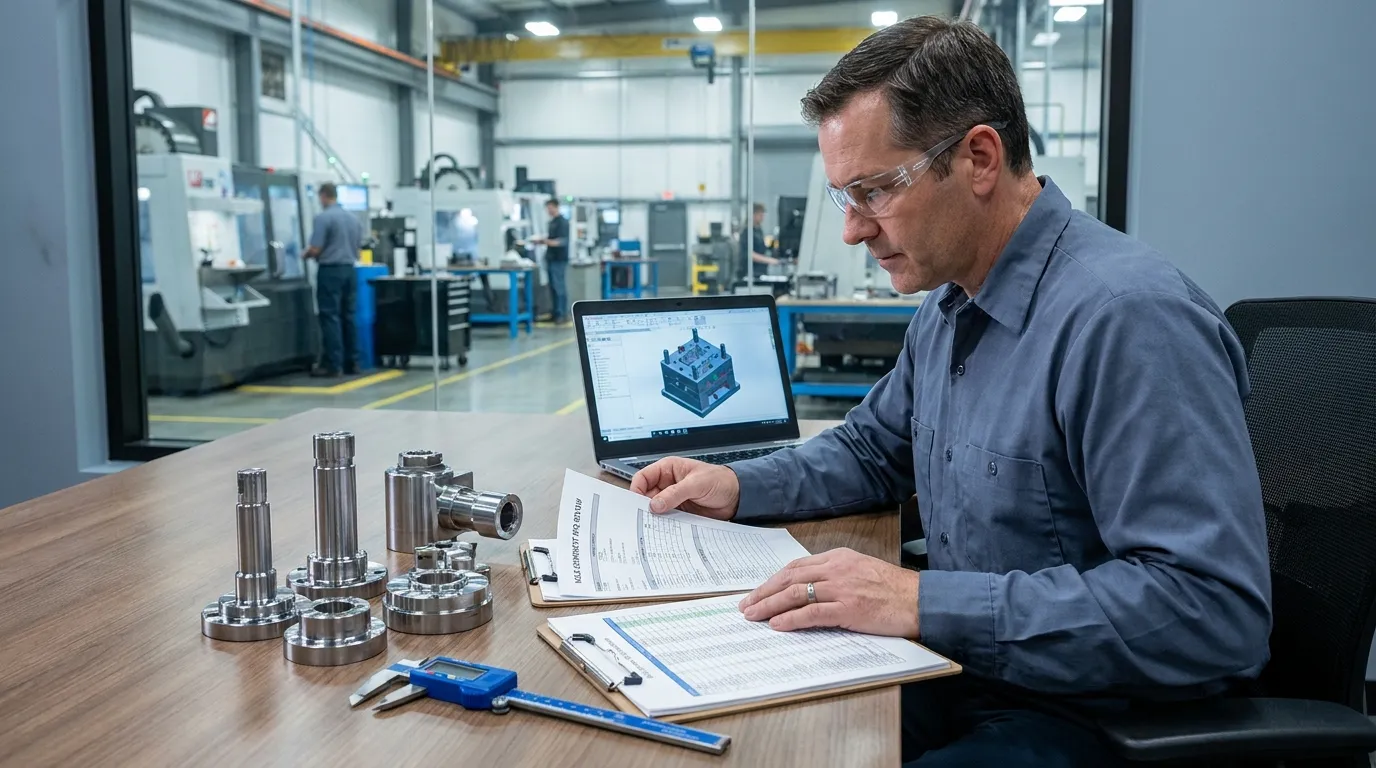
Before sending an RFQ for mold components, buyers should confirm tolerances, Stalowy gatunek, Twardość, Powłoki, delivery lead time, Standardy inspekcji, oraz dostępność zastępczą. Missing specifications often cause fit problems and production delays.
Many RFQ problems start with incomplete technical details. Suppliers may quote different materials, Tolerancje, or coatings if specifications are unclear. That makes pricing difficult to compare accurately.
A procurement team comparing two RFQs may discover one supplier omitted hardness specifications entirely. The lower quote can look attractive at first, but the long-term wear risk may be much higher.
Lista kontrolna RFQ dla kupujących
| Pozycja do potwierdzenia | Dlaczego to ważne |
|---|---|
| Jakość materiałowa | Wpływa na odporność na zużycie |
| Zakres twardości | Wpływ na długość życia |
| Wymagania tolerancyjne | Zapobiega problemom z dopasowaniem |
| Wykończenie powierzchni | Wspiera płynny ruch |
| Typ powłoki | Zmniejsza tarcie i zużycie |
| Standard inspekcji | Potwierdza dokładność wymiarową |
| MOQ | Wpływ na elastyczność zakupową |
| Czas realizacji | Pomaga w planowaniu produkcji |
| Dostępność zastępcza | Zmniejsza ryzyko przestojów |
Wymagania dotyczące wymagań dotyczących wymagań dostawcy
Most suppliers need clear drawings, production volume estimates, resin information, and dimensional tolerances before quoting accurately. Surface finish requirements and expected mold life should also be included early.
Factories ordering overseas should ask about inventory availability before approving production. Long machining queues or material shortages can extend delivery schedules significantly.
If you're comparing overseas manufacturing partners, Współpraca z Dostawca komponentów do form na zamówienie that provides engineering support and inspection documentation can reduce sourcing risk.
How do lead times and customs delays affect mold component sourcing?
Lead times for mold components depend on machining complexity, inventory availability, and international shipping processes. Incorrect documentation or HS codes can delay customs clearance and disrupt mold maintenance schedules.
Production delays often come from logistics issues rather than machining itself. Custom parts usually require longer manufacturing windows, while stock components can ship quickly if inventory is available.
Industry estimates from Aprios show complex injection mold tooling can require lead times of several weeks, especially when multiple machining operations and heat treatment processes are involved.
A shipment of replacement mold accessories may also get delayed during customs clearance if HS codes or paperwork are incomplete. One overseas buyer experienced maintenance downtime after guide bushings were held for classification review during import processing.
Lista kontrolna pozyskiwania komponentów form
- Sprawdź status zapasów przed zamówieniem
- Potwierdź dokładność kodu HS
- Przegląd wymagań dotyczących dokumentacji celnej
- Utrzymywanie zapasowych zapasów dla komponentów zużycia
- Poproś o szacunkowe terminy wysyłki wcześniej
- Plany wymiany planów przed awarią
Factories running high-volume production lines often keep spare ejector pins, tulejki, and springs on-site. Waiting for emergency overseas shipments can stop production for days.
How do you evaluate a mold component supplier?
A reliable mold component supplier should provide consistent tolerances, clear material specifications, stable lead times, and responsive technical support. Buyers should evaluate long-term reliability instead of comparing price alone.
Strong suppliers usually maintain quality control systems and provide dimensional inspection records. They should also explain steel grades, heat treatment methods, and coating options clearly during quotation discussions.
Tabela oceny dostawców
| Obszar oceny | Co sprawdzić |
|---|---|
| Kontrola jakości | Inspection reports, measurement process |
| Weryfikacja materiałów | Steel certifications, hardness data |
| Możliwości obróbki | Zakres tolerancji precyzyjnych |
| Głębokość inwentarza | Dostępność części standardowych |
| Stabilność czasu realizacji | Realistyczne szacunki dostaw |
| Wsparcie inżynieryjne | Wyjaśnienia RFQ i porady techniczne |
| Wsparcie zastępcze | Dostępność zapasowych komponentów |
Suppliers serving automotive or electronics production often maintain stricter tolerance consistency because those industries depend on repeatability. Buyers working with complex molds should ask how dimensional deviations are handled during inspection.
For examples of how component choices vary across industries, Przejrzyj te recenzje Zastosowania w formach wtryskowych.
Poprawne wykonanie kolejnego kroku
Choosing the right mold components is not only about matching dimensions on a drawing. Jakość materiałów, Planowanie zastępstwa, Czasy realizacji, and supplier consistency all affect long-term production performance.
Start by identifying which components experience the most wear in your molds. Then compare suppliers based on technical capability, Wsparcie dla zapasów, and inspection standards instead of price alone. A well-planned RFQ usually prevents more problems than it creates.
If your production depends on stable cycle times and reliable maintenance scheduling, investing in higher-quality mold components often saves money over the full life of the tool.
Najczęściej zadawane pytania
Jakie są główne elementy formy wtryskowej?
The main parts of an injection mold include the mold base, Ubytek, Rdzeń, System chłodzenia, System zasilający, and ejection system. Each section supports molding accuracy, part release, and cycle efficiency.
What does an ejector pin do?
An ejector pin pushes the molded plastic part out of the cavity after cooling. Poor ejector pin quality can cause sticking, scratches, or inconsistent ejection during production.
What materials are mold components made from?
Most mold components are made from hardened tool steel, Stal nierdzewna, or wear-resistant alloy steel. Material choice depends on production volume, Ścierność żywicy, Narażenie na korozję, oraz wymagane tolerancje.
How long do mold components last?
Mold component lifespan depends on material quality, Konserwacja, molding pressure, and production cycles. High-wear parts like ejector pins and bushings usually require replacement more often than mold bases.
What causes mold component failure?
Mold components commonly fail because of friction, słabe smarowanie, incorrect hardness, Korozja, or alignment problems. Using low-grade materials or incorrect tolerances also increases premature wear risk.
Should I choose standard or custom mold components?
Standard components are easier to replace and usually cost less, while custom components support specialized mold geometry or tighter tolerances. The best choice depends on mold complexity and production goals.
Udostępnij:



Napisane przez Sunshine
W Sunshine, Jesteśmy profesjonalnym producentem i dostawcą komponentów do precyzyjnych form, oferując szeroką gamę produktów do tłoczenia i formowania wtryskowego. Naszym głównym celem są formy do dziurkania, Sworznie wyrzutowe i tuleje, oraz słupy i tuleje. Dzięki zaawansowanej obróbki CNC, Ścisła kontrola jakości, oraz silne możliwości produkcyjne, Zapewniamy niezawodność, Części o wysokiej precyzji, wraz ze standardowymi komponentami dostępnymi na stanie, zapewniającymi szybkie i efektywne globalne dostawy.
WIADOMOŚCI
UZYSKAJ USŁUGĘ
Z wysokiej jakości częściami dostosowanymi do każdego budżetu oraz przyjaznym personelem przeszkolonym, by Twoja wizyta była poinformowana i bezproblemowa.
