



Sworznie prowadzące formę: Przebieg trasy, Zużycie, oraz przewodnik selekcji
Mold guide pins keep injection mold halves aligned during every opening and closing cycle. Proper guide pin selection reduces flashing, prevents cavity and core damage, improves repeatability, and extends mold life. High-cycle molds usually need hardened guide pins, matched bushings, and consistent lubrication to reduce wear and maintain alignment accuracy over long production runs.
A mold can have excellent cavity design and still fail early if alignment is inconsistent. Guide pins control how mold halves meet during every cycle, which directly affects wear, Błyskanie, dimensional consistency, oraz koszty utrzymania. Understanding how these components work helps tooling buyers and maintenance teams avoid expensive repair problems before they grow into full mold rebuilds.
What do mold guide pins do during mold operation?
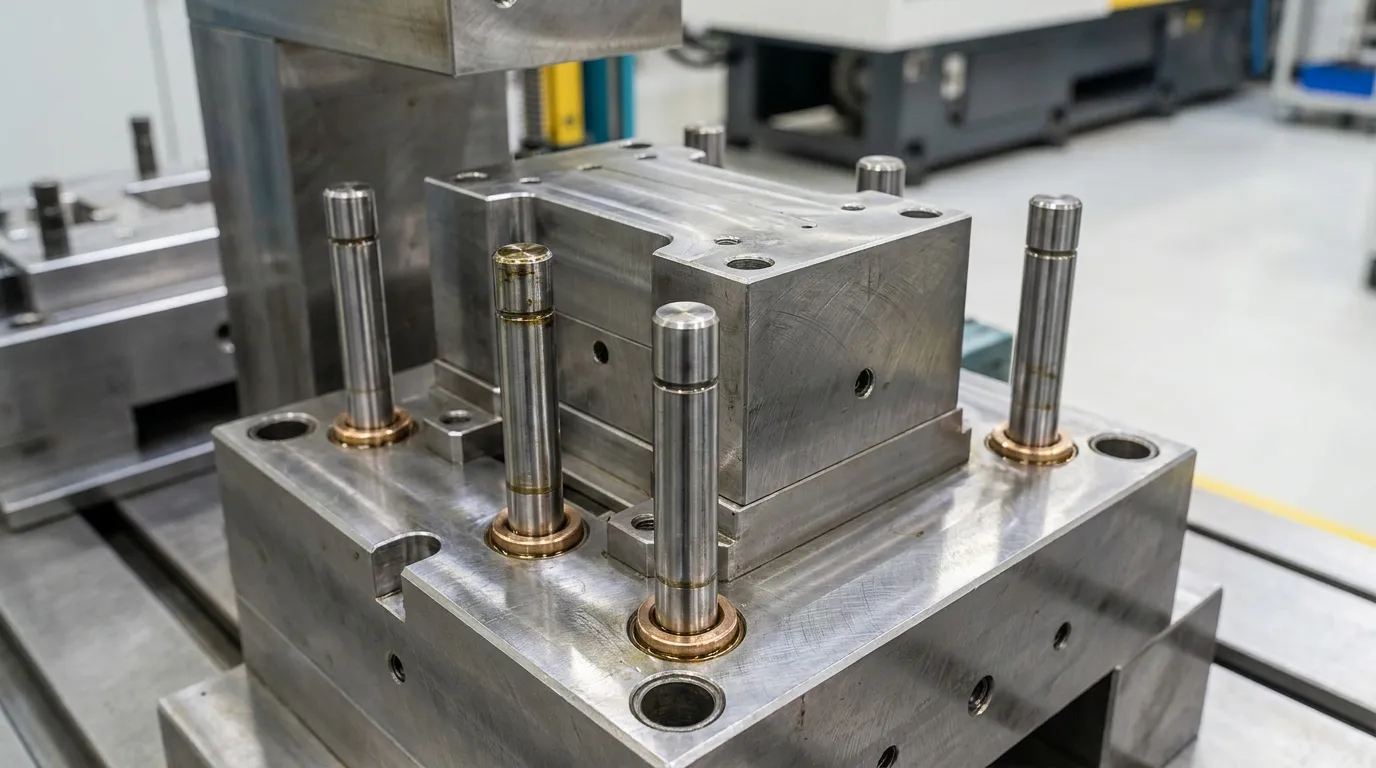
Mold guide pins keep the mold halves aligned during opening and closing cycles. Proper alignment prevents cavity damage, reduces flashing, improves repeatability, and extends mold life by minimizing uneven wear.
Guide pins are precision-machined cylindrical components installed in the mold base. During mold closing, the pins enter matching guide bushings and help both mold halves align correctly before clamping pressure builds. This protects cavity edges, Kolory, and other precision surfaces from impact damage.
Bez odpowiedniego wyrównania, even small positioning errors can create uneven stress across the mold. Z czasem, that stress increases wear and may create flashing or dimensional variation in molded parts. This becomes more noticeable in high-cycle production where molds open and close thousands of times per day.
Guide pins also improve movement consistency during production. In precision molds, repeatable alignment helps maintain stable part quality and smoother mold movement. If you need a broader overview of how alignment fits into the full tooling system, Sunshine’s guide to Struktura formy wtryskowej explains how these components work together inside a complete mold assembly.
Why does guide pin alignment affect mold life?
Poor guide pin alignment increases uneven stress across the mold. Z czasem, this accelerates cavity wear, damages cores, creates flashing defects, and shortens the usable life of high-cycle tooling.
Guide pins do more than position mold halves. They help distribute movement evenly during closing and opening. When alignment drifts, side loading increases across cavity surfaces and moving components. That extra friction slowly damages precision areas that are expensive to repair.
A common example appears in high-cycle packaging molds. A small amount of guide pin wear may initially create light flashing near the parting line. If the problem continues, cavity edges begin wearing unevenly, and repair costs rise quickly.
Standard guide pin systems are not always enough for high-cycle precision molds. Lower-cost setups may reduce tooling cost at the beginning, but they often increase maintenance frequency later. Precision molds with tight tolerances usually benefit from hardened materials and tighter fit control.
| Warunek wyrównania | Wspólny wynik | Długoterminowe ryzyko pleśni |
|---|---|---|
| Prawidłowe wyrównanie | Stabilne zamykanie formy | Niższe tempo zużycia |
| Drobne zużycie szpilki prowadzącej | Migające światło | Nierówne naprężenia w jamie |
| Słabe smarowanie | Zwiększone tarcie | Galling i punktacja |
| Poważne niewyrównanie | Uderzenie rdzenia lub wnęki | Główna naprawa pleśni |
For a broader look at tooling relationships, Sunshine’s overview of Systemy komponentów formowych covers how alignment components interact with the rest of the mold assembly.
How do guide pins and guide bushings work together?
Guide pins provide alignment movement while guide bushings control friction and support. The fit between both parts directly affects mold smoothness, wear rate, and long-term alignment accuracy.
Guide pins and guide bushings operate as a matched system. The guide pin enters the bushing during mold closing, which keeps movement controlled and centered. If the fit becomes too loose, alignment accuracy drops. If the fit is too tight, friction increases and wear accelerates.
Lubrication also affects how these parts perform together. Standard systems rely on oil or grease to reduce friction between the pin and bushing surface. Poor lubrication increases scoring and surface damage, especially in high-speed molds.
| Składnik | Główna funkcja | Powszechny problem zużycia |
|---|---|---|
| Sworzeń prowadzący | Kieruje ruchem wyrównania | Punktacja nawierzchni |
| Tulejka prowadząca | Wspiera i stabilizuje ruch | Zużycie wewnętrzne |
| Warstwa smarująca | Zmniejsza tarcie | Uszkodzenia podczas suchego biegu |
Precision medical molds often use tighter tolerances and hardened guide systems because dimensional consistency is critical. Small alignment errors that might be acceptable in low-precision parts can create rejection problems in medical or electronic components.
What causes mold guide pins to wear out early?
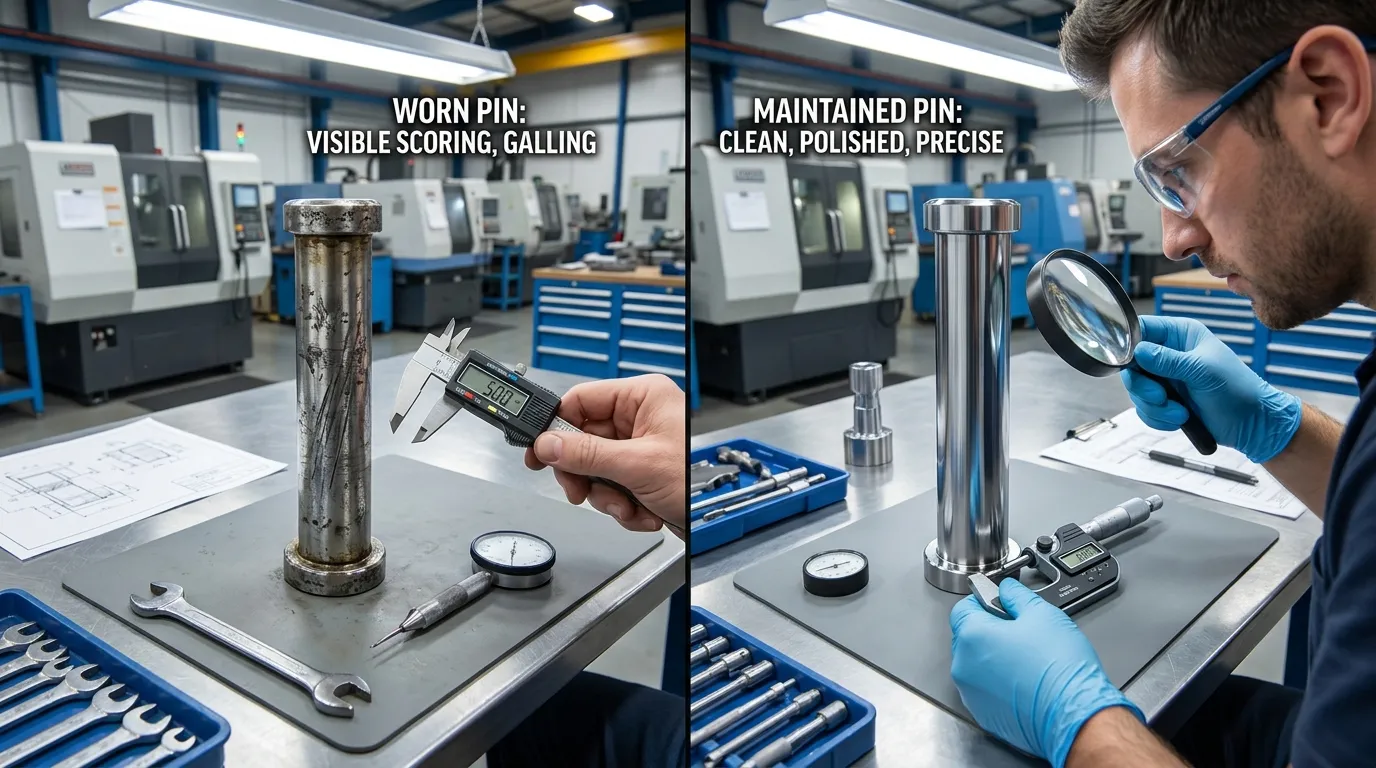
Early guide pin wear usually comes from poor lubrication, Zanieczyszczenie, or incorrect fit. Misalignment increases side loading, which accelerates scoring, irytujące, and uneven wear inside the mold.
Guide pins rarely fail suddenly. Most wear problems develop slowly through friction, Zanieczyszczenie, or poor maintenance habits. Once surface wear begins, alignment quality decreases and additional damage spreads across nearby components.
A common maintenance issue appears in dusty production environments. Dirt or resin contamination enters the guide system and scratches the guide pin surface during repeated cycling. This creates rough movement and increases wear inside the bushing.
Typowe objawy zużycia do sprawdzenia
- Zarysowania lub zarysowania na powierzchni prowadnicy
- Nierówne wzory zużycia po jednej stronie sworzni
- Oświetlanie wokół formy
- Ruch otwierania lub zamykania formy
- Zwiększone przebarwienia smarowania
- Hałas podczas cyklicznego wymkowania formy
Oil-less systems reduce lubrication maintenance, but they are not maintenance-free. Contamination and poor fit can still shorten guide pin life. In some environments, a properly lubricated standard system may last longer than a poorly maintained oil-less setup.
Tabela diagnostyki zużycia sworzni prowadzących
| Objawy | Prawdopodobna przyczyna | Ryzyko pleśni | Zalecane rozwiązanie |
|---|---|---|---|
| Punktacja nawierzchni | Słabe smarowanie | Szybsze zużycie | Popraw harmonogram smarowania |
| Nierówne zużycie | Niedopasowanie | Obróbka i naprężenia szczelne | Sprawdź dopasowanie ustawienia |
| Znaki galingu | Nadmierne tarcie | Ruch przejęty | Wymień uszkodzone komponenty |
| Ruch formowy | Zanieczyszczenie | Uszkodzenia tulejów | Czyść i kontrolować system |
| Wady obróbki błyskawicowej | Dopasowanie zużytej prowadnicy | Niespójność wymiarowa | Wymień zużyte sworznie i tuleje |
Wear patterns often affect more than one component. Teams investigating alignment issues may also benefit from reviewing Precyzyjne zużycie rdzenia because similar wear conditions can affect multiple tooling areas at the same time.
How do you select the right mold guide pin setup?
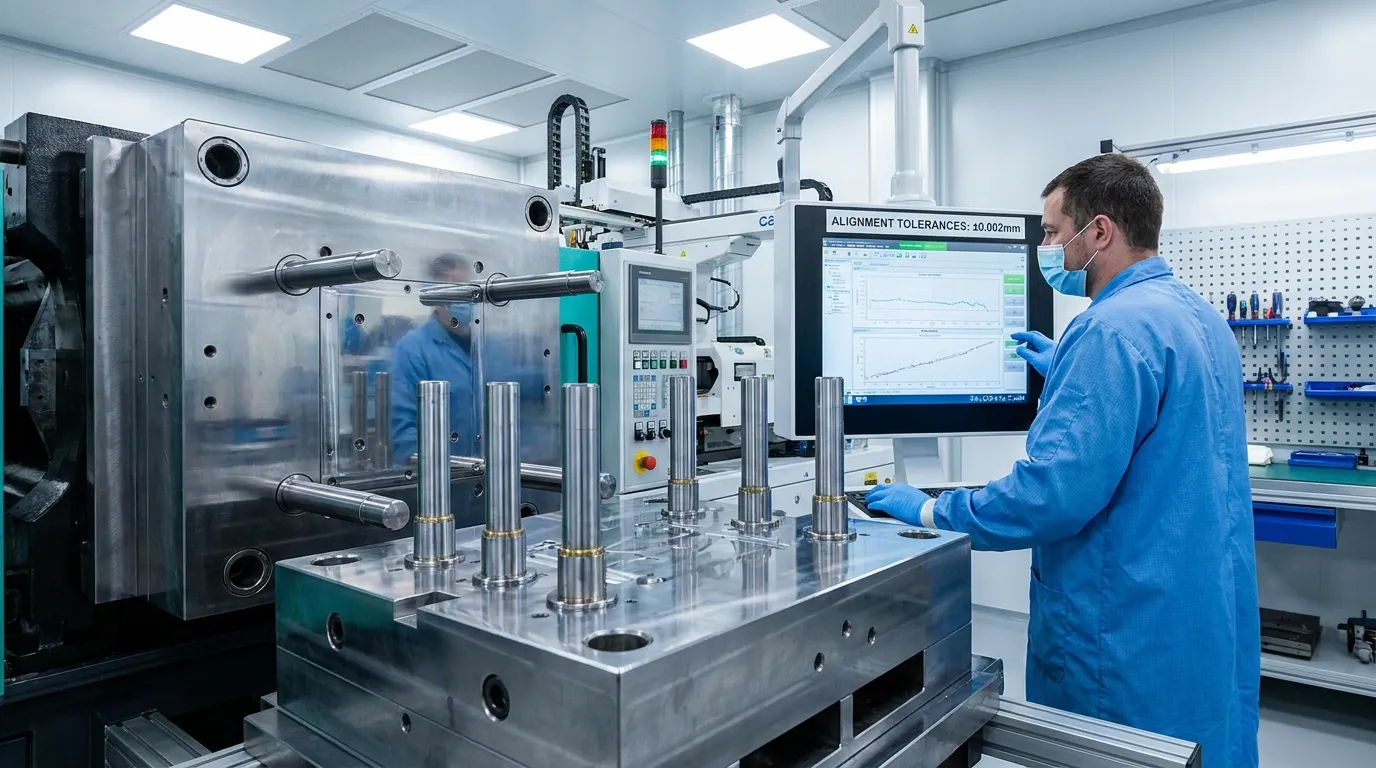
The right mold guide pin setup depends on mold size, production cycles, Precyzja wyrównania, and maintenance conditions. High-cycle molds usually require hardened materials, Bardziej precyzyjne tolerancje, and more reliable lubrication systems.
Guide pin selection should match the mold’s operating conditions. A low-volume prototype mold does not need the same alignment system as a high-speed production mold running continuously across multiple shifts.
Material hardness matters because guide pins experience repeated contact and side loading. Hardened tool steels such as SUJ2 are commonly used because they provide better wear resistance under repeated cycling conditions.
Standardowe vs precyzyjne systemy prowadnic
| Stan pleśni | Zalecany zestaw | Strategia smarowania | Oczekiwany poziom zużycia |
|---|---|---|---|
| Narzędzia o niskiej wydajności | Standardowe kołki prowadzące | Ręczne smarowanie | Umiarkowany |
| Forma do pakowania o wysokim cyklu | Utwardzone sworznie precyzyjne | Planowane smarowanie | Dolne |
| Precyzyjna forma medyczna | System ścisłych tolerancji | Kontrolowane smarowanie | Bardzo niskie |
| Zakurzony obszar produkcji | System bezolejowy lub uszczelniony | Zmniejszona konserwacja | To zależy od skażenia |
A practical example appears in consumer packaging molds. High-cycle production can create side loading and wear quickly, especially when molds operate at fast cycle times. Using hardened guide pins with controlled lubrication often reduces downtime compared to lower-cost standard setups.
Replacing worn guide pins early is usually cheaper than waiting for visible cavity damage. Small alignment problems can become expensive mold repairs quickly, especially in molds with precision cavity surfaces.
If your project involves different tooling environments or production sectors, Sunshine’s guide to Zastosowania w formach wtryskowych shows how mold requirements change across industries.
Are oil-less guide pin systems worth using?
Oil-less guide pin systems reduce lubrication maintenance, but they are not the best option for every mold. Their performance depends heavily on contamination levels, cycle frequency, and alignment precision requirements.
These systems usually use self-lubricating bushings or specialized surface materials that reduce the need for manual lubrication. They work well in environments where regular lubrication is difficult or where excess oil could contaminate products.
| Typ systemu | Główna zaleta | Główne ograniczenie |
|---|---|---|
| Standardowy system smarowania | Niższy koszt początkowy | Wymaga regularnej konserwacji |
| System bezolejowy | Zmniejszona ilość pracy smarowniczej | Wrażliwość na zanieczyszczenia |
| System precyzyjnie hartowany | Lepsza odporność na zużycie | Wyższy koszt narzędzi |
A dusty production area highlights the difference clearly. Oil-less systems may reduce grease buildup that traps debris, but contamination can still damage alignment surfaces if cleaning intervals are ignored. In cleaner environments, lubricated precision systems may provide longer service life and smoother movement.
What maintenance practices extend guide pin life?
Regular inspection and lubrication are the most effective ways to extend guide pin life. Small alignment problems become expensive mold repairs when wear is ignored for too long.
Preventive maintenance keeps alignment problems from spreading into cavity or core damage. Most guide pin wear starts as a small surface issue that grows gradually over thousands of cycles.
Maintenance teams should inspect guide pins during scheduled mold servicing. Wykończenie powierzchni, lubrication condition, and movement smoothness all provide early warning signs before major alignment failure develops.
Znaki, że Twoje prowadnice wymagają wymiany
- Widoczne nacięcie lub żalenie
- Nierówne ślady zużycia
- Luźne dopasowanie wewnątrz tulejek
- Problemy z miganiem pojawiają się nagle
- Zwiększone drgania lub opór ruchu
- Powtarzające się przebarwienia po smarowaniu
A common repair scenario involves delayed replacement. A mold may continue running after light flashing appears, but continued operation can damage cavity edges and increase downtime later. Replacing worn guide pins early often prevents larger repair costs.
Maintenance planning also overlaps with other tooling components. Teams reviewing broader wear conditions can compare alignment-related movement issues with Komponenty do konserwacji formy used throughout the mold system.
How do guide pins affect molding quality and repeatability?
Guide pin condition directly affects molding consistency. Stable alignment keeps cavity surfaces positioned correctly during injection and clamping, which helps maintain dimensional accuracy across production cycles.
When guide pins wear unevenly, the mold halves may shift slightly during injection pressure. Even small movement changes can create flashing, niespójna grubość ścianki, lub zmienność wymiarowa. Precision molds are especially sensitive to these alignment changes.
A medical molding example shows why this matters. Precision medical components often require tight dimensional repeatability. Hardened guide systems with tighter tolerances help maintain stable cavity positioning and reduce variation between production runs.
Guide pins also affect mold movement smoothness. Stable movement reduces stress on nearby tooling components and helps maintain repeatable cycle performance over long production runs. Manufacturers focused on high-precision parts often evaluate alignment together with Precyzyjna dokładność formowania because both directly influence finished part quality.
Poprawne wykonanie kolejnego kroku
Choosing the right mold guide pins comes down to operating conditions, maintenance discipline, oraz wymagania dotyczące precyzji. A standard setup may work well for lower-volume tooling, but high-cycle molds often need tighter tolerances, Materiały hartowane, and more consistent lubrication practices.
Before selecting a guide system, review cycle volume, contamination risks, maintenance access, and required part accuracy. Small alignment decisions affect wear, Błyskanie, Czas wolny, and mold life more than many buyers expect. A properly matched guide pin system usually saves money long before the mold reaches the repair bench.
Najczęściej zadawane pytania
What happens when mold alignment fails?
Mold alignment failure can cause flashing, cavity damage, nierówne zużycie, and dimensional inconsistency. Continued operation with poor alignment may also damage cores, tulejki, and other precision mold components.
How often should mold guide pins be replaced?
Czas wymiany zależy od ilości produkcji, Jakość smarowania, and mold precision requirements. High-cycle molds usually need more frequent inspection because even small wear patterns can affect alignment accuracy early.
What material is best for mold guide pins?
Hardened tool steels such as SUJ2 are commonly used for mold guide pins because they resist wear during repeated cycling. The best material still depends on production volume, lubrication conditions, and required precision.
Do guide pins need lubrication?
Most standard guide pin systems require lubrication to reduce friction and wear. Oil-less systems reduce maintenance demands, but they still need proper fit and contamination control to perform reliably.
Can worn guide pins cause flashing?
Tak, worn guide pins can allow slight mold movement during clamping and injection. Even small alignment shifts may create flashing and dimensional inconsistency in precision molded parts.
What is the difference between guide pins and guide bushings?
Guide pins direct mold alignment movement, while guide bushings support the pin and control friction during operation. Both components work together to maintain smooth movement and positioning accuracy.
Udostępnij:



Napisane przez Sunshine
W Sunshine, Jesteśmy profesjonalnym producentem i dostawcą komponentów do precyzyjnych form, oferując szeroką gamę produktów do tłoczenia i formowania wtryskowego. Naszym głównym celem są formy do dziurkania, Sworznie wyrzutowe i tuleje, oraz słupy i tuleje. Dzięki zaawansowanej obróbki CNC, Ścisła kontrola jakości, oraz silne możliwości produkcyjne, Zapewniamy niezawodność, Części o wysokiej precyzji, wraz ze standardowymi komponentami dostępnymi na stanie, zapewniającymi szybkie i efektywne globalne dostawy.
WIADOMOŚCI
UZYSKAJ USŁUGĘ
Z wysokiej jakości częściami dostosowanymi do każdego budżetu oraz przyjaznym personelem przeszkolonym, by Twoja wizyta była poinformowana i bezproblemowa.
