



Górny dziurk vs dolny dziurk w prasie do tabletów: Porównania ról
Porównanie prasy do tabletu górnego i dolnego, Główna różnica polega na ich roli podczas cyklu kompresji. Górny dziurk wchodzi do matrycy od góry i pomaga sprężyć proszek. Dolny wybicie tworzy przestrzeń służącą do wypełniania, reguluje objętość zatrzymanego prochu, Wspiera kompresję, i podnosi się, by wyrzucić gotową tabliczkę.
Kompletna stacja narzędziowa zawiera górny dziurkarz, niższy cios, i kostkę. Dla szerszego zakresu rodzin narzędzi i konfiguracji, Zobacz Rodzaje narzędzi do prasy do tabletów.
Dokładny ruch zależy od maszyny. W prasie do tabletów obrotowych, Oba wybicie poruszają się przez ścieżki sterowane wałkiem krzywki i przenoszą obciążenie kompresyjne. W podstawowym wycisku z pojedynczym uderzeniem, górny wybijacz zwykle wykonuje główny ruch kompresji skierowanej w dół, podczas gdy dolny kontroluje głębokość wypełnienia i wyrzut.
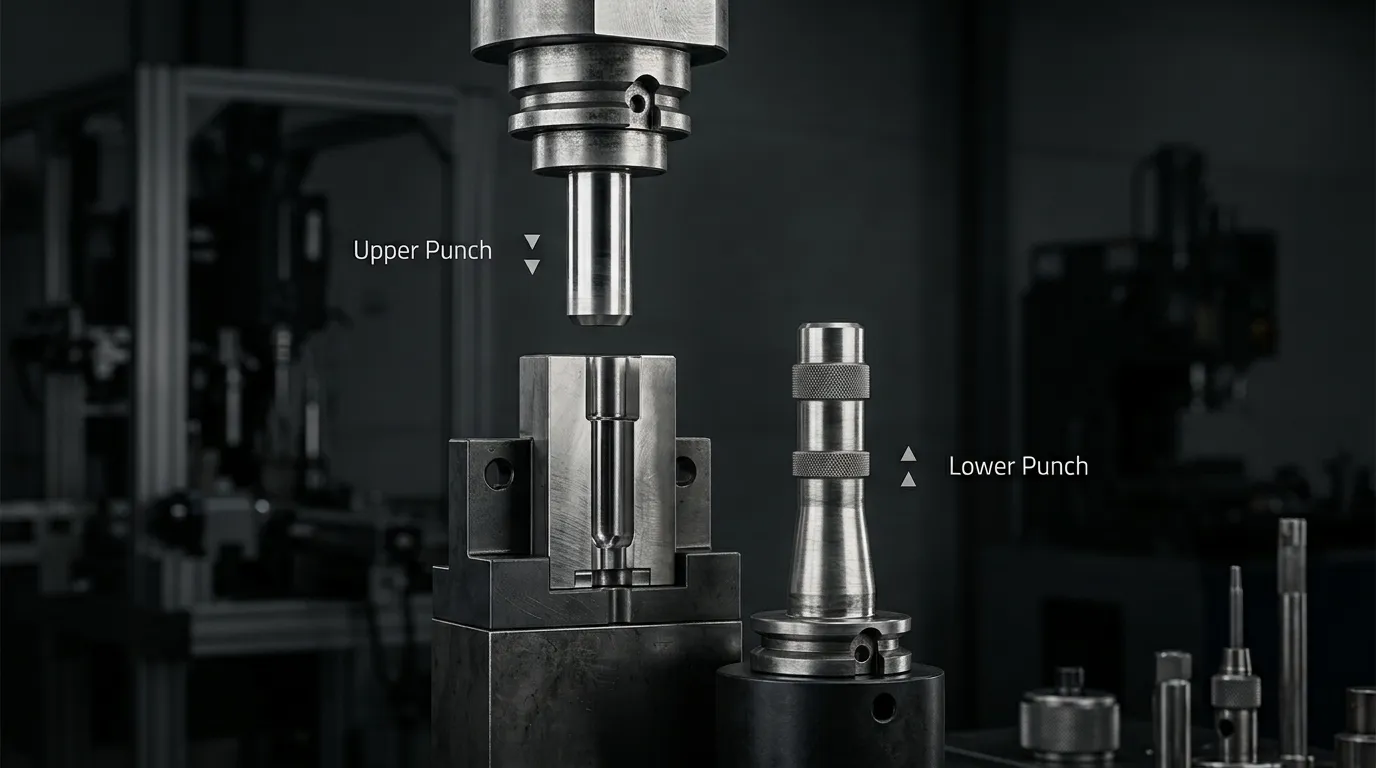
Górny cios kontra dolny cios: Szybkie porównanie
| Punkt porównania | Górny punch | Dolny moc uderzenia |
|---|---|---|
| Pozycja | Wchodzi do kości z góry | Wchodzi do kości od dołu |
| Typowa długość | Zazwyczaj ma krótszą łodygę | Zazwyczaj ma dłuższy trzonek, aby ułatwić większy ruch |
| Pełnienie roli | Zazwyczaj pozostaje nad matrycą podczas napełniania | Przesuwa się w dół, tworząc jamę wypełniającą |
| Rola dawkowania | Zazwyczaj nie ustala objętości zatrzymanego proszku | Przesuwa się w górę, aby ustalić ostateczną dawkę |
| Rola kompresji | Działa siłą z góry | Wspiera i wywiera siłę od dołu w prasie rotacyjnej |
| Ustawianie penetracji lub pozycji | Przebijanie górnego wybijaka wpływa na miejsca sprężania wewnątrz matrycy | Dolna pozycja wybijania wpływa na głębokość wypełnienia i wysokość komory kompresyjnej |
| Rola wyrzutowa | Wycofanie przed wyrzuceniem tabletki | Podnosi się, aby wypchnąć tablet z matrycy |
| Wspólne obszary inspekcji | Głowa, Długość robocza, Podpowiedź, Puchar, Zużycie powierzchni, Ustawienie penetracji | Głowa, dłuższy łodyg, Długość robocza, Podpowiedź, Puchar, Ruch dawkowania, Ruch wyrzutowy |
| Wymienność | Nie powinno się go używać jako dolnego dziurka, chyba że jest specjalnie zaprojektowany i zatwierdzony | Nie powinno się go używać jako górnego dziurka, chyba że jest specjalnie zaprojektowany i zatwierdzony |
Żaden z ciosów nie jest ważniejszy. Pełnią funkcje komplementarne, i oba muszą pozostać kompatybilne z tą kością, Wieża, Krzywki, Rolki, oraz ustawienia nacisku.
Jak górne i dolne dziurki poruszają się w cyklu tłoczenia obrotowego
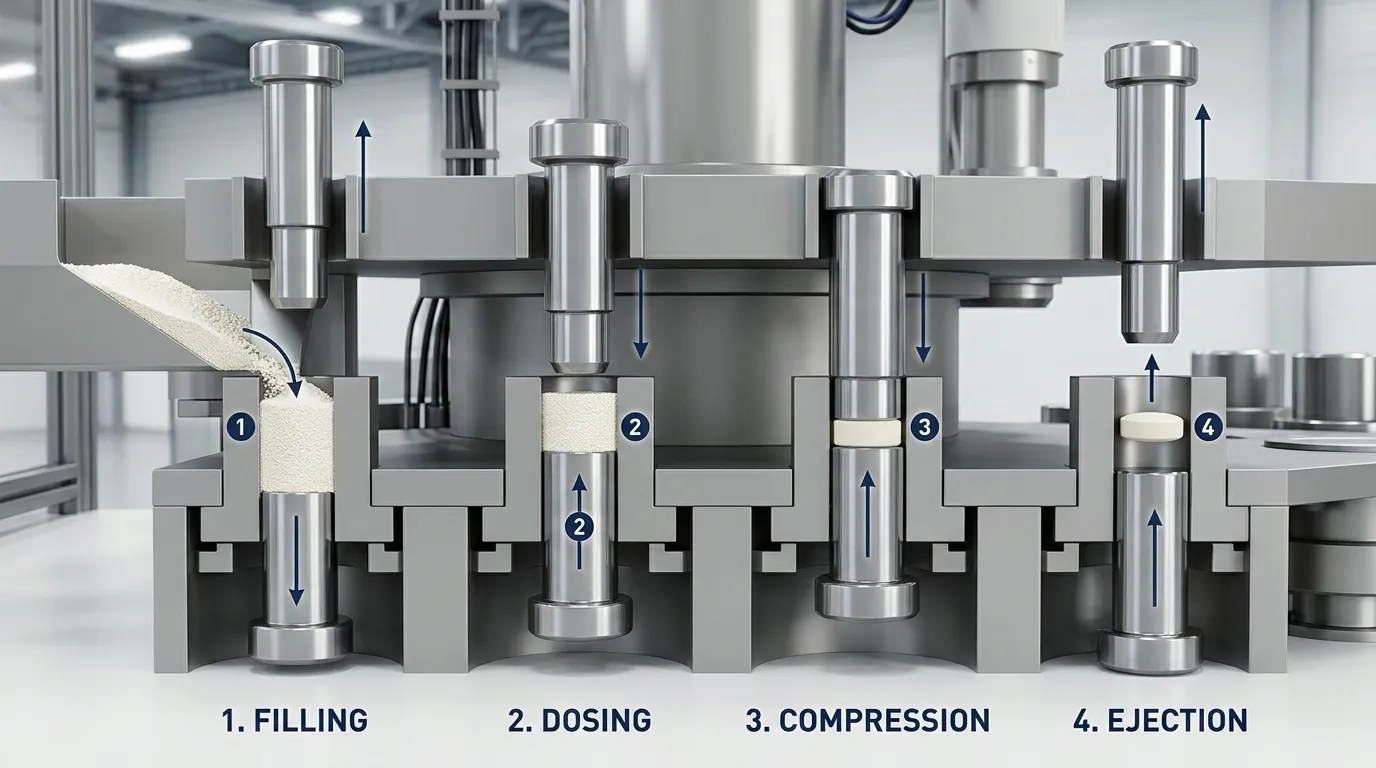
Obrotowa prasa do tabletów posiada wiele stacji dziurkaczy i matryc wokół obrotowej wieży. Ścieżki krzywki kierują pionowym ruchem uderzeń, podczas gdy wałki kompresyjne wywierają siłę na głowice.
Dolny dziurk zwykle przechodzi przez więcej pozycji roboczych niż górny. Musi stworzyć przestrzeń wypełniającą, Dostosuj dawkę, Kompresja wspierająca, i wyrzucić tabliczkę.
Napełnianie i dawkowanie: Dolny wybiór określa objętość prochu
Podczas napełniania, dolny dziurpak przesuwa się poniżej powierzchni stołu matrycowego. Przestrzeń między jego końcówką a wierzchnią matrycy tworzy wnękę, do której przepływa proszek lub granulacja.
Typowa sekwencja to:
- Wałek wypełniający ustawia dolny wybiór na wymaganej głębokości.
- Proch wchodzi do otworu matrycy.
- Niektóre prasy celowo wypełniają tę komorę.
- Krzywka do dawkowania lub regulacji wagi podnosi dolny wybicie.
- Nadmiar proszku jest usuwany, pozostawiając zatrzymaną objętość do kompresji.
Dlatego pozycja niższej pozycji uderzenia ma duży wpływ na wagę tabletu. Wyższa pozycja dawkowania pozostawia mniej proszku w matrycy, natomiast niższa pozycja zostawia więcej.
Jednak, Dolny wybicie nie kontroluje wyłącznie masy. Gęstość proszku, Spójność przepływu, Wydajność zasilająca, Prędkość wieży, a rozkład materiałów wpływa również na ilość zachowaną w każdej matrycy. Dyskusje techniczne dotyczące regulacji prasy do tabletu traktują więc pozycję dawkowania i zachowanie podawania jako zmienne powiązane, a nie jako pojedyncze sterowanie, Jak wyjaśniono tutaj Artykuł w Pharmaceutical Technology o regulacjach prasy.
Niektóre prasy również obniżają wypełniony materiał nieco poniżej powierzchni stołu matrycowego po dozowaniu. Ten ruch pull-down lub underfill zależy od konstrukcji maszyny i nie powinien być określany jako uniwersalny.
Przedkompresja i kompresja główna: Oba dziurki przenoszą obciążenie w prasie rotacyjnej
Po podaniu dawki, górny dziurk wchodzi do kostki. Para uderzeń przechodzi następnie przez strefy prekompresji i głównej kompresji.
Wstępna kompresja lekko konsoliduje proszek przed przyłożeniem maksymalnej siły. Może pomóc usunąć uwięzione powietrze, Stabilizuj warstwę prochu, oraz zmniejszenie ryzyka defektów podczas głównego etapu kompresji.
Podczas głównego sprężania:
- Górny wałek działa na głowicę górnego dziurka.
- Dolny wałek działa na dolną głowicę uderzeniową.
- Dwie powierzchnie wybiwarki zmniejszają przestrzeń zajmowaną przez proszek.
- Zwarcie formuje się pomiędzy górną a dolną końcówką wybicia wewnątrz matrycy.
Oznacza to, że nie jest trafne twierdzenie, że sam górny dziurkarz ściska tablet w prasie obrotowej. Oba dziurki przenoszą obciążenie, chociaż ich ścieżki i miejsca akcji nie są identyczne.
Przebicie górnego wybijaka decyduje, jak daleko górny wybiór wchodzi do matrycy podczas sprężania. Wpływa to na położenie strefy kompresji i może wpływać na uwalnianie powietrza, Ruch ekstrakcyjny, oraz prześwit narzędzi. Nie istnieje uniwersalna głębokość penetracji odpowiednia dla każdej prasy, Kształt tabliczki, Formułowanie, lub zestaw narzędzi.
Geometria głowicy dziurkaczowej wpływa również na to, jak długo narzędzia pozostają blisko maksymalnego sprężania. Ten okres często opisuje się jako czas zatrzymania. To zależy od konstrukcji prasy, głowica punch flat, Prędkość wieży, oraz układ kompresji.
Dekompresja i wyrzut: Dolny dziurk podnosi gotowy tablet
Po maksymalnym sprężaniu, Uderzenia zaczynają się rozdzielać, a ciśnienie z kompaktu zostaje uwalniane.
Górny dziurcz najpierw wycofuje się z matrycy. Dolny dziurk następnie przesuwa się w górę pod kontrolą krzywki wyrzutowej, aż tabletka osiągnie lub wzniesie się ponad powierzchnię stołu matrycy. Komponent startowy może następnie usunąć go ze stacji.
Wyższa niż normalna rezystancja wyrzutowa nie dowodzi automatycznie, że niższy wybiór jest wadliwy. Możliwe przyczyny obejmują:
- Nadmierne tarcie ściany matrycowej.
- Słabe smarowanie.
- Uszkodzone lub skażone powierzchnie matrycy.
- Nieprawidłowa geometria tabliczki.
- Zużycie krzywki przy dolnym dziurze lub wyrzucaniu.
- Niedopasowanie między dziurkaczem a matrycą.
- Przyczepność związana z formułą.
Dolny ruch wykonuje ostatni ruch podnoszący, jednak jakość wyrzutu zależy od całego narzędzia i systemu procesowego.
Prasy obrotowe vs jednorazowe prasy: Dlaczego role nie są identyczne
Wyjaśnienia online czasem wydają się sprzeczne, ponieważ opisują różne architektury prasowe.
| Punkt pracy | Rotacyjny tablet press | Podstawowa prasa jednorazowa |
| Liczba stacji narzędziowych | Wiele stacji rotuje w ciągu | Jedna stacja powtarza cykl |
| Ruch ciosu | Oba ciosy podążają za kontrolowanymi ścieżkami ruchu | Górny dziurk zwykle wykonuje główny suw kompresji |
| Kompresja | Siła jest kierowana przez górne i dolne rolki | Kompresję często generuje głównie opadający górny punch |
| Rola o niższym poziomie uderzenia | Nadzienie, Dawkowanie, Wsparcie kompresji, Ruch dekompresyjny, oraz wyrzucenie | Kontrola głębokości wypełniania, Wsparcie podczas kompresji, oraz wyrzucenie |
| Sekwencja produkcyjna | Ciągłe | Przerywane lub cykliczne |
Podstawowa różnica pozostaje taka sama: Górny cios nadchodzi z góry, natomiast dolny dziurpak ustanawia dno wnęki i wyrzuca gotową tabliczkę. Dokładna ścieżka siły i sekwencja ruchu muszą być opisane zgodnie z typem prasy.
Który uderzenie wpływa na wagę tabletu, Grubość, oraz Breaking Force?
Stwierdzenia takie jak "dolny punch kontroluje wagę" lub "upper punch kontroluje twardość" są przydatne tylko jako wstępne skróty. Rzeczywiste właściwości tabliczki są zależne od kilku zmiennych powiązanych.
| Atrybut tablicy | Silny wpływ związany z uderzeniami | Inne czynniki, które należy sprawdzić |
| Waga tabletki | Pozycja dozowania przy niższym dziurku i zachowana objętość matrycy | Gęstość proszku, przepływ, Spójność podajnika, Prędkość wieży, oraz rozmieszczenie materiałów |
| Grubość tabletki | Pozycje dziurkaczy, Długość robocza, oraz ustawienia wałków kompresyjnych | Masa prochu, Sprężalność formułowania, Elastiska regeneracja, oraz zużycie narzędzi |
| Tablet breaking force | Komora kompresyjna, Siła przyłożona, dwell, oraz stan wybicia | Formułowanie, Wilgoć, Poziom smaru, Własności cząstek, oraz geometria tablic |
Dolna pozycja dodawkowania bezpośrednio zmienia dostępną objętość przed kompresją, Ma więc najwyraźniejsze mechaniczne powiązanie z wagą tabletu. A Badanie projektowania eksperymentów kompresją tabletów Pokazuje także związek między ustawieniami fill-cam, Proch zatrzymany, Waga tabletu, Grubość, oraz warunki kompresji.
Grubość tabletki nie jest określana przez pojedynczy dziurkacz. To zależy od tego, ile proszku trafia do matrycy, Ostateczna odległość między ścianami uderzenia, Spójność długości roboczej, Ustawienia wałków, oraz jak kompaktowy rozpręża się po uwolnieniu ciśnienia.
Wytrzymałość tabletki powinna być lepiej omawiana jako siła łamania, a nie luźno nazywana twardością. USP Ogólny Rozdział 1217 Traktuje siłę pękającą jako zmierzoną właściwość tabletki stosowaną podczas rozwoju i kontroli jakości. Jest to wynik warunków formułowania i kompresji, nie jest to niezależne ustawienie wzmacniające.
Różnice fizyczne, Długość robocza, oraz wymienność
Dolny punch zwykle ma dłuższą trzonkę, ponieważ musi przejść przez napełnienie, Dawkowanie, Kompresja, oraz pozycje wyrzutowe. Górny dziurk podąża krótszą ścieżką od powyżej matrycy do strefy kompresji i z powrotem na zewnątrz.
Ważne cechy dziurkaczy to m.in.:
- Głowa: Wałki styków lub wałki kompresyjne.
- Głowa płaska: Wpływ na kontakt rolkowy i zawstyd zaciskowy.
- Lufa: Prowadzi wybijacz wewnątrz lufy wieży.
- Łodyga: Łączy głowicę i koniec roboczy.
- Koniec i kubek: Formuj tarczę tabletu.
- Ziemia: Wąski krawędź wokół miseczki, który pomaga wyznaczyć obwód tabletu.
- Długość robocza: Krytyczne odniesienie wymiarowe wpływające na pozycję dziurkacza wewnątrz prasy.
Górne i dolne dziurkacze mogą mieć dopasowane profile kubków, aby obie powierzchnie tablic prawidłowo się formowały, ale to nie czyni wszystkich komponentów wymiennymi. Długość łodygi, Szczegóły głowy, Długość robocza, Wymagania dotyczące ruchu, a kompatybilność maszyn może się różnić.
Rodziny narzędzi wpływają także na wymiary i kompatybilność prasy. Funkcjonalne rozróżnienie górnych i dolnych pozostaje takie samo, ale specyfikacje fizyczne mogą się różnić między standardami. Szczegółowy wybór wymiarowy należy do osobnego Narzędzia B kontra narzędzia D Porównanie.
ISO 18084:2011 dostarcza międzynarodowego kontekstu dla głównych wymiarów, Tolerancje, Charakterystyka, oraz wymienność dziurków i matryc do tabletów. Jednak, Odwołanie się do standardu nie dowodzi, że dany komponent pasuje do konkretnej prasy. Kompatybilność nadal wymaga maszyny, Wieża, Narzędzia, oraz weryfikację rysunków.
Rozwiązywanie problemów według objawów: Który dziurk lub powiązana część powinna być sprawdzona?
Usterka tabletu rzadko sama w sobie identyfikuje uszkodzony komponent. Wykorzystaj objaw, aby zdecydować, od czego powinna rozpocząć inspekcja, następnie sprawdź powiązane zmienne procesu.
| Objawy | Pierwsze czeki związane z dziurkaniem | Inne testy |
| Wariant wagi tabletu | Ruch o niższej sile ciosu, Pozycja dawkowania, Spójność długości roboczej | Kamera uzupełniająca, Pokarmnik, Gęstość proszku, przepływ, Prędkość wieży |
| Zmienność grubości | Górna i dolna długość robocza, Zużycie dziurkowe, Pozycja kompresyjna | Ustawienia wałków, Masa prochu, Elastiska regeneracja |
| Zmiana siły pękającej | Stan punch-face, Długość robocza, Komora kompresyjna | Formułowanie, dwell, Ustawianie siły, Wilgoć, Smarowanie |
| Pokrywanie lub laminacja | Penetracja górna, Stan twarzy uderzeniowej, Ruch dekompresyjny | Przedkompresja, Emisja powietrzna, prędkość, Formułowanie |
| Wysoka siła wyrzutowa | Ustawienie dolnego wybicia, Stan końcówki, Ruch wyrzutowy | Tarcie ściany matrycowej, Smarowanie, Zwężanie się, Wałek wyrzutowy |
| Przyklejanie lub skubanie | Górne i dolne powierzchnie uderzenia, Puchary, tłoczenie, Uszkodzenia powierzchni | Formułowanie, Temperatura, Wilgoć, Poziom smaru |
| Kontakt metalowy lub nietypowe zużycie | Wyrównanie od dziurka do wykrojnika, Zużycie głowicy i lufy | Otwory wież, Krzywki, Rolki, Instalacja |
Ta tabela jest punktem wyjścia, nie zastępuje instrukcji prasy, Zatwierdzone ustawienia procesu, lub inspekcję narzędzi kwalifikowanych. Widoczna wada może być spowodowana kombinacją zużycia narzędzi, Regulacja maszyny, Zachowania żywieniowe, oraz właściwości formułowania.
Co określić przy wymianie górnego lub dolnego dziurkacza
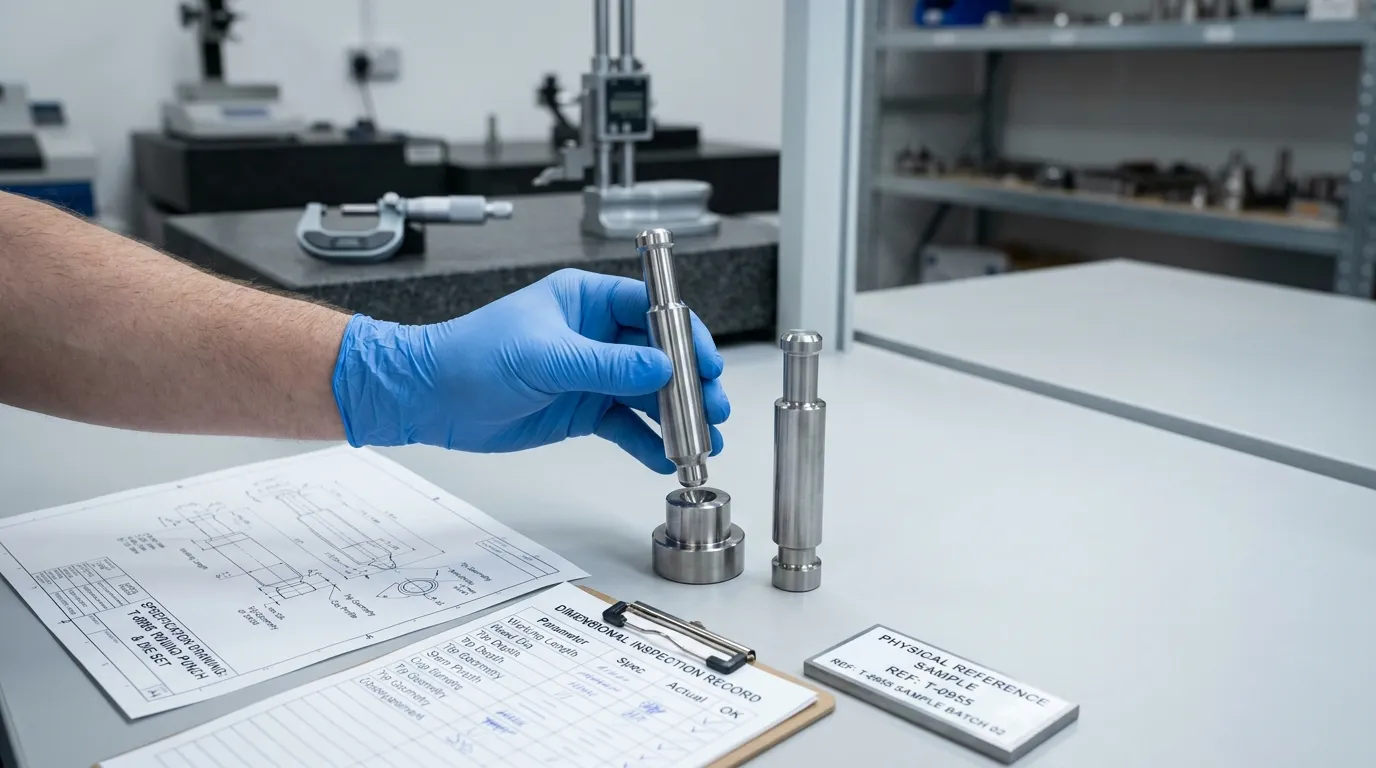
Dziurkacze zastępcze należy zamawiać na podstawie zweryfikowanych informacji technicznych, a nie tylko wyglądu. Dostawca może potrzebować:
- Producent prasy i model prasy.
- Maszyna obrotowa lub pojedyncza maszyna dziurkowa.
- Szczegóły wieżyczki lub stacji.
- Applicable tooling standard.
- Wzmocnienie, Niższy cios, oraz rysunki matryc.
- Fizyczna próbka, jeśli to odpowiednie.
- Długość robocza i wysokość krytyczna, lufa, Łodyga, Podpowiedź, Puchar, oraz wymiary terenu.
- Profil tabletu i głębokość kubka.
- Tłoczenie, logo, Punktacja, lub orientacja oznaczająca.
- Wymagania dotyczące materiałów i powłok.
- Ścieranie, Korozja, lub wątpliwości związane z formułowaniem.
- Wymagana ilość.
- Niezależnie od tego, czy prośba dotyczy indywidualnych wymian, czy dopasowanego zestawu narzędzi.
- Wymagania dotyczące inspekcji wymiarowej i dokumentacji materiałowej.
SunshinePro's Narzędzia prasy do tabletów Strona wymienia dziurki i matryce, Stal szybka, Obróbka CNC, Obróbka cieplna, oraz własne przetwarzanie na podstawie rysunków lub próbek. Jest również stwierdzone, że dostępne są standardowe i niestandardowe rozmiary oraz raporty z inspekcji materiałów.
Strona reklamuje dokładność tolerancji w granicach ±0.002 mm, Ale tego stwierdzenia nie należy interpretować jako automatycznie odnoszącego się do każdej cechy każdego uderzenia. Krytyczne tolerancje muszą być potwierdzone na zatwierdzonym planie rysunku i inspekcji dla konkretnego komponentu.
SunshinePro opisuje również inspekcję surowców, Monitorowanie w trakcie procesu, Testy końcowe, oraz raportowanie inspekcyjne w jego ramach Proces kontroli jakości. Kupujący powinni nadal potwierdzać zakres inspekcji, Wymiary mierzone, Dokumentacja materiałowa, oraz wymagania zgodności dla każdego zamówienia.
Górne i dolne uderzenia muszą działać jako dopasowany system
Górny cios, Dolny wynik, i umierają wykonując różne zadania, ale działają jak jedna stacja narzędziowa. Niezawodna kompresja zależy od ich wymiarów, Przebieg trasy, Stan powierzchni, Ruch krzywki, Ustawienia wałków, oraz kompatybilność z prasą.
Do wymiany lub niestandardowych narzędzi, Przygotuj model prasowy, Standard narzędzi, zatwierdzone rysunki, Próbki, Wymagania materialne, oraz potrzeby inspekcji przed zwróceniem się do dostawcy. Te szczegóły pozwalają na bardziej sensowną ocenę zgodności niż ogólne żądanie "górnego" lub "dolnego" wybicia.
Techniczni nabywcy mogą skontaktuj się z SunshinePro składanie rysunków, Próbki, oraz informacje prasowe do recenzji narzędzi tabletowych.
Udostępnij:



Napisane przez Sunshine
W Sunshine, Jesteśmy profesjonalnym producentem i dostawcą komponentów do precyzyjnych form, oferując szeroką gamę produktów do tłoczenia i formowania wtryskowego. Naszym głównym celem są formy do dziurkania, Sworznie wyrzutowe i tuleje, oraz słupy i tuleje. Dzięki zaawansowanej obróbki CNC, Ścisła kontrola jakości, oraz silne możliwości produkcyjne, Zapewniamy niezawodność, Części o wysokiej precyzji, wraz ze standardowymi komponentami dostępnymi na stanie, zapewniającymi szybkie i efektywne globalne dostawy.
WIADOMOŚCI
UZYSKAJ USŁUGĘ
Z wysokiej jakości częściami dostosowanymi do każdego budżetu oraz przyjaznym personelem przeszkolonym, by Twoja wizyta była poinformowana i bezproblemowa.
