



Die Mold Components: Selection Guide for Durable Stamping Tools
Die mold components control stamping accuracy, alignment stability, and tooling lifespan. Choosing the right guide posts, tulejki, ciosy, and wear-resistant materials helps reduce downtime and improve repeatable production. Most early tooling failures come from poor alignment, incorrect material selection, or weak maintenance planning. Standard components work well for many production lines, while custom parts are better for specialized tolerances or high-load applications.
Stamping tools fail faster when components are mismatched to production conditions. A guide system with poor alignment can wear out punches early, while overly hard tooling materials may crack under repeated impact. Buyers need more than a parts catalog. They need a selection framework that balances durability, sourcing speed, Konserwacja, and repeatable performance.
What are die mold components and why do they affect stamping durability?
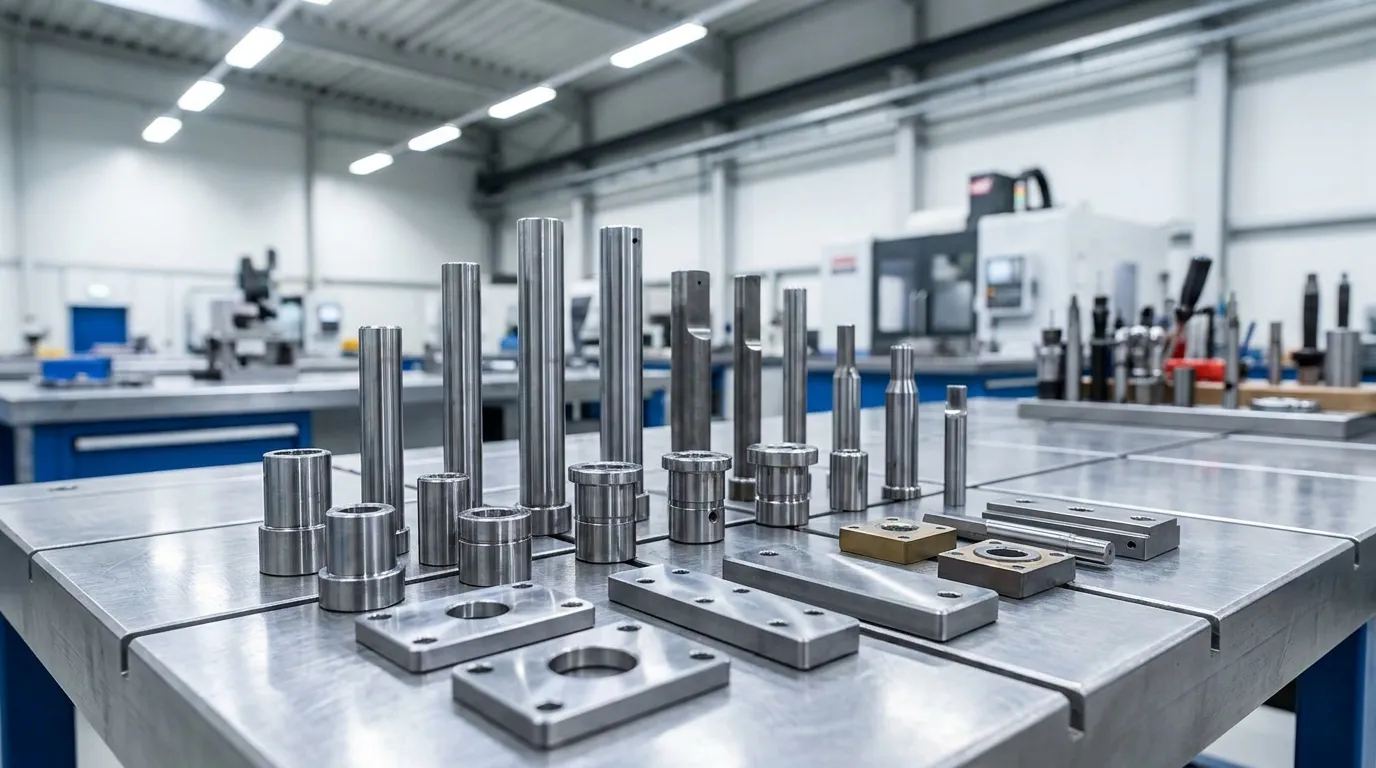
Die mold components directly affect stamping accuracy, Odporność na zużycie, and tooling lifespan. Systemy prowadzenia, ciosy, and bushings must work together to maintain alignment and repeatable production under high-cycle operation.
Die mold components are the precision parts inside a stamping tool that guide movement, control alignment, and shape material during production. Common examples include punches, to, Punkty przewodnika, tulejki, Systemy wyrzutowe, Płyty zużycia, and sleeves.
When one component wears unevenly, the entire tooling system can drift out of tolerance. That creates burrs, Wariacja wymiarowa, and unnecessary downtime. In high-cycle stamping lines, even small alignment errors become expensive over time.
Many buyers focus only on hardness or material grade. That approach misses a bigger issue. Long-term stamping performance depends on how well components work together under load, prędkość, oraz powtarzający się wpływ.
| Składnik | Główna funkcja | Wpływ na trwałość |
|---|---|---|
| Uderzenia | Kształt lub cięty materiał | Wysokie narażenie na zużycie |
| Punkty przewodnika | Utrzymanie wyrównania | Zapobiegaj nierównemu zużyciu |
| Tuleje | Zmniejszenie tarcia | Poprawa stabilności ruchu |
| Płyty zużycia | Powierzchnie chronione | Wydłuż żywotność narzędzi |
| Systemy wyrzutowe | Usuń tłoczone części | Zmniejszenie przerw w produkcji |
For a broader overview of tooling structures and systems, Zobacz to Przewodnik po komponentach formy oraz eksplorować powiązane tematy Systemy komponentów układu.
Which die mold components have the biggest impact on tool life?
Punkty przewodnika, tulejki, ciosy, and wear-resistant inserts typically determine tool lifespan more than secondary accessories. Poor alignment or inadequate hardness increases friction, dryf wymiarowy, and premature failure during repeated stamping cycles.
Guide systems usually have the biggest effect on long-term durability because they control movement accuracy. If alignment drifts even slightly, punches and dies begin wearing unevenly. That shortens service life and increases replacement frequency.
Punch material also matters, especially in high-volume stamping. Harder materials improve wear resistance, but higher hardness is not always better. Extremely hard punches can become brittle under repeated impact loads and may crack earlier than tougher materials with lower hardness.
A high-cycle automotive stamping line provides a good example. One manufacturer replaced guide bushings every two months because alignment tolerance was too loose. After tightening guide fit tolerances and improving lubrication control, the replacement cycle extended significantly without changing punch material.
| Składnik | Typowa przyczyna awarii | Wpływ na żywotność narzędzi |
|---|---|---|
| Punkty przewodnika | Niedopasowanie | Nierówne zużycie |
| Tuleje | Tarcie i zanieczyszczenia | Zmniejszona celność |
| Uderzenia | Kruchość lub zużycie | Cracking i przestój |
| Wkładki zużycia | Zmęczenie powierzchni | Krótsze interwały konserwacji |
| Źródła | Zmęczenie kompresyjne | Niespójna eksploatacja |
Kupujący porównujący tolerancje i odporność na zużycie również powinni je zapoznać Elementy precyzyjnej formy for tighter production requirements.
How do you choose guide posts and bushings for repeatable alignment?
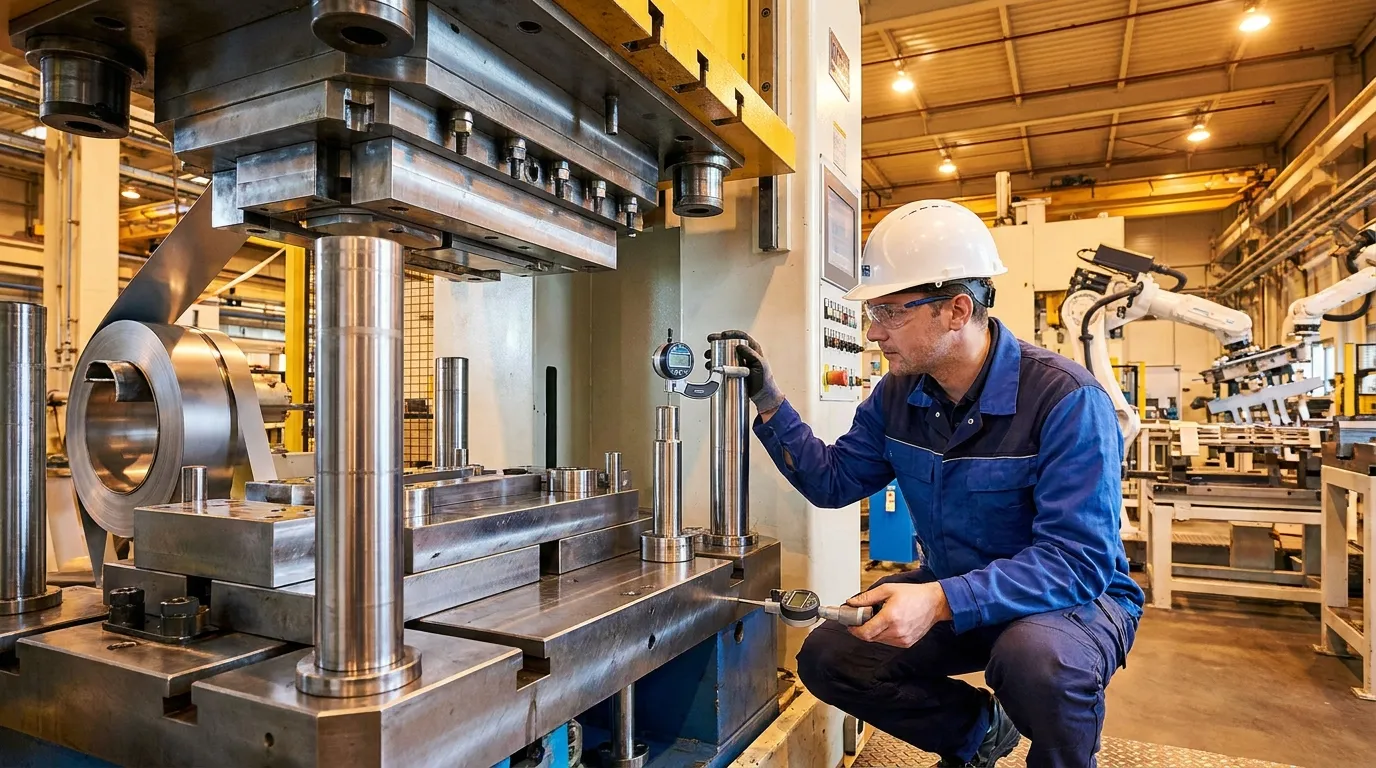
Guide posts and bushings should match production load, stamping speed, oraz wymagania tolerancyjne. Tight alignment control reduces uneven wear, protects punches, and improves repeatable part accuracy over long production runs.
Guide systems should be selected based on operating conditions, not just catalog dimensions. High-speed stamping lines usually require tighter fit tolerances and smoother surface finishes to reduce friction and vibration.
Poor alignment creates a chain reaction. Bushings wear faster, punches shift slightly off-center, and stamped parts lose dimensional consistency. In severe cases, the die set can crack from uneven stress distribution.
Prześwit i tolerancja dopasowania
Tighter clearances improve alignment accuracy, but excessive tightness can increase friction and lubrication problems. The best balance depends on cycle speed, stamping load, and contamination exposure.
Standard guide systems often perform well for medium-volume production because replacement parts are easier to source. Fully custom systems are usually reserved for specialized tolerances or unusual tooling geometry.
| Warunki produkcji | Zalecane podejście |
|---|---|
| Tłoczenie średniej objętości | Standardowe systemy prowadzenia |
| Produkcja szybka | Tuleje dopasowane precyzyjnie |
| Ciężkie obciążenia uderzeniowe | Bardziej wytrzymałe materiały prowadzące |
| Środowisko skażone | Ulepszona konstrukcja smarowania |
Wybór materiałów i wykończenia powierzchni
Surface finish affects wear more than many buyers expect. Rough surfaces increase friction and accelerate bushing wear, especially during long production runs.
A manufacturer that switched from fully custom guide systems to stocked standard assemblies reduced downtime because replacement inventory became easier to maintain. Faster replacement availability often matters more operationally than small precision gains.
For commonly stocked assemblies and replacement availability, Przejrzyj te recenzje Części systemu prowadzenia.
What materials work best for high-cycle stamping applications?
The best die mold component material depends on stamping force, Produkcja, oraz warunki zużycia. Harder materials improve wear resistance, but excessive hardness can increase brittleness and shorten component life under impact loads.
Tool steel remains the most common material for punches, to, and wear components because it balances hardness, Wytrzymałość, and machining stability. Heat treatment also plays a major role. Two components made from the same steel can perform very differently after processing.
Many buyers assume maximum hardness guarantees maximum durability. To nie zawsze jest prawdą. A stamping operation using extremely hard punch materials experienced repeated cracking because the tooling absorbed heavy impact loads during each cycle.
Tabela decyzyjna o wyborze komponentów matrycy
| Produkcja | Obciążenie tłoczące | Zalecany zakres materiałów | Standardowe czy niestandardowe |
|---|---|---|---|
| Niskowolumowe | Światło | Ogólna stal narzędziowa | Standard |
| Średnia objętość | Umiarkowany | Stal użytkowana termicznie | Standard |
| Wysokowolumowe | Heavy | Wysoka odporność na zużycie i wytrzymałość | Personalizacja w razie potrzeby |
| Precyzyjne tłoczenie | Umiarkowany | Stal narzędziowa o ścisłej tolerancji | Zwyczaj |
| Tłoczenie materiałów ściernych | Heavy | Stal o zwiększonej odporności na zużycie | Zwyczaj |
Heat treatment quality matters as much as material grade. Poor heat treatment creates inconsistent hardness, Zmęczenie powierzchniowe, and uneven wear patterns.
Replacement planning also affects material decisions. Some manufacturers choose slightly lower hardness materials because they are easier to machine, faster to replace, and less prone to cracking.
Kupujący planujący zapasy konserwacyjne mogą porównać dostępne Części formy zamienne before finalizing specifications.
When should you use standard components instead of custom parts?
Standard die mold components reduce sourcing time and replacement delays for most applications. Custom parts become necessary when tolerance, Geometria, or production load requirements exceed standard component limitations.
Standard components work well in many stamping operations because they simplify sourcing, Konserwacja, oraz planowanie inwentaryzacji. Replacement parts are easier to stock, and production downtime is usually shorter when failures occur.
Custom components make sense when production requirements exceed standard tolerances or when tooling geometry is highly specialized. Precision electronics stamping and complex automotive applications often fall into this category.
Custom die components are not automatically higher quality. Standard parts are often the safer operational choice when replacement speed matters more than extreme precision.
Standardowa vs niestandardowa tabela wyboru
| Sytuacja | Lepszy wybór | Główny powód |
|---|---|---|
| Ogólny tłoczenie | Standard | Szybsze pozyskiwanie |
| Częste wymiany | Standard | Łatwiejsze planowanie zapasów |
| Wymagania dotyczące ekstremalnej tolerancji | Zwyczaj | Precyzyjne sterowanie |
| Specjalistyczna geometria | Zwyczaj | Lepiej dopasowanie |
| Globalna produkcja wielolokacyjna | Standard | Stała dostępność |
Lead time is another factor. According to manufacturing timeline analysis from Ulitech Engineering, tooling revisions and component delays often extend production schedules more than buyers initially expect.
For common stocked options, compare available Standardowe części formy.
Why do die mold components fail earlier than expected?
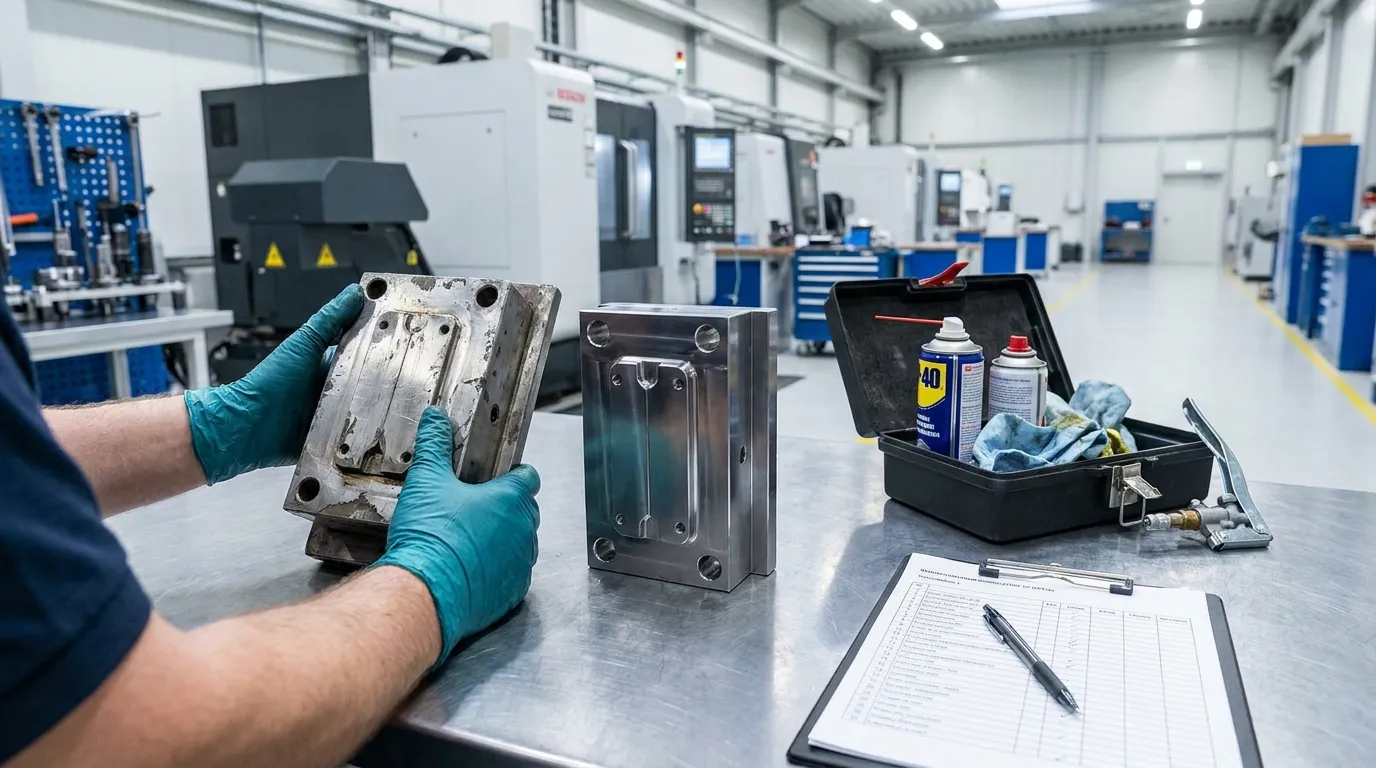
Most premature die component failures are caused by alignment problems, Niewystarczające smarowanie, Zanieczyszczenie, or incorrect material selection. Preventive maintenance and proper fit tolerance usually extend tool life more effectively than simply choosing harder materials.
Misalignment is one of the biggest causes of premature wear. Even small guide system movement creates uneven loading across punches and bushings. Z czasem, that increases friction and dimensional drift.
Contamination is another common issue. Metal particles and debris can damage bushings quickly if lubrication systems are inconsistent or poorly maintained.
Lista kontrolna do rozwiązywania problemów z przedwczesną awarią
| Objaw awarii | Prawdopodobna przyczyna | Etap inspekcji | Zalecane rozwiązanie |
|---|---|---|---|
| Nierówne zużycie ciosów | Niedopasowanie | Sprawdź przezor w przewodniku | Dostosowanie tolerancji dopasowania |
| Punktacja tulejów | Słabe smarowanie | Sprawdź przepływ smarowania | Popraw harmonogram smarowania |
| Uderzenie uderzeniowe | Nadmierna twardość | Specyfikacja materiałów przeglądowych | Zwiększenie równowagi wytrzymałości |
| Zmęczenie powierzchni | Zanieczyszczenie | Sprawdź ekspozycję na odłamki | Popraw rutynę czyszczenia |
| Dryf wymiarowy | System zużytych prowadnic | Dokładność wyrównania miar | Wymień zużyte prowadnice |
Many tooling failures blamed on material quality actually start with maintenance problems. Regular inspection schedules usually prevent larger failures before production stops.
A preventive maintenance program that checks alignment, Smarowanie, and surface wear at fixed intervals often reduces replacement costs more effectively than upgrading every component material.
Operacje dotyczące ścisłych tolerancji mogą je przeglądać Elementy narzędziowe o wysokiej precyzji for improved alignment consistency.
How should buyers evaluate suppliers and lead times?
Supplier evaluation should focus on delivery consistency, Wsparcie dla zapasów, Kontrola jakości, and replacement availability. A low component price means little if replacement delays stop production for weeks.
Global buyers also need to consider customs processing and shipping documentation. Import delays caused by incomplete paperwork can extend lead times significantly. Recent customs guidance from Służby celne Bangladeszu oraz analizę logistyczną z EximAgent AI show that documentation errors remain a major cause of shipment delays.
Pytania do zadawania dostawcom
- Do they stock replacement inventory locally?
- Can they maintain consistent tolerances across batches?
- What is the average replacement lead time?
- Do they provide inspection reports?
- How do they handle urgent replacement requests?
One manufacturer experienced several weeks of downtime because replacement guide components were unavailable during a production spike. After switching to a supplier with stocked standard assemblies, the company reduced replacement delays and stabilized scheduling.
Supplier quality control also matters during production launch. Manufacturing analysis from HH Molds Inc. highlights how inspection planning affects tooling consistency and long-term production stability.
For broader sourcing considerations and tooling categories, Przeczytaj to Pozyskiwanie komponentów narzędziowych.
What maintenance practices extend die mold component lifespan?
Regular inspection, lubrication control, and planned replacement schedules extend component lifespan more effectively than reactive repairs. Most long-term tooling problems develop gradually before major failures appear.
Maintenance teams should track wear patterns instead of waiting for visible damage. Small alignment shifts can create uneven punch loading long before production defects become obvious.
Zalecana lista kontrolna konserwacji
- Kontroluj wyrównanie prowadnic w zaplanowanych odstępach czasu
- Regularnie czyść zanieczyszczenia z ruchomych powierzchni
- Monitoruj konsystencję smarowania
- Wymień zużyte tuleje zanim dryf tolerancji się rozprzestrzeni
- Utrzymuj dostępne zapasy części zamiennych
- Rejestruj powtarzające się wzory zużycia na potrzeby przyszłych korekt
A scheduled inspection program helped one stamping operation reduce premature punch wear after identifying uneven guide loading early. The company avoided a larger die failure because technicians corrected alignment before cracks developed.
Utrzymanie kopii zapasowej Zapasy narzędzi zapasowych also shortens recovery time when failures happen unexpectedly.
Poprawne wykonanie kolejnego kroku
Choosing the right die mold components is about balancing precision, Trwałość, sourcing speed, and maintenance practicality. Buyers who focus only on hardness or upfront cost often miss the operational factors that affect long-term tooling performance.
Start by evaluating alignment stability, Produkcja, replacement lead times, and maintenance requirements together. Standard components may provide the best long-term value for many stamping lines, especially when replacement speed matters. For tighter tolerances or specialized production demands, custom tooling can still be the better fit when managed carefully.
Najczęściej zadawane pytania
What are die mold components?
Die mold components are the precision parts used inside stamping tools to guide movement, shape material, and maintain alignment during production. Common examples include punches, Punkty przewodnika, tulejki, Systemy wyrzutowe, and wear-resistant inserts.
What components affect stamping accuracy the most?
Punkty przewodnika, tulejki, and punches have the biggest effect on stamping accuracy because they control alignment and dimensional consistency. Worn or poorly matched components often cause uneven wear, burrs, oraz dryf wymiarowy.
What material is best for stamping dies?
The best material depends on production volume, impact load, oraz warunki zużycia. Tool steels with proper heat treatment usually balance hardness, Wytrzymałość, and wear resistance better than overly hardened materials.
When should custom die components be used?
Custom die components are best when standard parts cannot meet tolerance, Geometria, or production-load requirements. They are commonly used in high-precision or specialized stamping applications.
Why do die components wear out early?
Most premature wear comes from misalignment, słabe smarowanie, Zanieczyszczenie, or incorrect material selection. Preventive maintenance and accurate fit tolerances usually improve lifespan more than increasing hardness alone.
How do you improve mold life?
Mold life improves when components are properly aligned, regularly lubricated, and inspected before excessive wear develops. Scheduled replacement planning also reduces sudden production failures.
Udostępnij:



Napisane przez Sunshine
W Sunshine, Jesteśmy profesjonalnym producentem i dostawcą komponentów do precyzyjnych form, oferując szeroką gamę produktów do tłoczenia i formowania wtryskowego. Naszym głównym celem są formy do dziurkania, Sworznie wyrzutowe i tuleje, oraz słupy i tuleje. Dzięki zaawansowanej obróbki CNC, Ścisła kontrola jakości, oraz silne możliwości produkcyjne, Zapewniamy niezawodność, Części o wysokiej precyzji, wraz ze standardowymi komponentami dostępnymi na stanie, zapewniającymi szybkie i efektywne globalne dostawy.
WIADOMOŚCI
UZYSKAJ USŁUGĘ
Z wysokiej jakości częściami dostosowanymi do każdego budżetu oraz przyjaznym personelem przeszkolonym, by Twoja wizyta była poinformowana i bezproblemowa.
