



Forma elektroniczna: Precyzyjne narzędzia do obudów, Złącza, oraz Komponenty
Electronic mold manufacturing focuses on producing tight-tolerance plastic housings, Złącza, and internal structures for electronic products. These molds must control warpage, maintain connector alignment, support PCB fit accuracy, and deliver repeatable dimensions across production runs. Electronic molds commonly use ABS, PC, or PC/ABS materials and require careful mold trials, Kontrola chłodzenia, and dimensional validation before mass production.
Electronic products depend on precise plastic parts. A small dimensional shift inside a router housing or connector shell can create assembly failures, loose fits, or PCB alignment problems. That’s why electronic molding requires tighter process control than many standard plastic applications. This guide explains how electronic molds are designed, testowane, and validated for housings, Złącza, and precision internal structures.
What is an electronic mold?
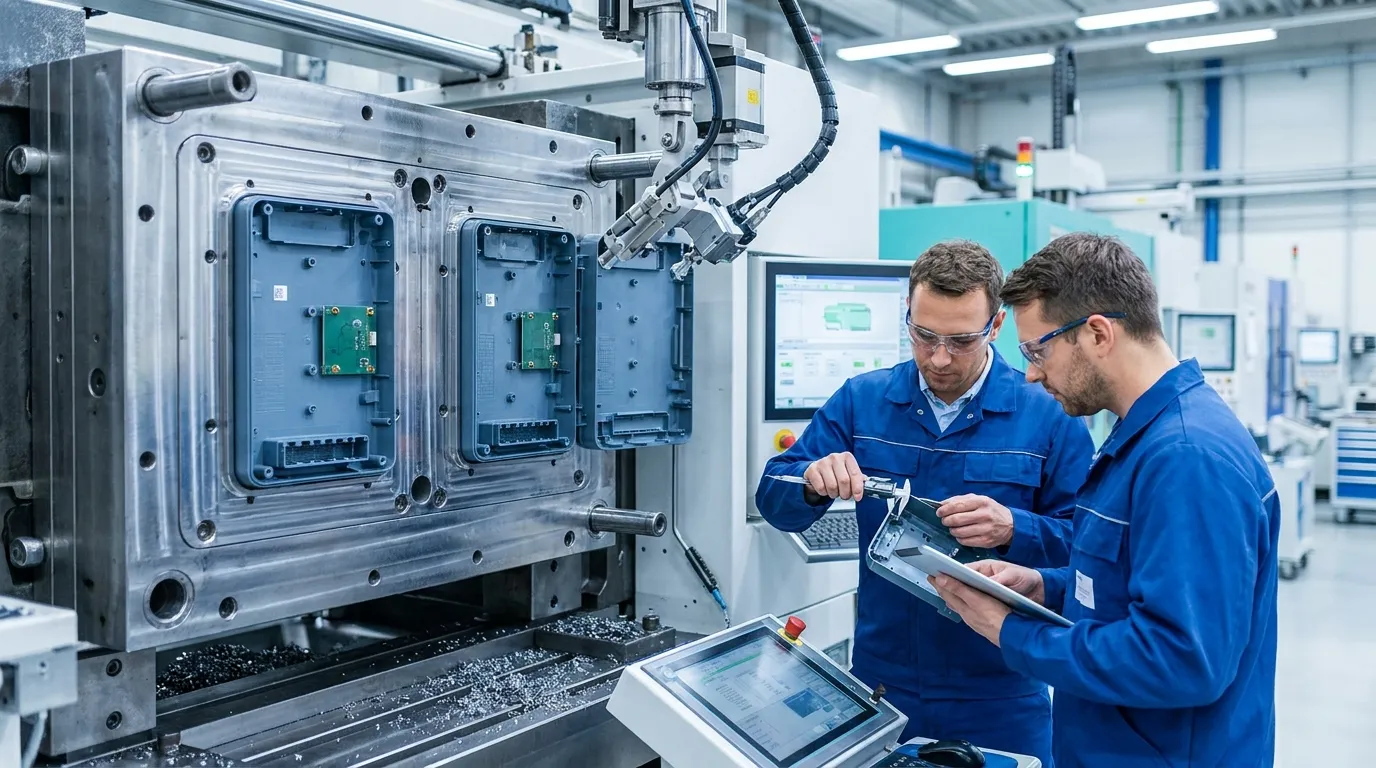
Electronic molds are precision injection molds designed for plastic housings, Złącza, and internal electronic structures that require tight dimensional control. They help maintain alignment, reduce warpage, and support reliable PCB and component assembly.
An electronic mold is a tooling system used to produce plastic parts for electronic products such as router housings, battery covers, smart sensors, connector shells, and control unit enclosures. These parts often contain thin walls, snap-fits, mounting posts, or cable channels that require consistent dimensions across large production volumes.
Unlike general-purpose molding, electronic molding focuses heavily on dimensional repeatability. Connector openings, PCB mounting points, and enclosure joints must fit correctly every time. Even a small variation can affect assembly speed or product reliability.
Many buyers reviewing electronics tooling first need a basic understanding of mold structure and processing. A broader overview of Podstawy formowania wtryskowego can help explain how tooling systems support mass production before focusing on electronics-specific requirements.
Why do electronic housings require tighter tolerances than standard plastic parts?
Electronic housings require tighter tolerances because even small dimensional shifts can affect PCB placement, connector alignment, snap-fit closure, or cable routing. Electronics parts must maintain repeatable dimensions across large production volumes.
A decorative plastic shell can tolerate small dimensional changes. Electronic housings usually cannot. Internal components such as PCBs, charging ports, Złącza, and mounting clips depend on exact positioning. If one section shrinks unevenly during cooling, the entire assembly may fail.
A common example is a Wi-Fi router enclosure. If the mold causes slight distortion near the connector openings, Ethernet or USB ports may no longer align correctly with the housing exterior. The product might still function, but assembly becomes slower and cosmetic gaps become visible.
Thin-wall electronics parts also increase molding difficulty. Reduced wall thickness lowers material use and keeps products compact, but aggressive wall reduction raises the risk of deformation during cooling. This is why cooling balance and process monitoring matter so much in electronics manufacturing.
Process monitoring tools can help manufacturers maintain consistent molding conditions during production. Wskazówki dotyczące instrumentacji form RJG explains how sensors and validation systems support stable molding performance.
| Cechy | Standardowa plastikowa część | Obudowa elektroniczna |
|---|---|---|
| Wrażliwość na tolerancję | Umiarkowany | Wysoko |
| Wymagane wyrównanie PCB | Nie | Tak |
| Pozycjonowanie złącza | Limitowane | Krytyczne |
| Precyzja dopasowania zatrzaskowego | Podstawy | Ścisła kontrola |
| Struktury cienkościenne | Okazjonalne | Powszechne |
Which materials are commonly used for electronic molds and housings?
ABS, PC, and PC/ABS blends are commonly used for electronic housings because they balance impact resistance, Stabilność wymiarowa, oraz jakość powierzchni. Flame-retardant grades are often required for consumer and industrial electronics.
Material selection affects durability, Wygląd, Odporność na ciepło, oraz stabilność wymiarowa. Most electronic housings use engineering plastics that can maintain shape consistency during molding and repeated use.
ABS is common in cost-sensitive consumer electronics because it offers good surface finish and easy processing. It works well for products with moderate mechanical demands. Mimo to, ABS is not always the best choice for electronic housings. PC/ABS is usually safer when dimensional stability and impact resistance matter more.
Polycarbonate provides higher strength and heat resistance, though it can increase tooling and processing complexity. Many industrial or automotive electronic parts use PC or PC/ABS blends for better long-term durability.
Tabela porównawcza żywic elektronicznych
| Materiał | Odporność na uderzenia | Stabilność wymiarowa | Wykończenie powierzchni | Typowe zastosowania | Ograniczenia |
|---|---|---|---|---|---|
| ABS | Umiarkowany | Dobrze | Świetnie | Domy konsumenckie | Niższa odporność na ciepło |
| PC | Wysoko | Bardzo dobrze | Dobrze | Elektronika przemysłowa | Wyższa temperatura formowania |
| PC/ABS | Wysoko | Świetnie | Bardzo dobrze | Smart devices, Elektronika samochodowa | Wyższy koszt materiałów |
| Ognioodporny PC/ABS | Wysoko | Świetnie | Bardzo dobrze | Control units, power systems | Potrzebna jest większa kontrola przetwarzania |
A smart home sensor project may begin with ABS for cost reasons. After repeated snap-fit testing, cracking can appear near the enclosure clips. W takim przypadku, switching to PC/ABS often improves durability without changing the overall design.
How do manufacturers prevent warpage and fit problems in electronic housings?
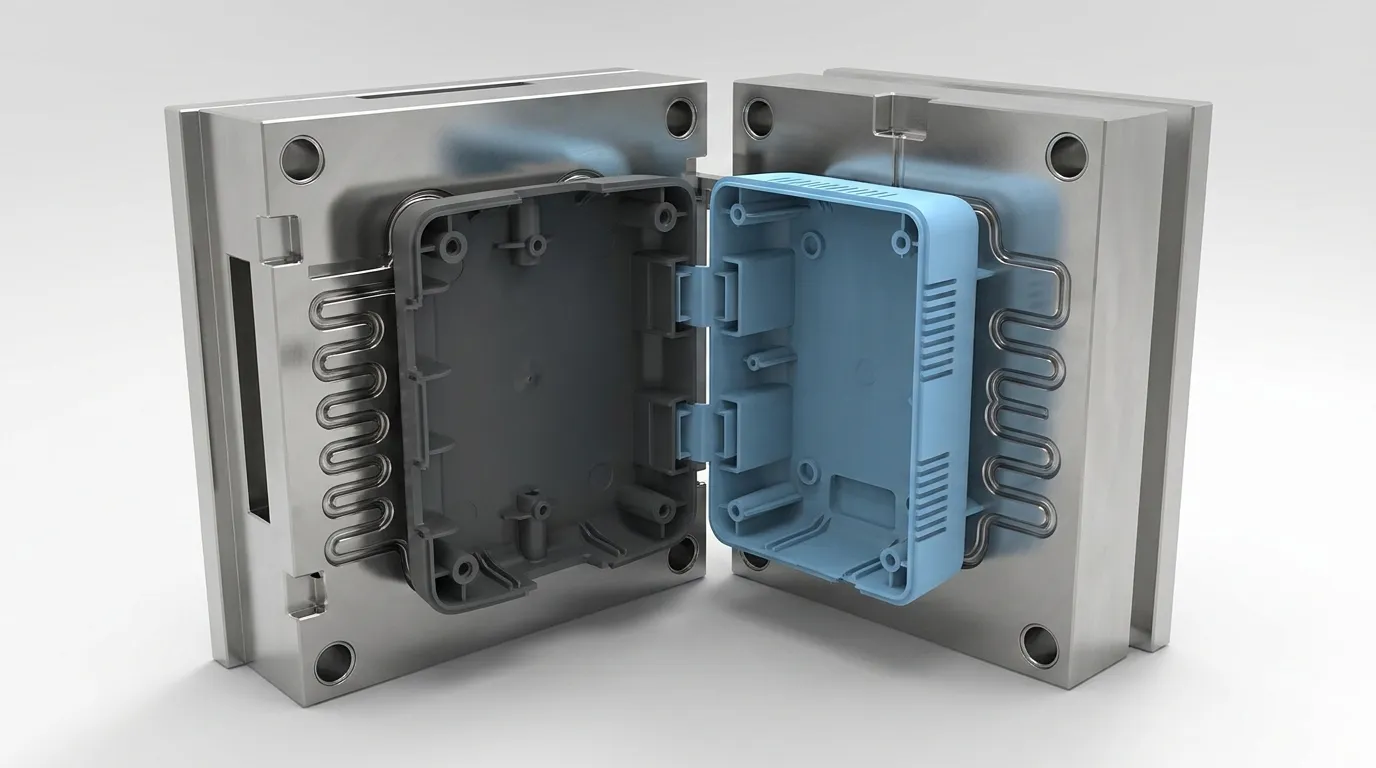
Manufacturers reduce warpage in electronic housings by controlling wall thickness, optimizing gate placement, balancing cooling, and validating molding parameters during trial runs. Stable processing is critical for PCB fit and connector alignment.
Warpage happens when plastic cools unevenly or shrinks inconsistently. Electronic housings are especially sensitive because internal features must line up correctly with PCBs, Złącza, switches, and mounting points.
One common failure occurs near battery compartments. A handheld device enclosure may look acceptable externally, but internal distortion can prevent the battery pack from fitting correctly. This usually traces back to uneven wall thickness or poor cooling balance inside the mold.
Dlaczego elementy elektroniki cienkościennej łatwo się odkształcają
Thin walls cool faster and react more aggressively to molding pressure changes. If resin flow becomes unbalanced, one side of the housing may shrink differently from the other side. Small shifts like this can affect connector alignment or create visible gaps during assembly.
Manufacturers often run multiple mold trials before approving production. A connector housing project may require gate relocation after testing reveals inconsistent shrinkage near mounting features. Adjusting gate position can improve flow balance and reduce dimensional variation.
Elektroniczna lista kontrolna zapobiegania awariom mieszkań
- Utrzymuj jednolitą grubość ścianek, jeśli to możliwe
- Zrównoważ kanały chłodzące w wnęce formy
- Przegląd rozmieszczenie bramek w pobliżu obszarów łącznikowych
- Weryfikacja dopasowania PCB podczas prób formowania
- Sprawdź zatrzaskowanie po schładzeniu
- Potwierdź wyrównanie złącza z oprawami montażowymi
- Przeprowadz testy powtarzalności na wielu próbkach
Production tuning also plays a major role. Korekty prób formowania i optymalizacja parametrów often affect final delivery schedules because manufacturers must stabilize cooling, Ciśnienie, and shrinkage behavior before approving mass production.
For readers who want a broader breakdown of tooling structure, Projektowanie komponentów formowych explains how different mold systems support dimensional stability.
What affects electronic mold lead time?
Electronic mold lead time depends on tooling complexity, Wymagania tolerancyjne, mold testing cycles, and design revisions after trial runs. Connector-heavy parts and thin-wall housings usually require additional validation before production approval.
Electronic molds often take longer than standard tooling because precision validation requires more testing. A basic enclosure may move quickly through sampling, but connector-rich assemblies usually need repeated inspection and adjustment.
Fast mold delivery is not always a good sign for electronics projects. Tight-tolerance housings frequently require extra validation cycles to avoid assembly problems later. Rushing this stage can increase rejection rates once production starts.
Dyskusje dotyczące czasu realizacji formowania wtryskowego commonly highlight tooling, Próbkowanie, and modification stages as major schedule drivers. Electronics projects add another layer because dimensional inspection often includes PCB assembly testing and connector verification.
Typowy harmonogram elektronicznych form
- Przegląd projektu części i analiza DFM
- Zatwierdzenie projektu formy
- Produkcja narzędzi
- Początkowe badanie formy
- Inspekcja wymiarowa
- Testowanie dopasowania PCB i złącza
- Modyfikacja formy w razie potrzeby
- Ostateczna walidacja i zatwierdzenie produkcji
An industrial control enclosure may require several PCB fit tests before approval because tolerance stacking across multiple mounting points can create alignment problems. Even if each feature falls within specification individually, combined variation can still affect final assembly.
How are electronic molds validated before mass production?
Electronic molds are validated through mold trials, Inspekcja wymiarowa, assembly testing, and repeatability verification. The goal is to confirm that the mold can consistently produce parts that fit electronic components without distortion or alignment issues.
Validation usually begins with sample molding. Engineers inspect critical dimensions such as connector openings, PCB mounting locations, Grubość ściany, and snap-fit engagement. Surface finish and cosmetic quality also matter for consumer-facing products.
Typowe punkty inspekcyjne dla obudów elektronicznych
- Dokładność ustawienia złącza
- Pozycja otworu montażowego PCB
- Siła zatrzaskowego zatrzasku
- Płaszczyzna powierzchni uszczelniających
- Wymiary komory baterii
- Spójność zamykania mieszkań
- Weryfikacja materiałów
Many manufacturers also perform repeated production runs to confirm process stability. A mold that produces acceptable parts once may still fail during continuous operation if cooling or shrinkage behavior changes under higher production volumes.
Process monitoring systems can improve validation consistency during these stages. Praktyki instrumentacji formowej are often used to track pressure behavior and improve repeatability during electronics production.
Which products commonly use electronic molds?
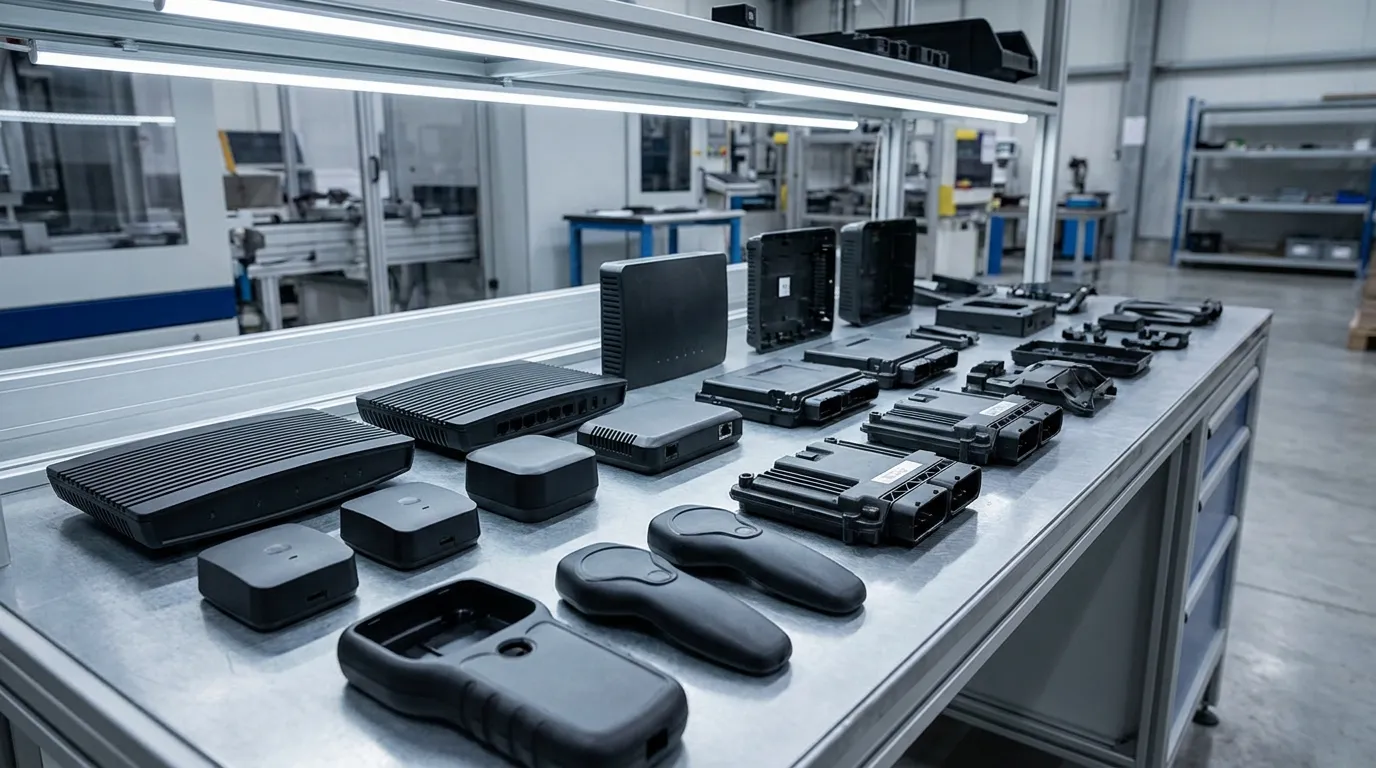
Electronic molds are widely used for router housings, handheld devices, battery enclosures, smart sensors, automotive control units, and medical electronics where dimensional consistency directly affects assembly and reliability.
Consumer electronics use electronic molding heavily because compact products depend on tightly controlled internal structures. Smartphone accessories, networking equipment, smart home devices, and charging systems all require accurate plastic enclosures.
Industrial electronics also depend on stable molding performance. Control boxes, machine interfaces, and sensor housings often contain mounting points that must stay dimensionally consistent during long production runs.
Automotive systems use many precision electronic housings as well. Readers exploring broader Zastosowania w formowaniu samochodowym can see how electronic control units and sensor housings fit into larger vehicle manufacturing systems.
Medical electronics create another demanding application category because small dimensional shifts can affect assembly precision. Similar requirements appear in Formowanie urządzeń medycznych, where repeatability and consistency remain critical.
| Typ produktu | Typowe formy |
|---|---|
| Routery i urządzenia sieciowe | Outer housings, connector frames |
| Inteligentne urządzenia domowe | Sensor enclosures, snap-fit covers |
| Sterowanie przemysłowe | Interface panels, mounting structures |
| Elektronika motoryzacka | ECU housings, sensor shells |
| Elektronika medyczna | Kompaktowe obudowy sprzętu |
What should buyers check before approving an electronic mold?
Before approving an electronic mold, buyers should verify dimensional consistency, assembly fit, connector alignment, Specyfikacje żywicy, and repeatable molding performance across multiple trial samples.
Tool approval should never rely only on visual inspection. Electronic parts may appear acceptable externally while internal dimensions drift outside usable limits. Buyers should request dimensional reports and assembly validation data before production release.
Connector-heavy parts deserve extra attention because small shifts can affect installation quality. A connector housing that passes cosmetic inspection may still create alignment problems during cable insertion or PCB assembly.
Lista kontrolna zatwierdzeń kupujących
- Przegląd raportów z inspekcji wymiarowej
- Sprawdź dopasowanie PCB za pomocą próbek produkcyjnych
- Potwierdź dokładność ustawienia złącza
- Sprawdź trwałość zatrzasku podczas wielokrotnego montażu
- Weryfikacja jakości żywicy i certyfikacji materiałów
- Przejrzyj wyniki wypaczenia po schłodzeniu
- Żądaj danych powtarzalności z wielu przebiegów
Pozyskiwanie przez kupujących Części precyzyjnie formowane often apply similar validation standards because dimensional consistency affects downstream assembly efficiency across many industries.
Poprawne wykonanie kolejnego kroku
Choosing the right electronic mold approach starts with understanding where precision matters most. Connector alignment, PCB fit, Równowaga chłodzenia, and resin selection all influence long-term production stability.
A good mold supplier should explain how they handle dimensional validation, Próby formowania, and repeatability testing before production begins. That matters more than simply promising short lead times. When electronic housings contain thin walls or complex internal structures, careful process control usually prevents expensive assembly problems later.
Najczęściej zadawane pytania
What is an electronic mold?
An electronic mold is a precision injection mold used to manufacture plastic housings, Złącza, and internal structures for electronic products. These molds are designed to maintain tight tolerances and stable dimensions for reliable assembly.
What materials are used for electronic housings?
Electronic housings commonly use ABS, Poliwęglan, and PC/ABS blends because they provide impact resistance, Stabilność wymiarowa, and good surface finish. Flame-retardant grades are often selected for safety compliance.
Why are tolerances important in electronic molding?
Tight tolerances are important because connector alignment, PCB fit, and snap-fit assembly depend on consistent dimensions. Even small deviations can create assembly failures or unreliable product performance.
What affects electronic mold lead time?
Electronic mold lead time depends on tooling complexity, Próby formowania, dimensional revisions, and assembly validation requirements. Thin-wall parts and connector-heavy designs usually increase testing and adjustment time.
How do manufacturers reduce warpage in electronic housings?
Manufacturers reduce warpage by controlling wall thickness, balancing cooling channels, optimizing gate locations, and stabilizing processing parameters during mold trials. Consistent cooling and resin flow are critical for dimensional stability.
What is in-mold electronics?
In-mold electronics integrates electronic circuits, czujniki, or conductive structures directly into molded plastic components. This approach supports thinner and more compact electronic products.
Udostępnij:



Napisane przez Sunshine
W Sunshine, Jesteśmy profesjonalnym producentem i dostawcą komponentów do precyzyjnych form, oferując szeroką gamę produktów do tłoczenia i formowania wtryskowego. Naszym głównym celem są formy do dziurkania, Sworznie wyrzutowe i tuleje, oraz słupy i tuleje. Dzięki zaawansowanej obróbki CNC, Ścisła kontrola jakości, oraz silne możliwości produkcyjne, Zapewniamy niezawodność, Części o wysokiej precyzji, wraz ze standardowymi komponentami dostępnymi na stanie, zapewniającymi szybkie i efektywne globalne dostawy.
WIADOMOŚCI
UZYSKAJ USŁUGĘ
Z wysokiej jakości częściami dostosowanymi do każdego budżetu oraz przyjaznym personelem przeszkolonym, by Twoja wizyta była poinformowana i bezproblemowa.
