



Przewodnik po formach wtryskowych: Komponenty, Rodzaje, oraz Jak to działa
Injection mold systems are precision tools used to shape molten plastic into repeatable parts during injection molding production. A typical injection mold includes the cavity, Rdzeń, System biegaczy, Kanały chłodzące, and ejector components. Mold type, Wybór materiałów, and cooling design directly affect part quality, Tempo produkcji, tooling cost, oraz żywotności pleśni.
An injection mold determines how a plastic part looks, fits, and performs. Even small tooling decisions can affect cycle time, defect rates, and long-term production cost. This guide explains how injection molds work, what components matter most, and how manufacturers choose the right mold setup for different production goals.
What is an injection mold?
An injection mold is a precision tooling system used to shape molten plastic into repeatable parts during injection molding. The mold controls the part’s final shape, Wymiary, Wykończenie powierzchni, and production consistency.
An injection mold is the custom-built tool installed inside an injection molding machine. Molten plastic flows into the mold cavity under pressure, cools into shape, and then ejects as a finished part. The same mold can produce thousands or even millions of identical components when maintained correctly.
The mold itself contains several engineered systems that control material flow, Chłodzenie, Przebieg trasy, and part release. That’s why tooling quality has such a strong impact on production efficiency and defect prevention.
If you’re new to the manufacturing process, to Przewodnik po formowaniu wtryskowym tworzyw sztucznych explains the broader molding workflow and machine operation in more detail.
For a technical overview of molding fundamentals, the Przegląd formowania wtryskowego TWI Global provides a useful industry reference.
How does an injection mold work during production?
Injection molds work by receiving molten plastic under pressure, cooling the material inside a precision cavity, and ejecting the finished part after solidification. The process repeats rapidly for high-volume production.
The process starts with plastic pellets melting inside the injection molding machine barrel. The machine pushes the molten plastic into the mold cavity through a runner and gate system. Once the cavity fills, the mold holds pressure while the material cools and hardens.
Cooling time matters more than many buyers expect. A poorly designed cooling layout can slow production dramatically and increase warping or shrinkage issues. In high-volume manufacturing, even a few seconds added to cycle time can affect overall production cost.
Faza wtrysku
During injection, the mold must stay tightly clamped to handle pressure. The cavity and core shape the plastic into its final geometry. Gates control how material enters the part, while runners distribute material through the mold.
A consumer electronics housing with thin walls, na przykład, often requires balanced flow paths to prevent cosmetic marks and incomplete filling.
Faza chłodzenia i wyrzutu
Po ochłodzeniu, ejector pins push the part out of the mold. The mold then closes again, and the cycle repeats. Efficient cooling design helps reduce downtime and improve production speed.
To Przewodnik po formowalności Protolabs explains how moldability and cooling design affect manufacturing performance.
For a broader explanation of production flow, see this Przewodnik po procesie formowania wtryskowego.
Jakie są główne elementy formy wtryskowej?
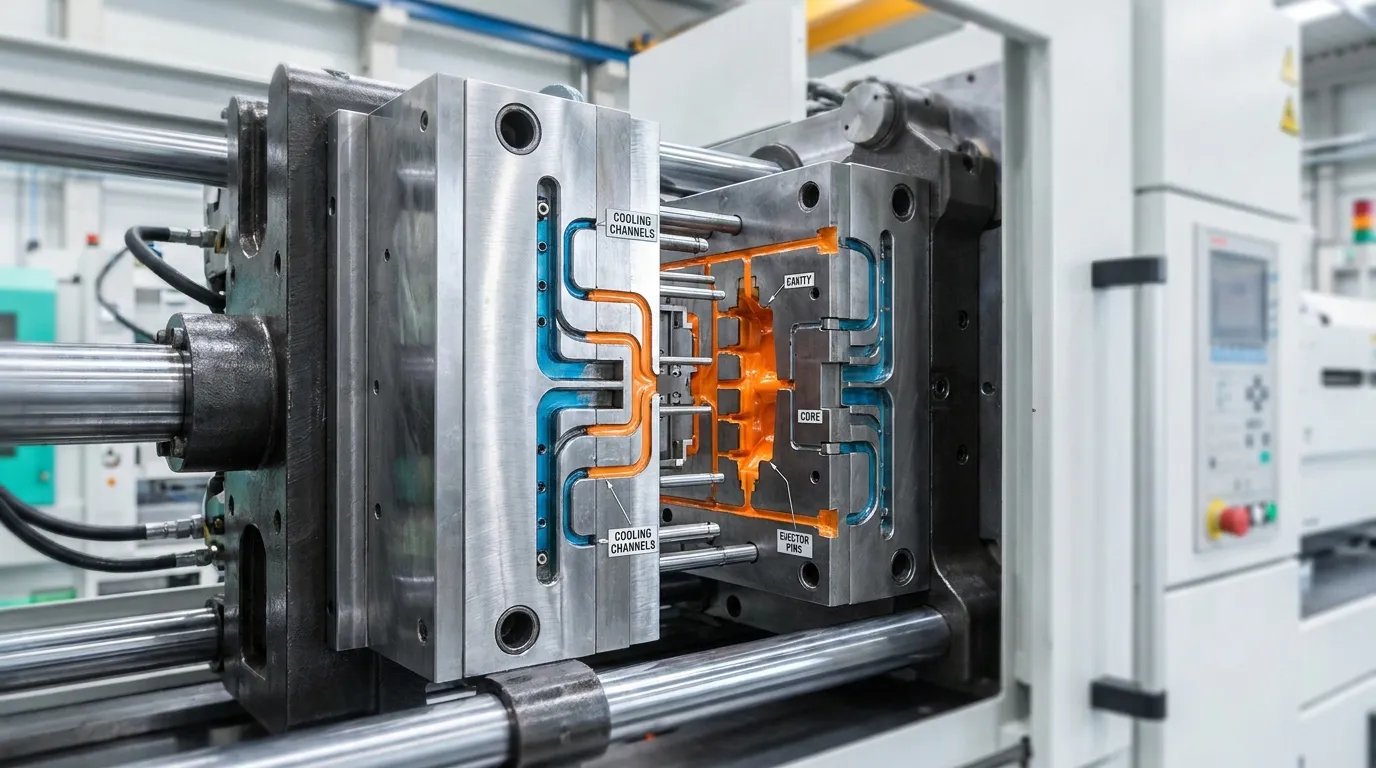
Injection mold components work together to control plastic flow, Chłodzenie, Przebieg trasy, and part ejection. Core systems include the cavity, System biegaczy, Wyrzutniki, Kanały chłodzące, and guide mechanisms.
Every injection mold includes several mechanical systems that must work together with tight precision. If one area fails, the entire molding process can suffer from defects, Czas wolny, or inconsistent dimensions.
| Składnik | Funkcja | Dlaczego to ważne |
|---|---|---|
| Ubytek | Tworzy zewnętrzny kształt części | Wymiary sterowania i wykończenie powierzchni |
| Rdzeń | Tworzy cechy wewnętrzne | Wpływa na dopasowanie i geometrię strukturalną |
| System biegaczy | Kieruje przepływem stopionego plastiku | Wpływy wypełniające równowagę |
| Brama | Punkt wejścia do jamy | Wpływy linii i śladów spawania |
| Kanały chłodzące | Usuwa ciepło z formy | Skraca czas cyklu |
| Sworznie wyrzutowe | Wypychaj gotowe części | Zapobiega przyklejaniu się i uszkodzeniom |
| Sworznie prowadzące | Wyrównaj połówki formy | Utrzymuje precyzję podczas zaciskania |
Cooling channels often receive less attention than cavities or gates, but they directly affect production efficiency. A redesigned cooling layout can shorten cycle time significantly during high-volume production runs.
Na przykład, a medical component with tight tolerances may require advanced cooling paths and hardened steel inserts to maintain dimensional stability across long production runs.
To Przegląd komponentów form provides a deeper look at individual tooling systems and their engineering roles.
For additional mold construction details, the Odniesienie do konstrukcji formowania wtrysków offers a useful technical resource.
What are the different types of injection molds?
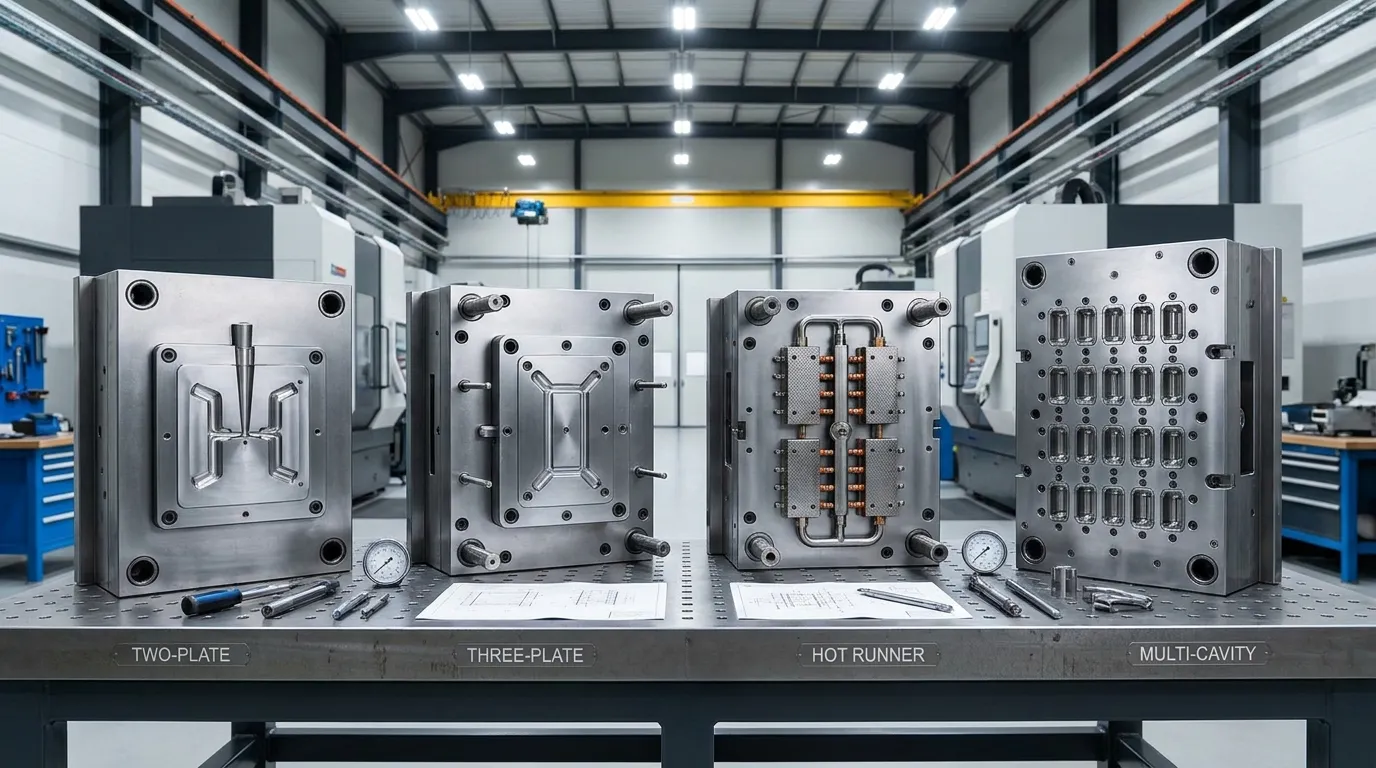
Different injection mold types are designed for different production needs. Simpler molds reduce tooling cost, while advanced systems like hot runner molds improve cycle efficiency and reduce material waste.
Manufacturers select mold types based on production volume, part complexity, gating requirements, and budget. Some molds focus on lower tooling cost, while others prioritize faster production and reduced scrap.
Formy z dwoma płytami vs trzema płytami
A two-plate mold uses a single parting line and simpler runner system. It works well for many standard plastic parts and usually costs less to manufacture.
A three-plate mold adds an extra plate that allows more flexible gate placement. This helps with complex geometries and automatic runner separation, but it also increases tooling complexity and maintenance requirements.
| Typ formy | Najlepsze dla | Główna zaleta | Główna wada |
|---|---|---|---|
| Forma dwupłytowa | Standardowe części produkcyjne | Niższy koszt narzędzi | Ograniczone rozmieszczenie bramek |
| Forma z trzema płytami | Złożone układy bram | Lepsza elastyczność bramek | Wyższa konserwacja |
| Forma gorącego kanału | Produkcja wielkomasowa | Mniej marnotrawstwa materiałowego | Wyższy koszt początkowy |
| Forma wielokomorowa | Duże serie produkcyjne | Wyższa wydajność na cykl | Większa złożoność równowagi |
Hot runner molds are not always the best choice. They improve material efficiency, but simpler cold runner systems are often safer for lower production volumes or products with frequent material changes.
A low-volume prototype project, for instance, may benefit more from a simpler tooling design with lower upfront investment.
To Przewodnik po zastosowaniu form przemysłowych explains how different mold setups fit various industries and product categories.
Which materials are used to make injection molds?
Steel molds are preferred for long production runs and tight tolerances, while aluminum molds reduce tooling cost and speed up prototyping. Material selection depends on production volume, part complexity, oraz przewidywana długość życia pleśni.
Tool steel is the most common mold material for long-term production. Hardened steel handles high injection pressure, abrasive materials, and repeated cycles better than softer metals. It’s commonly used for automotive, Medycyna, and industrial production programs.
Aluminum molds are lighter and easier to machine. That makes them useful for prototyping, bridge tooling, and shorter production runs where speed matters more than maximum lifespan.
| Materiał | Najlepsze zastosowanie | Siła | Ograniczenia |
|---|---|---|---|
| Hartowana stal | Długie serie produkcji | Wysoka trwałość | Wyższy koszt |
| Stal wstępnie hartowana | Narzędzia średniej objętości | Łatwiejsza obróbka | Krótsza żywotność |
| Aluminium | Prototypy i serie o niskim wolumenie | Szybszy czas realizacji | Niższa odporność na zużycie |
Aluminum molds reduce lead time and tooling cost, but steel molds are usually the better long-term investment for high-volume production. A medical connector produced in large quantities may justify hardened steel tooling because dimensional consistency matters over millions of cycles.
How long does injection mold production take?
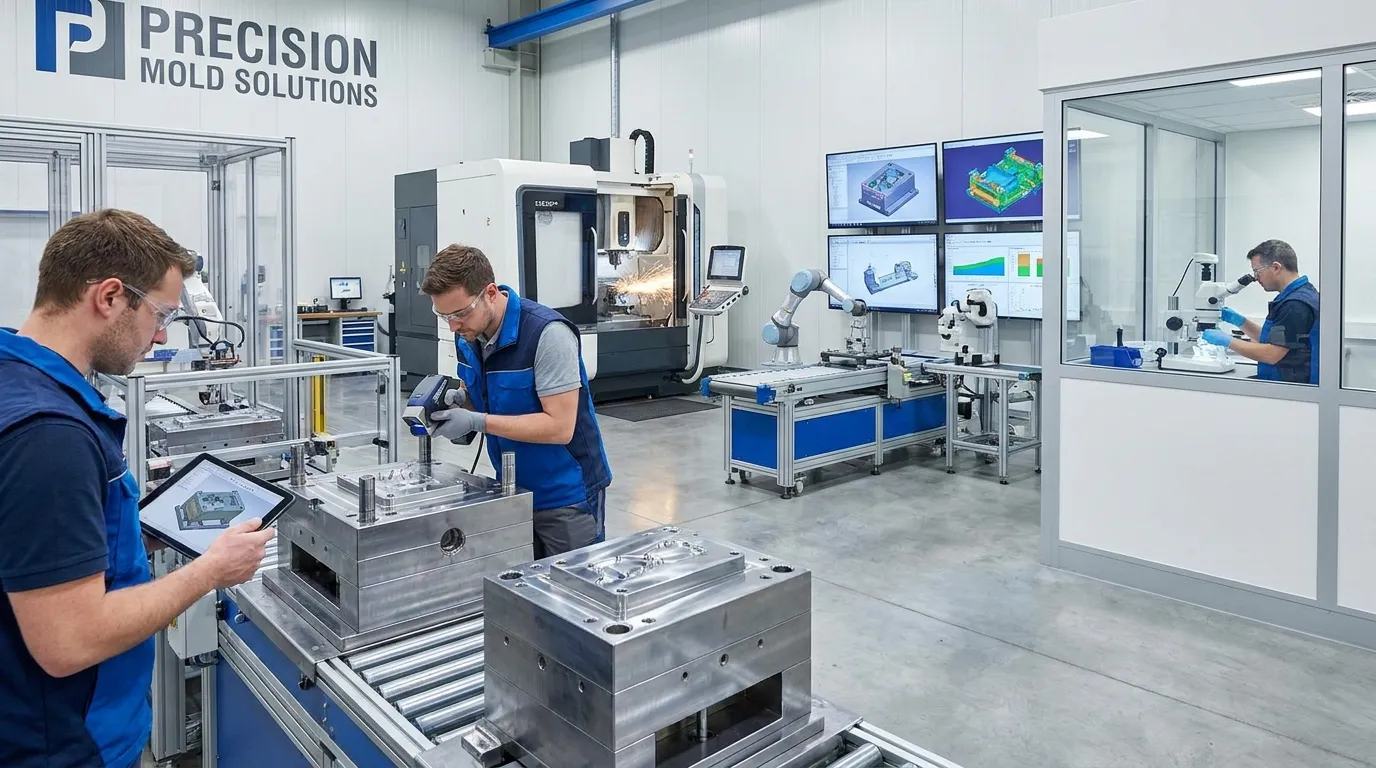
Injection mold lead times commonly range from several weeks to several months depending on mold complexity, Liczba ubytków, Zmiany w narzędziach, and validation requirements.
Lead time depends on more than machining speed. Mold design reviews, material sourcing, Próbkowanie, and validation testing all affect delivery schedules. Complex multi-cavity molds naturally take longer because they require tighter balancing and additional machining steps.
A simple prototype mold may move from design approval to sampling quickly. A multi-cavity production tool for consumer electronics can take much longer due to cosmetic requirements and repeated validation testing.
Czynniki opóźniające dostawę formy
- Zmiany w projekcie po cięciu stali
- Opóźnienia w pozyskiwaniu specjalistycznej stali narzędziowej
- Dodatkowe prośby o próbkę
- Korekty przepływu formy lub chłodzenia
- Opóźnienia w międzynarodowej przesyłce i odprawie celnej
Faster tooling timelines are not always a positive sign. Aggressive schedules can reduce testing time and increase production issues later.
| Etap produkcji | Typowe skupienie |
|---|---|
| Zatwierdzenie projektu | Przegląd DFM i walidacja części |
| Obróbka CNC | Produkcja podstaw form i wnęk |
| Zgromadzenie | Instalacja komponentów i systemów |
| Próbkowanie | Produkcja początkowych części testowych |
| Walidacja | Kontrole wymiarowe i kosmetyczne |
To Przewodnik po czasie realizacji EvokPoly explains how tooling complexity affects scheduling. The Artykuł o trendach produkcyjnych Fictiv also highlights how automation and digital validation are changing mold production workflows.
What problems can affect injection molds?
Injection molds can develop production problems from wear, cooling imbalance, Problemy z wyrównaniem, or poor maintenance. Many defects start small and become expensive only after production volumes increase.
Flash happens when molten plastic escapes along the mold parting line. Short shots occur when the cavity does not fill completely. Uneven cooling can also create warping, ślady zapadnięcia, lub niestabilność wymiarowa.
Podstawy konserwacji pleśni
Regular maintenance helps prevent unexpected downtime and part inconsistency. Most production teams monitor wear surfaces, Kanały chłodzące, Systemy wyrzutowe, and alignment components during scheduled inspections.
A high-volume packaging mold, na przykład, may require more frequent cleaning because resin buildup can affect gate performance and filling consistency.
Typowa lista kontrolna problemów z pleśnią
- Błysk wokół krawędzi części
- Krótkie ujęcia lub niepełne wypełnienie
- Nierównowaga chłodzenia
- Zużyte sworznie wyrzutowe
- Dryf wyrównania formy
- Blokada bramy
- Rysy lub ślady powierzchniowe
To Przewodnik po precyzyjnych komponentach form explains how individual tooling systems influence mold precision and maintenance planning.
How do manufacturers choose the right injection mold design?
Choosing the right mold design depends on production volume, Wybór materiałów, Geometria części, and long-term cost goals. The best tooling setup is usually the one that balances reliability, Wydajność cyklu, and maintenance needs.
A low-volume consumer product may use aluminum tooling to reduce launch cost and shorten development time. A medical device component with strict tolerances often requires hardened steel tooling and tighter validation procedures.
Tabela porównawcza typów form wtryskowych
| Potrzeba produkcyjna | Zalecane ustawienie formy | Dlaczego pasuje |
|---|---|---|
| Części prototypowe | Forma aluminiowa | Szybsza realizacja |
| Produkcja średnia | Forma stalowa z dwoma płytami | Zrównoważony koszt i trwałość |
| Opakowania o dużej objętości | Forma wielokomorowa z gorącym kanałem | Szybsza wydajność cyklu |
| Części medyczne o ścisłej tolerancji | Forma ze stali hartowanej | Lepsza stabilność wymiarowa |
| Obudowa elektroniki kosmetycznej | System wielokomorowego wyważonego biegacza | Poprawa spójności wizualnej |
Part geometry also changes tooling strategy. Thin-wall electronics housings often require balanced runner layouts and advanced cooling control. Głębokie żebra, podcina, or textured surfaces may increase tooling complexity and maintenance requirements.
Manufacturers also evaluate long-term operating cost. A cheaper mold can become expensive later if cycle times stay slow or maintenance needs increase.
To Przewodnik po zastosowaniach form wtryskowych shows how tooling decisions vary across industries and product categories.
Co robić dalej
An injection mold affects far more than part shape. It influences production speed, maintenance needs, defect rates, and long-term manufacturing cost. That’s why mold design decisions should match the product’s production goals instead of focusing only on upfront tooling price.
If you're comparing mold options, start by defining production volume, Wymagania materialne, and quality expectations first. Then review cooling strategy, cavity layout, and mold material selection with your supplier. A well-designed injection mold usually saves far more money during production than it costs during tooling development.
Najczęściej zadawane pytania
What is an injection mold used for?
An injection mold is used to manufacture repeatable plastic parts by shaping molten material inside a precision cavity. It’s widely used for automotive, Elektronika, Medycyna, and consumer products that require consistent dimensions and high production volume.
What are the main parts of an injection mold?
The main parts include the cavity, Rdzeń, System biegaczy, gate, Kanały chłodzące, System wyrzutnika, oraz elementy prowadzące. Each system controls how plastic flows, cools, aligns, and releases during production.
What is the difference between a two-plate and three-plate mold?
A two-plate mold uses one parting line and a simpler runner system, while a three-plate mold adds a separate runner plate for flexible gate placement. Three-plate molds improve gating control but increase tooling complexity and maintenance.
How long does it take to build an injection mold?
Injection mold production can take several weeks to several months depending on complexity, Liczba ubytków, testing requirements, and design revisions. Large production tools usually require longer validation and sampling stages.
Why are injection molds expensive?
Injection molds require precision machining, engineered cooling systems, hardened materials, and detailed testing. Higher cavity counts, tight tolerances, and complex part geometries increase tooling cost significantly.
How many parts can one injection mold produce?
Mold lifespan depends on tooling material, maintenance quality, oraz warunki produkcji. Hardened steel molds can often produce hundreds of thousands or even millions of cycles when maintained properly.
Udostępnij:



Napisane przez Sunshine
W Sunshine, Jesteśmy profesjonalnym producentem i dostawcą komponentów do precyzyjnych form, oferując szeroką gamę produktów do tłoczenia i formowania wtryskowego. Naszym głównym celem są formy do dziurkania, Sworznie wyrzutowe i tuleje, oraz słupy i tuleje. Dzięki zaawansowanej obróbki CNC, Ścisła kontrola jakości, oraz silne możliwości produkcyjne, Zapewniamy niezawodność, Części o wysokiej precyzji, wraz ze standardowymi komponentami dostępnymi na stanie, zapewniającymi szybkie i efektywne globalne dostawy.
WIADOMOŚCI
UZYSKAJ USŁUGĘ
Z wysokiej jakości częściami dostosowanymi do każdego budżetu oraz przyjaznym personelem przeszkolonym, by Twoja wizyta była poinformowana i bezproblemowa.
